لا تقلق، اتصل بمديرك فوراً
لا تتعجل في إغلاقها الآن، من فضلك تحدث إلى مديرنا مباشرةً. عادةً ما يتم الرد خلال ساعة واحدة.
أغشية الدفيئة والشبكات الزراعية
شريكك العالمي في حلول الزراعة في البيوت الزجاجية.
نستخدم بروتوكول SSL/3.0 لتشفير خصوصيتك

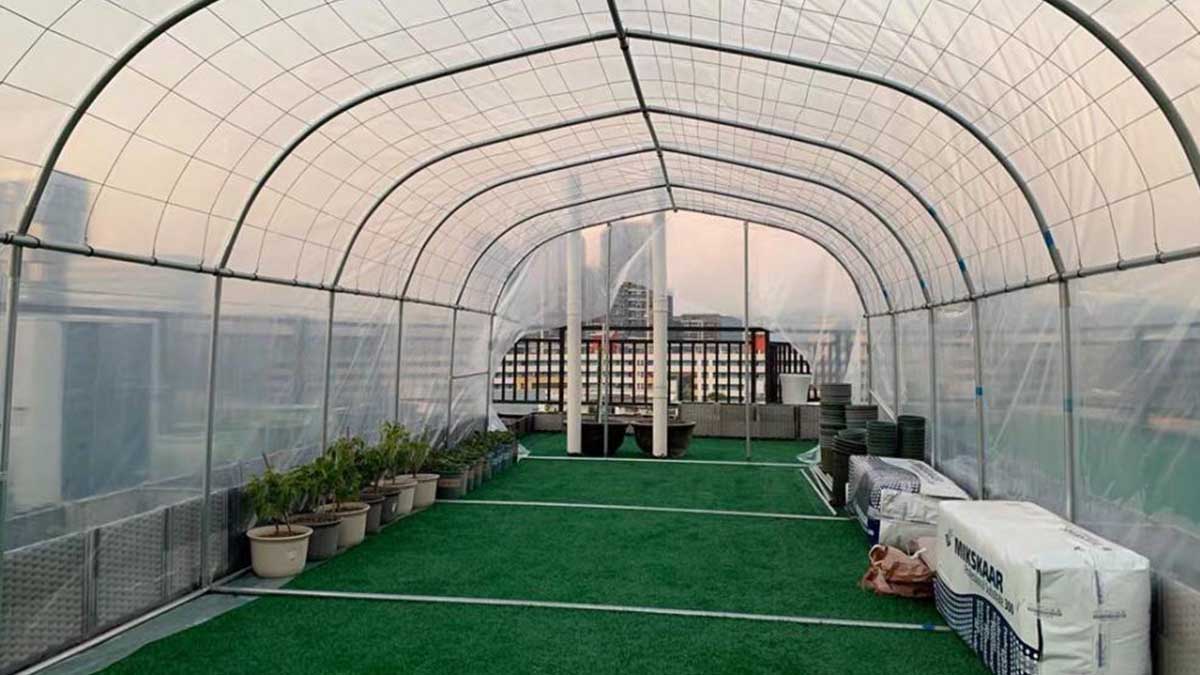
To achieve a genuine 5-year durability, you cannot use standard construction-grade polyethylene. You must upgrade to an advanced UV Resistant Greenhouse Film engineered with 5-layer co-extrusion technology and loaded with specific Hindered Amine Light Stabilizers (HALS).
If you’re running a big grow op, you’ve been there—cheap plastic is a total nightmare. You shell out the big bucks for a greenhouse cover, thinking you’re set, but then the sun just eats it alive. Give it 18 months and the stuff’s yellow, crispy, and basically turns into glass. The second a winter storm rolls through? Snap. It’s gone.
And it’s not just the plastic you’re losing. It’s the crops you spent months on, the downtime, and the pure hell of having to pay a crew to rip it all down and start over. It’s a massive drain on the wallet.
Here is the direct answer and the ultimate solution for your farm:
To achieve a genuine 5-year durability, you cannot use standard construction-grade polyethylene. You must upgrade to an advanced UV Resistant Greenhouse Film engineered with 5-layer co-extrusion technology and loaded with specific Hindered Amine Light Stabilizers (HALS). These chemical stabilizers act as a heavy-duty “sunscreen” for the plastic, absorbing and dissipating destructive UV radiation before it can break the polymer bonds. By choosing a high-quality UV-stabilized cover, you maintain over 90% light transmission for a half-decade while cutting your long-term roof replacement costs by up to 60%.
في هونريل للزراعة, we have spent years engineering climate control solutions for some of the harshest solar environments on the planet. In this comprehensive guide, we are going to break down the exact science of photo-degradation, analyze real-world data on film longevity, and share our proven best practices for getting the absolute maximum lifespan out of your commercial greenhouse covers.
To understand why our UV resistant film lasts up to 5 years, we must first look at what kills agricultural plastics. Greenhouse covers are subjected to a brutal combination of solar, chemical, and mechanical attacks every single day.
UV rays—the 290–400 nm stuff—are basically microscopic hacksaws. They don’t just “hit” the plastic; they chop up the molecular chains that give the film its strength.
In the lab, they call this chain scission. In the real world, it just means your film loses its stretch. Once those chains snap, oxygen moves in, the plastic turns yellow and brittle, and the first gust of wind rips it wide open. We don’t just hope for the best. We bake UV stabilizers (HALS) right into the outer skin of the film.
Think of these as “sacrificial” additives. They grab the UV energy before it can touch the polymer, soak it up, and bleed it off as harmless heat. It kills the photo-oxidation reaction before it even starts. You get a film that stays flexible and stays in one piece—even under brutal sun.
Many commercial growers do not realize that the very chemicals they use to protect their crops are actively destroying their greenhouse roof.
💡 Best Practice: Protect the Contact Points
Pro Tip: Don’t let your frame cook your film.
We get calls all the time from growers complaining about their film tearing. Nine times out of ten, the film isn’t the problem—the frame is.
Those dark metal pipes are heat magnets. In direct sun, they can easily hit 60°C (140°F). When your film is stretched tight against that scorching metal, it literally bakes the UV stabilizers right out of the plastic. You’ll see the film get brittle and fail exactly where it touches the arches.
The Fix: Before you pull your next roll, take the time to prep your contact points.
- Paint it: Hit the top of your metal arches with white, water-soluble acrylic paint.
- Tape it: Or, use white foam PVC tape on the contact points.
White reflects the heat. Keeping those frames cool is the easiest way to squeeze an extra year (or more) out of your film. It’s a cheap move that saves you a massive headache down the road.
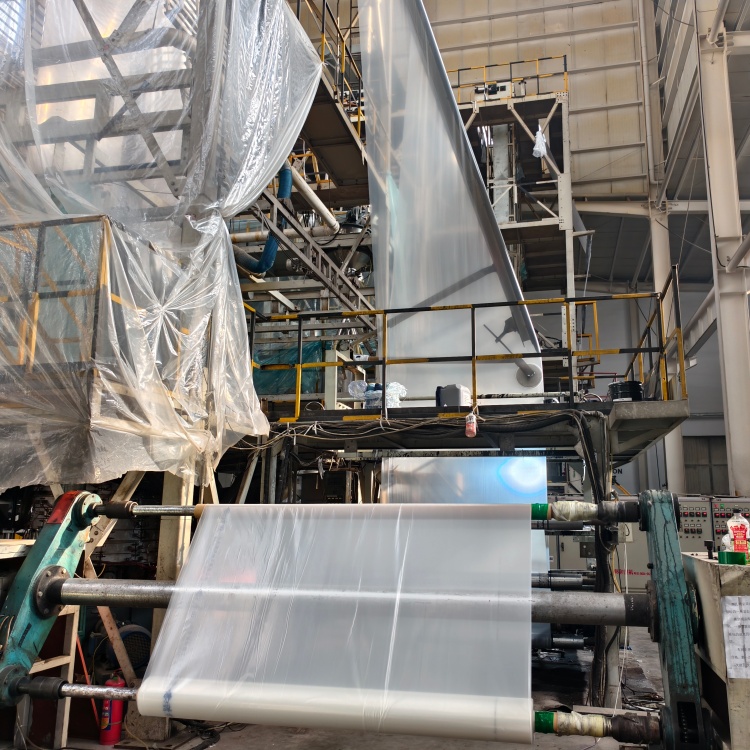
Back in the day, manufacturers stuck to this basic 3-layer setup. They’d cram everything—UV stabilizers, anti-drip agents, thermal minerals—into the same layer of plastic.
The problem? All those chemicals just didn’t get along. They’d basically fight each other, and when they’re busy clashing, they aren’t doing their jobs. So instead of a high-performance cover, you end up with something that’s barely working at half its strength.ctiveness.
By upgrading our manufacturing lines to 5-layer co-extrusion technology, we isolate these functions to create a perfect agricultural shield:
When consulting with our B2B wholesale clients, the conversation always comes down to Return on Investment (ROI). While the initial cost of a 5-year UV resistant film is higher than a standard 1-year film, the math heavily favors the premium upgrade over a commercial lifecycle.
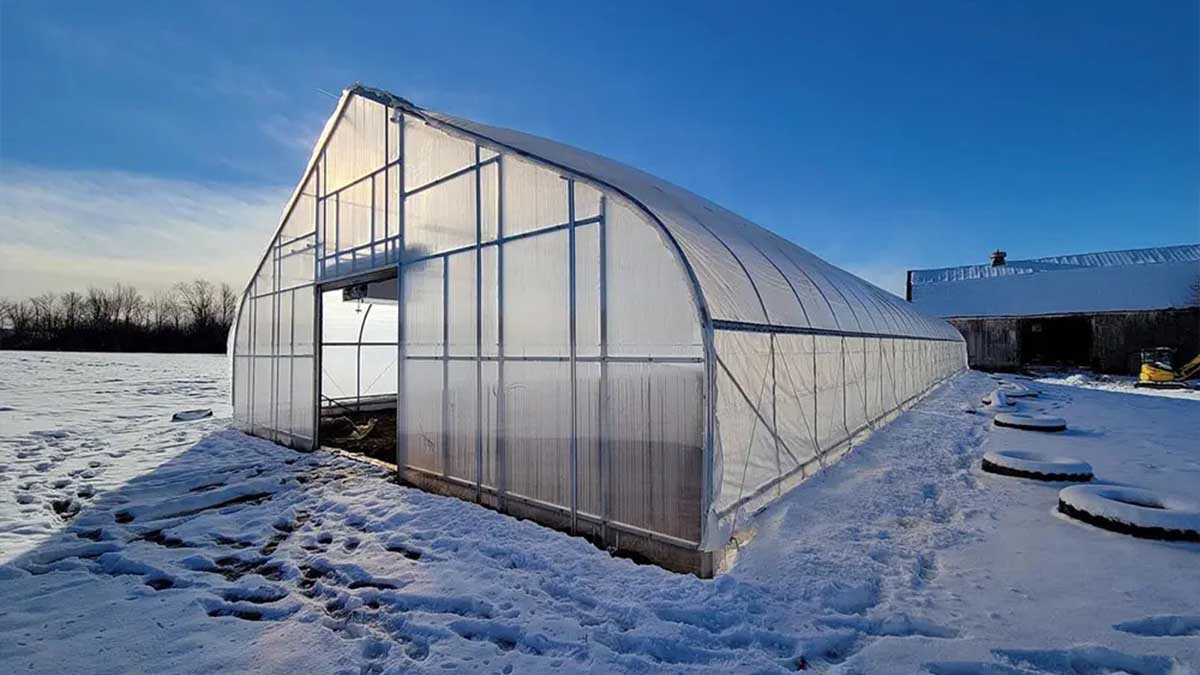
| Performance Metric | Standard PE Film (1-2 Years) | HONREL 5-Year UV Resistant Film |
| Initial Light Transmission | 85% – 88% | 90% – 93% (Glass-like clarity) |
| Light Transmission (Year 3) | Drops to ~70% (Hazy/Yellow) | Stays above 88% |
| Anti-Drip Longevity | 6 to 12 Months (Washes off) | Lifetime of the film |
| Puncture Resistance | Moderate | High (Metallocene Core) |
| 5-Year Labor Cost | High (Requires 2-3 Replacements) | Low (Requires 1 Install) |
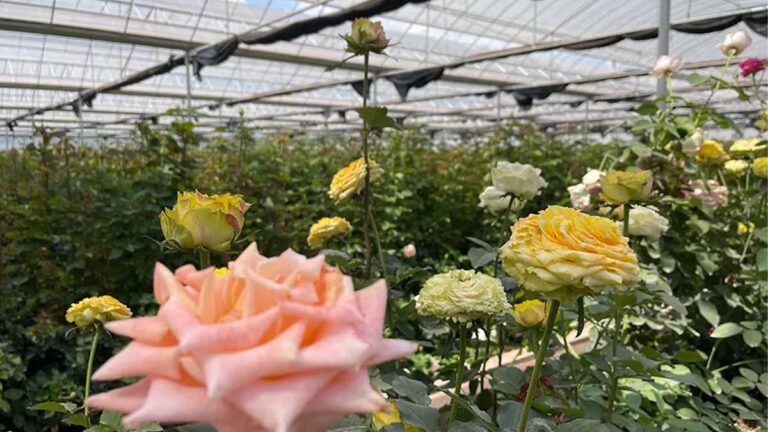
Longevity isn’t just about whether the plastic has holes in it; it is about whether it still lets light through to feed your crops. Photosynthetically Active Radiation (PAR) is the exact light spectrum plants use to grow. In greenhouse horticulture, there is a golden rule established by leading agricultural institutions: a 1% increase in light equals a 1% increase in plant yield.
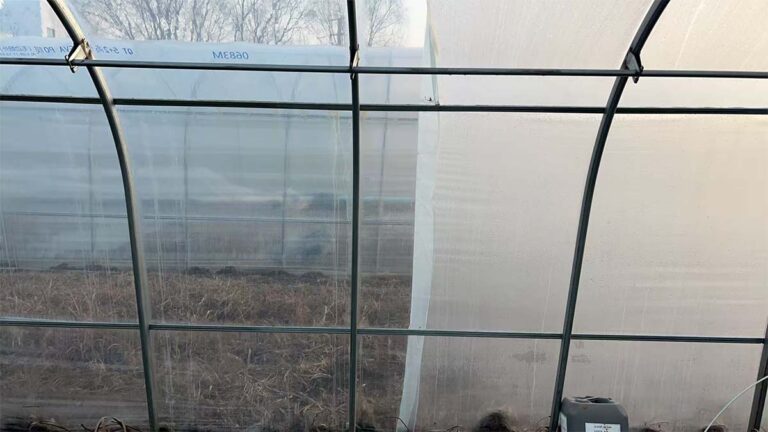
If your standard film survives for 3 years but turns yellow and blocks 20% of the light, it is literally costing you 20% of your total crop yield. Our UV stabilized PO film stays optically clear, feeding your crop’s photosynthesis engine for its entire 5-year lifespan.
💡 Best Practice: The “Warm Install” Technique
UV resistant polyethylene and polyolefin films are incredibly strong, but they shrink in the cold and expand in the heat.
How to fix this: Never install your film early on a freezing morning. If you pull it tight when it is cold, it will expand and sag drastically when the noon sun hits it. Sagging leads to wind-whip, and wind-whip causes micro-abrasions that strip away the protective UV surface layer, accelerating degradation. Always install your film on a mild, warm day. Pull it taut. As the temperature drops at night, the film will shrink slightly, tensioning itself perfectly over the frame like a drum.
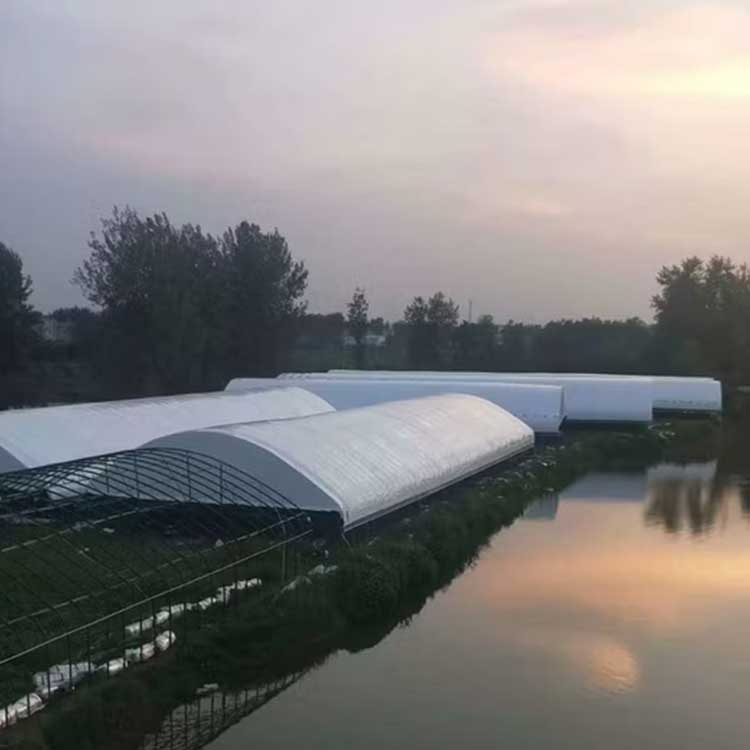
To get 5+ years out of your greenhouse cover, you cannot just install it and forget it. You need to manage the environment inside and outside the structure. Your roof is part of a larger agricultural ecosystem.
We work with commercial farm managers, greenhouse constructors, and agricultural distributors globally. Here are the five most common questions we receive regarding our 5-year UV resistant films.
A: In moderate climates (like Northern Europe or the Northern US), our 5-year film easily reaches its full lifespan. However, if you operate in desert regions with extreme solar radiation (like the Middle East, North Africa, or Arizona), the UV exposure is astronomically higher. For these regions, we manufacture a specialized high-UV recipe (rated for 150+ Kly/year) that guarantees structural integrity for 3 to 4 years even under the harshest, most unrelenting sun.
A: Heavy, constant use of sulfur and chlorine chemically attacks the UV stabilizers in all plastics. While our multi-layer film is highly resistant, frequent heavy chemical fogging will eventually accelerate degradation. We advise our B2B clients to check our technical data sheets for strict limits on ppm (parts per million) for sulfur and chlorine exposure to ensure the film reaches its maximum guaranteed lifespan.
A: Honestly? I wouldn’t risk it. When PVC pipes sit out in the sun and get hot, they start “off-gassing” chlorine. This gas is basically poison for your greenhouse film. It attacks the UV stabilizers in the plastic and makes it super brittle. You’ll end up seeing the film just shatter right along the arches before the season is even over. You’ve got to put something between them—like a quick coat of acrylic paint or some felt tape—to act as a buffer. It’s a bit of extra work now, but it saves you from buying a whole new roll of film in six months.
A: If you want your setup to survive for a good five years in a commercial environment, you’re looking at a minimum of 150 microns (6 mil). That’s usually the gold standard. But, if you live somewhere that gets hammered by heavy snow or high winds, or if you know the film is going to take a beating, you should definitely upgrade to 200 microns (8 mil). It’s significantly tougher and gives you that extra peace of mind when the weather turns nasty.
A: Because HONREL AGRICULTURE operates as a direct factory manufacturer, our MOQ is generally based on raw tonnage (typically 1 to 2 Tons, depending on your exact width, length, and micron customizations). By purchasing in bulk directly from our extrusion lines, B2B distributors and mega-farms save significantly compared to sourcing through retail middlemen.
Stop buying film that only lasts two seasons.
Cutting corners on low-tier plastic might save you a few cents upfront, but it’s a trap. Between the cost of replacement labor, the drop in light transmission, and the hit your crop yield takes, that “cheap” film ends up being the most expensive thing on your farm. We didn’t design our UV-resistant film to just “get by.” We built it to last five years in the field.
It’s not just about durability, though. We’ve engineered this film to maximize PAR light (the only light your plants actually care about) and to kill condensation drip entirely. You’re getting a professional-grade shield that handles sun and wind for years, not months.
If you’re tired of reskinning your houses every two years, let’s get to work. We offer factory-direct pricing and technical support that actually knows the industry.
Drop us a line for a wholesale quote. We can even tweak the specs to fit your specific climate and crop.
اختيار الخيار الصحيح فيلم غرينهاوس أو شبكة التظليل أمر بالغ الأهمية لنجاح المحاصيل. بصفتي متخصصًا مصنع الشباك والأغشية الزراعيةيساعدك خبراؤنا في تخصيص الحماية من الأشعة فوق البنفسجية ونفاذية الضوء بما يتناسب مع مناخ منطقتك. شاركنا تفاصيل مشروعك للحصول على حل مصمم خصيصًا لك.