PO Film Longevity | Commercial Use: The Ultimate Guide to Greenhouse Durability
Because high-quality PO film extends your covering’s lifespan to 3 to 5+ years, completely resists the early yellowing seen in older plastics, and features a permanent anti-drip nano-coating. By choosing PO, you cut your long-term roof replacement labor by up to 60% while maintaining a massive 90%+ light transmission rate year after year.
If you operate a commercial farming facility, you already know that your biggest hidden cost is not water, seeds, or fertilizer—it is replacing degraded plastic. Every time you have to change a greenhouse cover, you lose days of labor, risk crop exposure to the elements, and spend thousands of dollars on materials. We speak with farm operators every day who are frustrated with plastics that yellow, drip, and tear after just one or two seasons.
Here is the direct answer to maximizing your investment: For serious commercial use, standard polyethylene is no longer the most cost-effective option. Upgrading to a 5-layer co-extruded Polyolefin (PO) film is the definitive solution. Why? Because high-quality PO film extends your covering’s lifespan to 3 to 5+ years, completely resists the early yellowing seen in older plastics, and features a permanent anti-drip nano-coating. By choosing PO, you cut your long-term roof replacement labor by up to 60% while maintaining a massive 90%+ light transmission rate year after year.
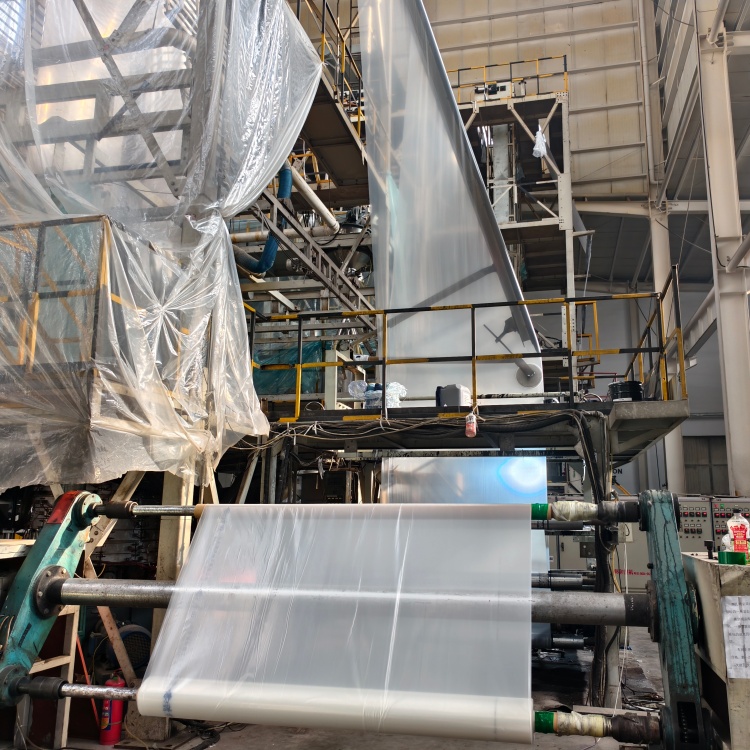
En AGRICULTURA HONREL, we have spent years engineering climate control solutions for extreme environments. In this guide, we will dive deep into the science of polymer degradation, analyze real-world data on film longevity, and share our proven best practices for getting the absolute maximum lifespan out of your commercial greenhouse covers.
The Science of Longevity: Why Commercial Plastics Fail
To fully understand why our PO film lasts so long, we first have to understand what kills agricultural plastics. Greenhouse covers do not just “get old” gracefully. They are subjected to a brutal, daily combination of chemical, solar, and mechanical attacks.
Photo-Oxidation (The UV Attack)
The sun is the primary enemy of plastic. Ultraviolet (UV) radiation breaks the molecular bonds of the polymer chains in a process called photo-degradation. As these chains break down (a process engineers call “chain scission”), the plastic loses its natural elasticity. It becomes brittle, yellows, and becomes highly prone to shattering in the wind.
The HONREL Solution: Advanced PO films use state-of-the-art UV stabilizers, such as Hindered Amine Light Stabilizers (HALS). In our 5-layer co-extrusion process, we concentrate these stabilizers in the outermost layer. This acts as a heavy-duty chemical “sunscreen” that protects the structural core of the film, allowing it to withstand severe solar radiation (up to 150+ Kly/year) without breaking down.
Agrochemical Degradation (The Silent Killer)
Many commercial growers do not realize that the very chemicals they use to protect their crops are actively destroying their greenhouse roof.
According to a comprehensive study on the degradation of greenhouse films, contact with common agrochemicals—specifically fungicides and anti-aphid treatments that contain sulfur or chlorine—significantly accelerates the breakdown of traditional plastics. The study demonstrated that contamination with these chemicals results in a rapid reduction of mechanical properties and alters the Carbonyl Index, making the film brittle much faster than natural UV weathering alone. (Source: MDPI: Degradation of Low-Density Polyethylene Greenhouse Film Aged in Contact with Agrochemicals)
The HONREL Solution: We engineer our commercial-grade PO films with specialized chemical-resistant additives. While no plastic is 100% immune to extreme concentrations of sulfur, the dense molecular structure of Polyolefin provides a significantly higher barrier against pesticide absorption compared to a standard PE film.
Mechanical Stress and Wind Fatigue
A commercial greenhouse film must survive gale-force winds, hail, and heavy snow loads. Standard plastics stretch under the weight of snow and never fully recover their shape. This leaves them sagging and flapping in the wind, which eventually causes micro-tears that turn into massive rips. Because our PO film utilizes Metallocene (mPE) in its core structural layers, it has incredible tensile strength and “memory.” It stretches under load and tightens back up when the load is removed.
💡 Best Practice: Protect the Contact Points
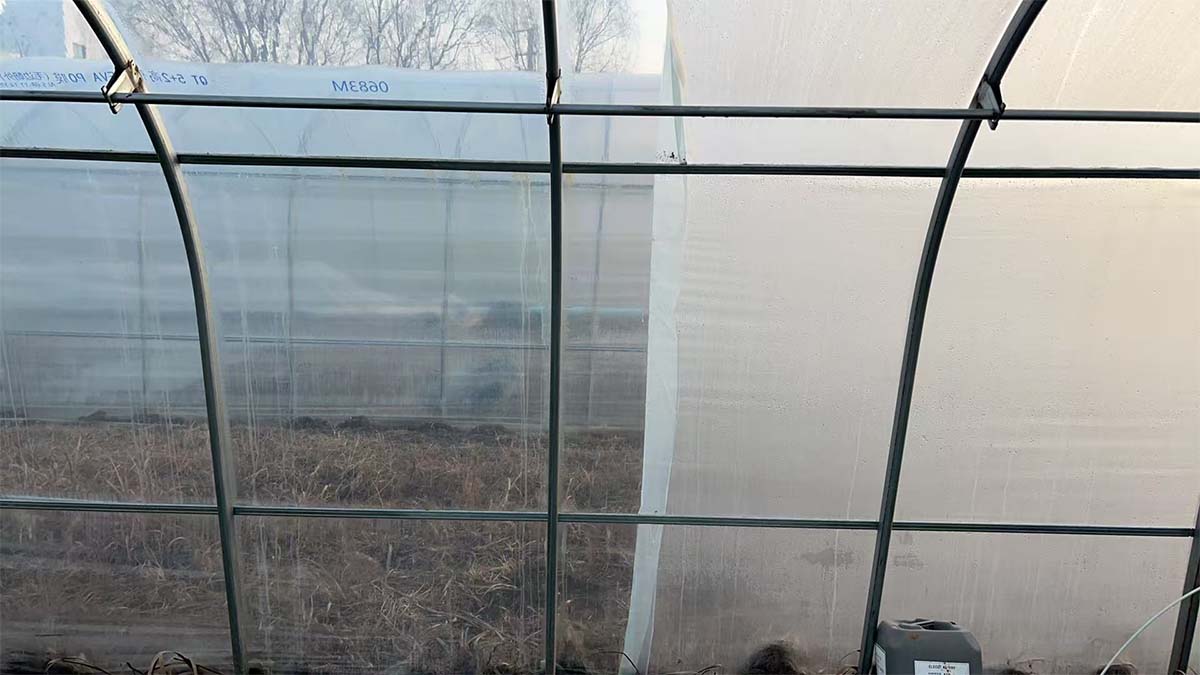
We often see growers blame the film for tearing, when the real culprit is the greenhouse frame itself. Dark metal pipes absorb heat and can easily reach 60°C (140°F) in direct sunlight. When your plastic rests directly against this hot metal, the heat literally cooks the UV stabilizers out of the film, causing localized thermal degradation.
How to fix this:Always paint the top of your metal arches with white, water-soluble acrylic paint, or apply white foam PVC tape to the contact points before pulling the film over the structure. Keeping the frame cool can add an entire year to your film’s commercial lifespan.
ROI and Durability: PO vs. PE Data Analysis
When consulting with our B2B wholesale clients, the conversation always comes down to Return on Investment (ROI). While the initial cost per square meter of PO is higher, the math heavily favors Polyolefin over a standard 5-year commercial growing cycle.
Take a look at how the performance metrics stack up.
Performance Metric
Standard PE Film (3-Layer)
HONREL PO Film (5-Layer)
Average Commercial Lifespan
1 to 3 Years
3 to 5+ Years
Light Transmission (Year 3)
Drops to ~70% (Hazy/Yellow)
Stays above 90%
Anti-Drip Longevity
6 to 18 Months (Washes off)
Lifetime of the film
Puncture Resistance
Moderate
High (Metallocene Core)
5-Year Labor Cost
High (Requires 2-3 Replacements)
Low (Requires 1 Install)
(Source: HONREL Agriculture: PO vs PE Greenhouse Film | Technical Comparison.)
Retaining Optical Clarity for Maximum Yield
Longevity isn’t just about whether the plastic has holes in it; it is about whether it still lets light through to feed your crops. If your standard film survives for 3 years but turns yellow and blocks 20% of the light, it is costing you thousands of dollars in lost yield.
Studies evaluating the effect of different agricultural films on crop growth show that PO films maintain significantly higher light transmittance and illumination intensity compared to older EVA or standard PE films. In these studies, greenhouses covered with PO film demonstrated superior light penetration (over 80% transmittance even under specific aging test conditions), leading to enhanced chlorophyll content and crop productivity.
Our PO film stays optically clear, feeding your crop’s photosynthesis engine for its entire lifespan. The permanent anti-drip nano-coating on the interior layer ensures that condensation sheets flat and runs down the sides, rather than forming droplets that reflect sunlight away from your plants.
Holistic Climate Control to Support Your Roof
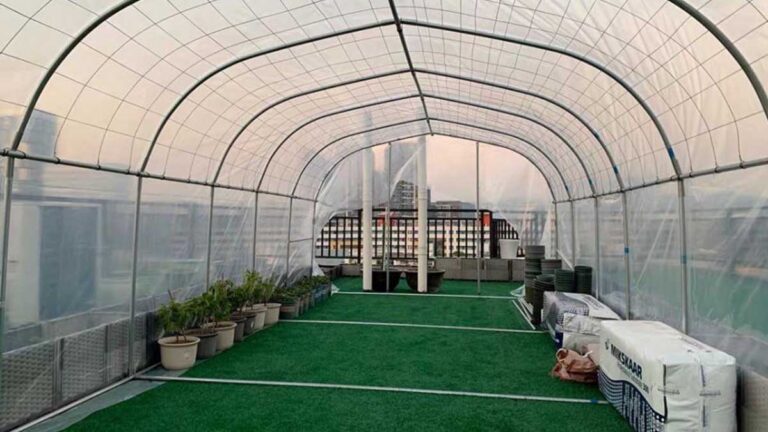
To get 5+ years out of your greenhouse cover, you cannot just install it and forget it. You need to manage the environment inside and outside the structure. Your roof is part of a larger agricultural ecosystem, and how you manage the rest of the facility directly impacts the longevity of the plastic overhead.
1. Manage Indoor Humidity from the Ground Up
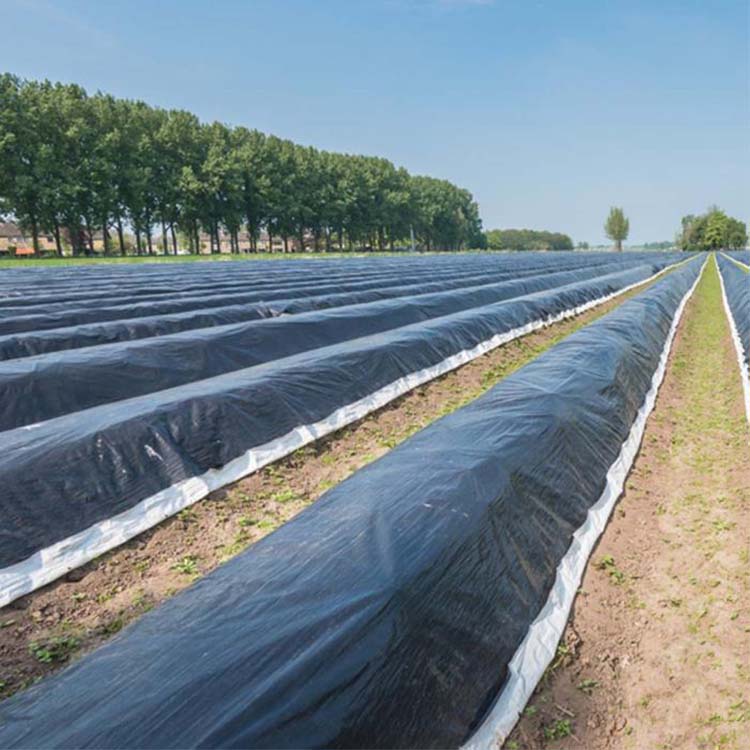
Excessive indoor humidity creates heavy, constant condensation. While our PO film has a permanent anti-drip coating to handle this, reducing the overall moisture load extends the life of all your greenhouse components (including metal frames and fans). We highly recommend laying down a high-quality película de mantillo over your soil beds. This prevents ground evaporation, keeping the greenhouse drier, warmer, and significantly less prone to fungal diseases like Botrytis. When you spray fewer fungicides, your roof lasts longer.
2. Light Deprivation and Specialty Cycles
If you are running commercial cycles that require total blackout periods (such as medicinal cannabis flowering or mushroom cultivation), standard clear plastics won’t work, and painting the roof degrades it quickly. For these specific applications, you need a cover that can handle extreme heat absorption without breaking down.
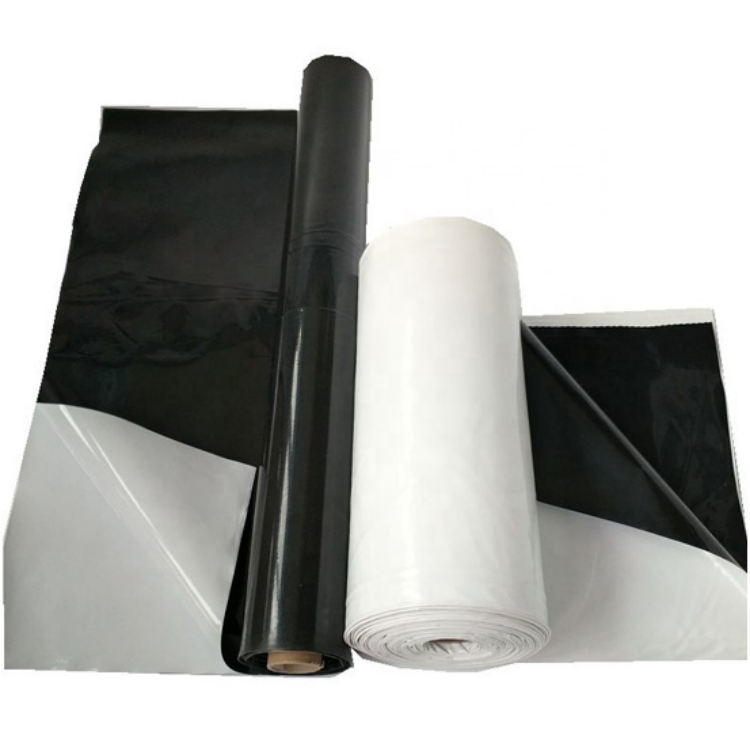
We utilize advanced co-extrusion to produce black and white panda film. The bright white outer layer reflects harsh UV and IR radiation, protecting the polymer matrix and keeping the structure cool, while the dense black core provides 100% opacity. This specialized film offers incredible durability for light-sensitive commercial operations.
3. Physical Windbreaks and Perimeter Defense
Don’t let birds, pests, or high-velocity debris puncture your expensive roof. Installing proper netting on your vents and utilizing windbreaks can significantly reduce the mechanical stress placed on your main greenhouse film. By layering your defenses, you ensure that the PO film only has to fight the sun, not physical impacts.
💡 Best Practice: The “Warm Install” Technique
Polyolefin has a different thermal expansion coefficient than standard PE. It is incredibly strong, but it shrinks in the cold and expands in the heat.
How to fix this: Never install your PO film early on a freezing morning. If you pull it tight when it is cold, it will expand and sag drastically when the noon sun hits it. Sagging leads to wind-whip, and wind-whip destroys plastic. Always install your film on a mild, warm day. Pull it taut. As the temperature drops at night, the film will shrink slightly, tensioning itself perfectly over the frame like a drum.
5 Frequently Asked Questions (FAQs) from Commercial Buyers
We work with commercial farm managers and agricultural distributors globally. Here are the five most common questions we get regarding film longevity.
Q1: How long does PO film actually last in high-UV desert regions?
A: In moderate climates, our PO film easily lasts 4 to 5 years. However, if you operate in desert regions with extreme solar radiation (like the Middle East, North Africa, or Arizona), the standard lifespan drops. For these regions, we manufacture a specialized high-UV recipe (rated for 150+ Kly/year) that guarantees structural integrity for 3 years even under the harshest sun.
Q2: Will using sulfur burners or chemical foggers void the longevity of the film?
A: Heavy use of sulfur and chlorine (common in agricultural fungicides) chemically attacks the UV stabilizers in all plastics. While PO is highly resistant, frequent heavy chemical fogging will accelerate degradation. We advise our B2B clients to check our technical data sheets for strict limits on ppm (parts per million) for sulfur and chlorine exposure to ensure the film reaches its maximum lifespan.
Q3: Is PO film harder to repair if a branch falls and tears it?
A: Because of the high-tech anti-dust nano-coating on the exterior of our 5-layer PO film, standard generic duct tape will not stick properly. If an accident occurs, you must use a specialized, high-adhesion PO repair tape. The good news is that thanks to the metallocene core, PO has exceptional tear-resistance, meaning small punctures will not easily “zipper” into massive, unrepairable rips.
Q4: Can I use PO film directly over a PVC pipe frame?
A: We strongly advise against direct contact. PVC pipes off-gas chlorine compounds as they heat up in the sun. This chlorine reacts directly with the film, destroying the UV stabilizers and causing the plastic to shatter along the arches within a single season. You debe use a physical barrier—like acrylic paint or felt tape—between PVC frames and the PO film.
Q5: What thickness should I order for maximum commercial longevity?
A: For long-term commercial use, we recommend a minimum thickness of 150 microns (6 mil). If you are in an area with heavy snow loads, high winds, or significant mechanical stress, upgrading to 200 microns (8 mil) provides the ultimate structural integrity for a full 5-year commercial lifespan.
Conclusion: Invest in Your Harvest’s Shield
In commercial agriculture, you truly get what you pay for. Buying cheap, low-tier plastic might save you a few cents per square meter today, but it will cost you thousands of dollars in replacement labor, lost light transmission, and compromised crop yield tomorrow.
By upgrading to HONREL AGRICULTURE’s 5-layer Polyolefin (PO) greenhouse film, you are investing in a proven, data-backed barrier that maximizes light transmission, completely eliminates condensation dripping, and stands up to the harshest environmental degradation for years.
Ready to stop replacing your roof every two years? Contact our engineering team today for a custom B2B wholesale quote. We offer factory-direct pricing, customized spectral recipes, and the technical support you need to build a resilient, highly profitable commercial farm.
Obtenga información directa de fábrica y consejos de cultivo
Seleccionar lo correcto Película de efecto invernadero o malla de sombra es fundamental para el éxito del cultivo. Como empresa dedicada Fabricante de redes y películas agrícolasNuestros expertos le ayudan a personalizar la protección UV y la transmisión de luz según su clima local. Comparta los detalles de su proyecto para una solución a medida.
AGRICULTURA HONREL Ingenieros de películas, redes y tuberías de goteo adaptados a su cultivo, clima y estructura: especificaciones, colores, etiquetado y embalaje, respaldados por dibujos y hojas de especificaciones.
Respuesta rápida y revisión rápida
Cotización rápida, revisión de especificaciones y muestras, y soporte práctico de ingeniería. Adaptamos las especificaciones y la documentación rápidamente para que su proyecto se ajuste a los plazos previstos.
Calidad y trazabilidad constantes
Formulaciones estabilizadas a la luz UV, control de calidad del proceso y comprobaciones de laboratorio para componentes ópticos y mecánicos, además de seguimiento a nivel de lote. Se ofrecen informes de COA y pruebas; el embalaje y el etiquetado para exportación están estandarizados.