걱정하지 마세요, 바로 상사에게 연락하세요.
서둘러 닫지 마시고, 저희 사장님과 직접 통화해 주세요. 보통 1시간 이내에 답변드립니다.
온실용 필름 및 농업용 네트
온실 농업 솔루션 분야의 글로벌 파트너.
저희는 SSL/3.0을 사용하여 고객님의 개인정보를 암호화합니다.

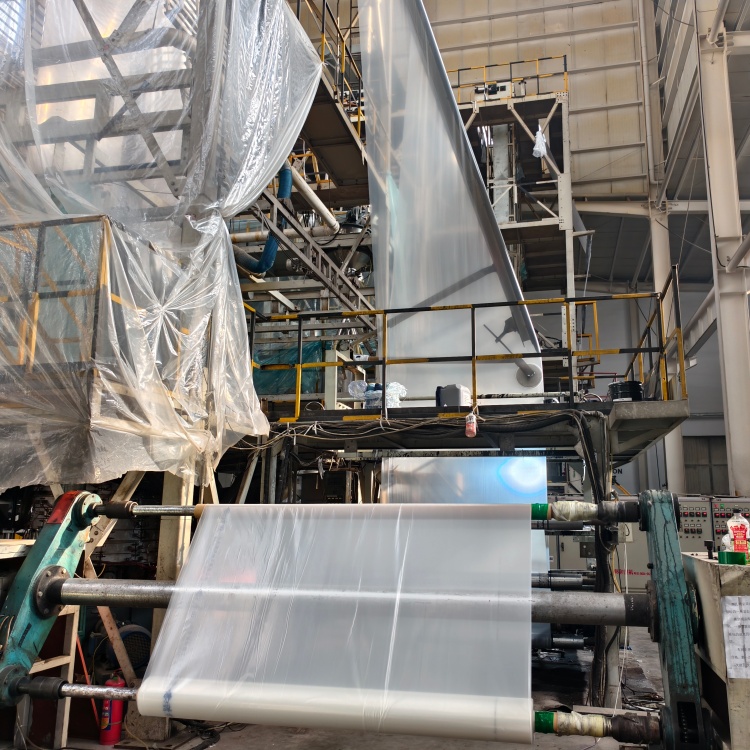
For arid and desert climates, standard construction-grade polyethylene will fail quickly. You need a Durable PE Greenhouse Film specifically engineered using multi-layer co-extrusion, loaded with Near-Infrared (NIR) blocking additives, and protected by advanced UV stabilizers (like HALS).
If you are farming in an arid region—whether it is the intense heat of the Middle East, the dry plains of Sub-Saharan Africa, or the deserts of North America—you know that the environment doesn’t just grow crops; it destroys equipment. We have spoken with countless commercial growers who installed generic “UV resistant” plastic, only to watch it turn yellow, become brittle, and shatter in a dust storm less than a year later.
Here is the direct answer to surviving desert farming:
For arid and desert climates, standard construction-grade polyethylene will fail quickly. You need a Durable PE Greenhouse Film specifically engineered using multi-layer co-extrusion, loaded with Near-Infrared (NIR) blocking additives, and protected by advanced UV stabilizers (like HALS).
By upgrading to this specialized film, you achieve three massive benefits:
As a Solution Specialist at 혼렐 농업, I spend my days engineering polymer formulas for extreme environments. In this guide, we are going to look at the exact physics of why films fail in the desert, analyze verified academic data, and show you how to source the right wholesale materials for your facility.
In arid regions, the environment attacks your greenhouse cover in three specific, highly destructive ways. Standard mono-layer plastics are completely unequipped for this war.
Look, the main reason your greenhouse turns into an oven is the Near-Infrared (NIR) light. It’s about half of all that solar energy hitting your roof, but here’s the kicker: your plants don’t even use it. It does absolutely nothing for photosynthesis. All it does is dump a massive amount of heat inside your setup. Once that heat gets in, it’s trapped, and your temps just skyrocket. That’s how you end up with heat stress, cracked fruit, and sunscald—basically ruining your harvest before it even gets started.
In the desert, wind isn’t just air; it is sandpaper. A scientific study investigating the degradation of plastic covers in the arid climate of Riyadh, Saudi Arabia, revealed that the combination of high temperatures, dust, and sand-wind induces massive surface degradation on standard plastics. Within just three months of exposure, the abrasive sand scratched the film so badly that Photosynthetically Active Radiation (PAR) transmittance dropped by an incredible 15.3%. If your plants lose 15% of their light, you lose 15% of your yield.
The sun’s basically a laser out in the desert. It snaps the molecular bonds in the plastic, and that UV index is just relentless.
It gets worse, too—if you’re spraying chemicals inside the house, they react with the hot plastic and kill off your UV protectors. That’s why you see so many covers turn yellow and just shatter into a million pieces. It’s a total mess.
To combat these three killers, we don’t just make the plastic thicker; we change the chemistry. Here is how advanced PE film is engineered for the desert.
Standard cheap films are mono-layer (one single sheet of plastic). At HONREL, we utilize multi-layer co-extrusion. According to extensive reviews on covering materials in arid regions, standard Low-Density Polyethylene (LDPE) loses its efficiency rapidly due to sand-wind abrasion. To fix this, manufacturers must incorporate Ethylene-Vinyl Acetate (EVA) and Metallocene (mPE) into the polymer blend. By layering these highly elastic polymers in the core, our film absorbs the impact of high winds and sand without tearing or scratching deeply.
To solve the heat problem, we inject advanced nano-particles and interference pigments into the outer layer of the film. NIR Additives
Think of these as a filter. They let in all the PAR light—the stuff your plants actually eat—but they kick out the NIR heat.
The guys over at KAUST in Saudi Arabia actually proved this works. They found that stuffing the film with nanoparticles like Cesium Tungsten Oxide blocks the near-infrared sun passively. It keeps your internal temps way down, which is a lifesaver for young crops that can’t handle the heat yet.
To keep the plastic from falling apart, we pack the outer layer with HALS. These things soak up the UV rays and just vent ’em off as heat before they can do any damage. It’s how the film stays flexible and clear for years instead of turning into a yellow, brittle mess.
When our B2B clients ask about the ROI of upgrading, we look at the data.
| 특징 | 표준 PE 필름 | HONREL Arid-Spec PE Film |
| Manufacturing | Mono-layer | 3-Layer or 5-Layer Co-extrusion |
| NIR Heat Blocking | None (Traps heat) | High (Lowers temp by up to 4-5°C) |
| Sand-Wind Resistance | Poor (Loses 15% PAR in 3 months) | High (Anti-scratch nano-coating) |
| Light Diffusion | Low (Direct beams burn plants) | High (Scatters light evenly) |
| 내구성 | 1 Year (Turns yellow/brittle) | 3 to 5 Years (HALS Stabilized) |
Agronomic Proof: An MDPI study evaluating diffusive and reflective PE films in an arid environment demonstrated that cucumbers grown under advanced diffusive covers achieved a significantly higher crop yield (12.3 kg/m ²) compared to standard controls (10.1 kg/m ²). The study proved that the diffusive nature of the film increased the ratio of diffuse to global solar radiation, improving relative humidity and significantly boosting vegetative biomass.
Even the most advanced plastic will fail if you install it poorly. Here are the expert best practices we deploy for our commercial clients.
💡 Best Practice: The “Warm Install” Method
Polyethylene expands in the heat and shrinks in the cold. Never install your film at dawn when it is freezing. Install it during the warm part of the morning, and pull it as tight as a drum. As the temperature drops dramatically at night (a common desert occurrence), the film will shrink and tension itself perfectly over your frame. A tight film prevents wind-whip, which is the primary cause of friction tears and structural failure during desert sandstorms.
💡 Best Practice: Protect the Frame Contact Points
Steel greenhouse frames in the desert can reach 60°C+ (140°F+) in direct sunlight. If your plastic rests directly on boiling hot steel, it cooks the UV stabilizers out of the film (thermal degradation). You must paint the top of your metal arches with white acrylic paint or apply thermal barrier tape. This simple insulation prevents localized melting and adds at least a full year to your cover’s operational lifespan.
A great roof is only half the battle in the desert. You must manage soil evaporation. By lining your garden beds with our high-quality 멀칭 필름, you trap irrigation moisture in the root zone and prevent it from evaporating into the hot greenhouse air. This drastically lowers your water usage. Furthermore, if you are running photoperiod cycles for sensitive crops in bright desert environments, you can line your sidewalls with our black and white panda film to block out intense lateral sunlight and achieve 100% light deprivation.
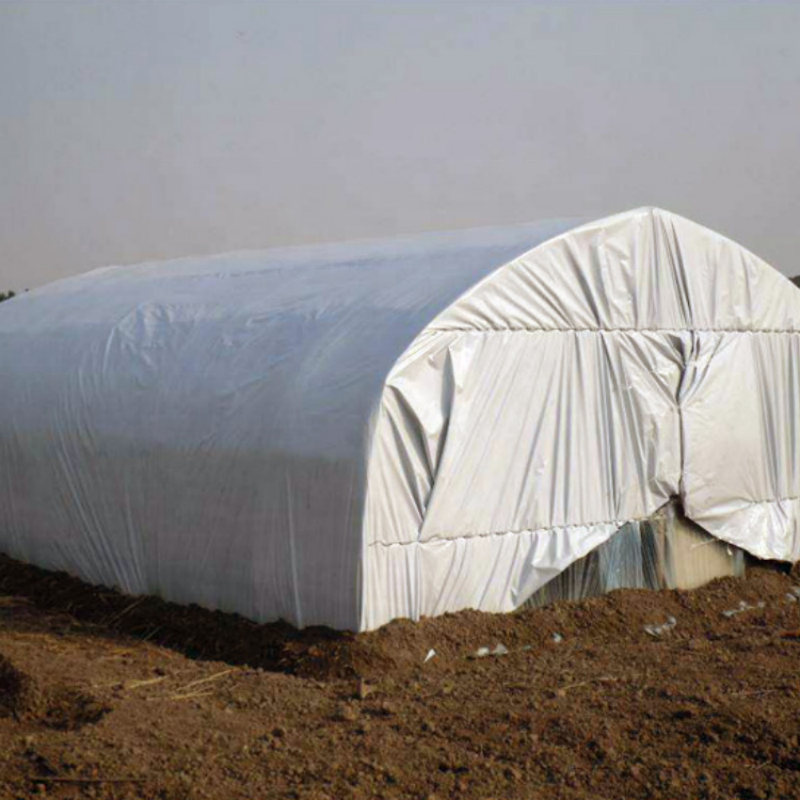
If you are an agricultural distributor or a mega-farm operator, buying retail plastics destroys your profit margins. You need a dedicated factory partner who understands polymer chemistry.
~에 혼렐 농업, we don’t just sell plastic; we engineer climate solutions. Depending on your exact geographic location, we calculate your region’s solar radiation (Kly/year) and customize the UV stabilizer recipe of the film to ensure it survives.
A: Nope. It just breaks the light up so it hits the whole plant, not just the tops. You’re still getting all the PAR you need, just without the sun scorching your canopy. It’s actually better—gets light down into the bottom leaves where it usually can’t reach.
에이: Zero chance. Plants don’t even use that NIR stuff for growing—that’s just pure heat. We’re just stripping out the useless infrared and letting the “real” growing light through. All the growth, none of the heat stress. Simple as that.
에이: Don’t overcomplicate it. These have an anti-static coating, so most of the time the wind just blows the dust right off. If a sandstorm really coats the roof, just hit it with a low-pressure hose. Keep the brushes away from it. You’ll scratch the surface and ruin the clarity for good.
에이: In the desert, cloudless nights cause rapid heat loss (radiant cooling), and the temperature inside a thin plastic greenhouse can actually drop slightly lower than the outside air. To combat this, we add “Thermic” (EVA) additives to the inner layer of the film, which traps long-wave infrared heat inside the greenhouse, keeping your plants warm until sunrise.
에이: Because we are a direct manufacturer operating massive extrusion lines, our MOQ is generally based on tonnage or full container loads. Buying in bulk guarantees you the absolute best commercial B2B pricing on the global market.
In the desert, nature is completely unforgiving. Buying cheap, mono-layer plastic is the most expensive mistake you can make because you will end up paying for replacement labor and lost crop yields within the first few months.
By upgrading your facility with HONREL’s Durable PE Greenhouse Film, you are investing in a proven, data-backed barrier. You actively lower your internal temperatures, eradicate the threat of sand-wind abrasion, and guarantee a 3 to 5-year lifespan under the most brutal sun on earth.
Ready to stop fighting the desert and start mastering it?
Partner with 혼렐 농업 today. Contact our engineering team for a custom B2B wholesale quote, and let us build the perfect polymer shield for your commercial farm.
올바른 것을 선택하세요 그린하우스 필름 또는 차광망은 작물 성공에 매우 중요합니다. 헌신적인 사람으로서 농업용 그물 및 필름 제조업체저희 전문가들이 고객님의 지역 기후에 맞춰 자외선 차단 및 광투과율을 맞춤 설정해 드립니다. 맞춤 솔루션을 위해 프로젝트 세부 정보를 알려주세요.