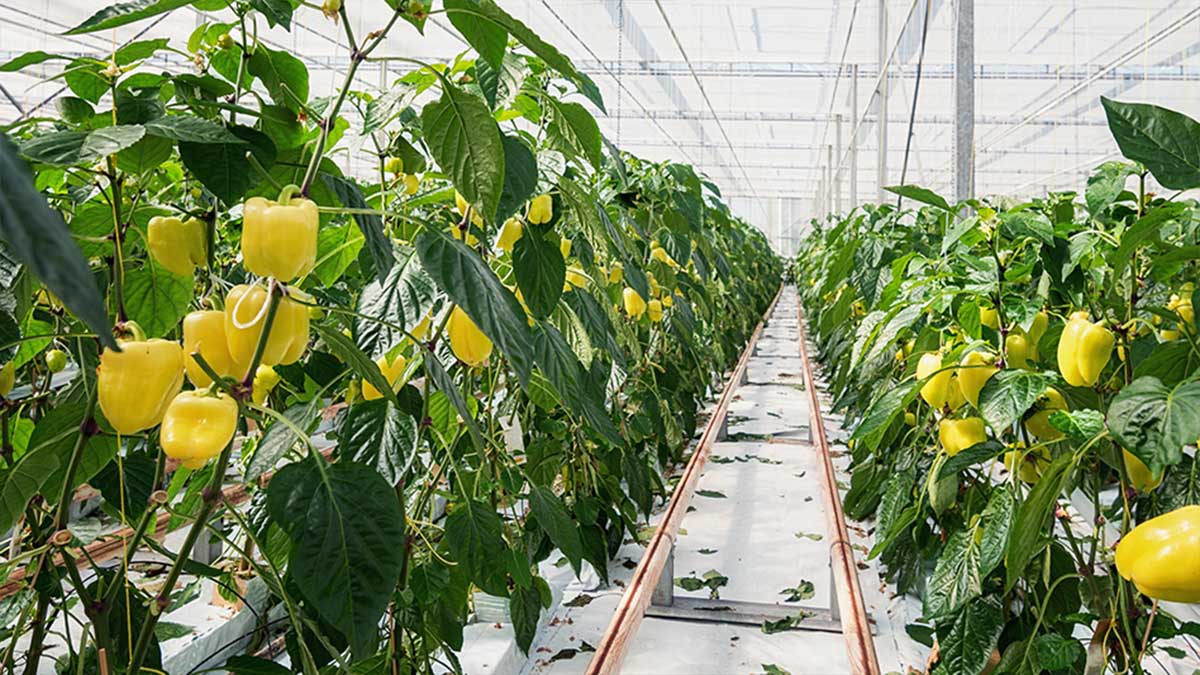
If you’ve ever grown commercial peppers, you know they’re a total pain. They love the heat and light, sure, but they’re also incredibly sensitive.
It’s a balancing act. If your greenhouse temps swing too much, or if that midday sun gets too harsh, you’re in trouble. You’ll see the blossoms just drop right off, the fruit gets scorched with sun scald, and the plants just stop growing.
We talk to pepper growers every week who are losing nearly a third of their harvest. It’s a massive hit to the wallet, all because their plastic isn’t up to the task.
Here is the direct answer and the ultimate solution for your farm:
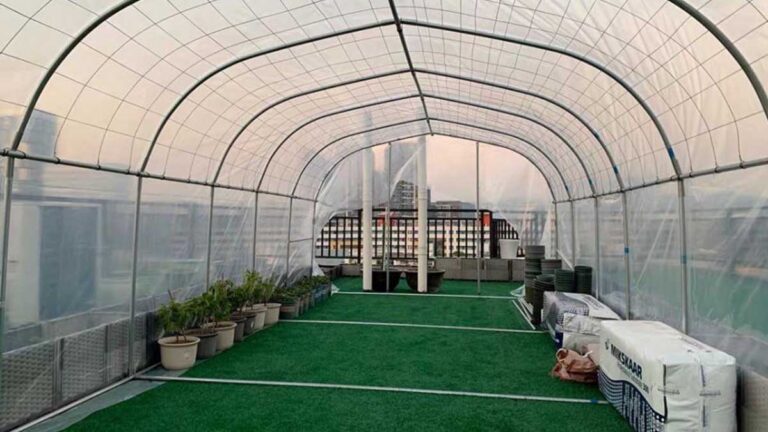
To create the perfect microclimate for chili peppers, you must cover your high tunnels and multi-span greenhouses with premium, 5-layer clear PE covers. Upgrading to an engineered clear polyethylene film provides your pepper plants with up to 90% light transmittance (PAR) to drive aggressive photosynthesis, while simultaneously utilizing a calculated 20% light diffusion rate. This diffusion scatters the incoming light, essentially mimicking natural cloud cover. It prevents upper-canopy leaf scorch and ensures that light penetrates deep into the lower branches, significantly increasing your total fruit set and premium-grade harvest.
As a Solution Specialist at AGRICULTURA HONREL, I have spent years working with agronomic data, polymer engineering, and large-scale facility design. In this comprehensive guide, we are going to dive deep into the exact plant biology of commercial pepper cultivation, analyze verified academic data on how plastics increase yields, and show you why partnering with a direct factory for your Película PE para estufas is the most profitable operational decision you can make.
Why Chili Peppers Demand High-Quality Clear PE Covers
Look, if you’re growing peppers, you aren’t growing lettuce. These things are energy hogs. To get those thick walls and that deep color everyone wants, they need a ton of sun over a long, hot season. Think of your greenhouse roof as the engine for the whole operation—if the engine is junk, the harvest is junk.
The PAR Light Engine
Peppers live and die by PAR light. The problem with that cheap, unbranded plastic you find at the hardware store is that it’s usually cloudy on day one. Give it a few months of UV, and it turns yellow. Once it’s yellow, it’s basically a filter—it’ll choke out up to 20% of the actual growing light your plants are begging for.
Our clear PE covers are a different beast. They hit 90% light transmittance, easy. By letting all that usable light in, you’re basically putting your plants’ growth into overdrive. You’ll see faster cycles, stems that can actually hold a heavy load, and you’ll be hitting the market way earlier when the prices are still high. It’s a no-brainer.
The Magic of Light Diffusion (Preventing Sun Scorch)
While peppers absolutely love light, direct, focused beams of intense summer sunlight act like a magnifying glass. This causes severe sun scald on the sensitive skin of developing peppers. Sun-scalded peppers develop white, blistered patches and are instantly downgraded from “premium fresh market” to “processing grade” (or simply thrown away), effectively destroying your profit margin.
- The HONREL Solution: We engineer our clear films with a specific light scattering mechanism built into the polymer matrix (typically around a 20-22% diffusion rate). This converts harsh, direct sunlight into soft, diffuse light. The scattered light wraps around the leaves and reaches the fruits hiding in the dense lower canopy, ensuring uniform ripening, better coloration, and zero risk of physical burns.
Data-Driven Benefits: How Clear Polyethylene Increases Pepper Yields
We do not rely on guesswork or marketing fluff when advising our B2B commercial clients; we rely entirely on agronomic science. Academic studies prove time and time again that combining clear greenhouse covers with proper root zone management drastically impacts pepper yields.
1. High Tunnels, Roof Materials, and Pepper Production
A comprehensive study published in the International Journal of Vegetable Science (Taylor & Francis) evaluated how different plastic roof materials affect bell pepper production in high tunnels.
- The Findings: The researchers analyzed clear polyethylene covers against various shade cloths. They determined that managing the Photosynthetic Photon Flux Density (PPFD) and temperature through clear polyethylene roofs is critical for plant growth. Clear poly tunnels were highly effective at accumulating “total heat units,” which directly resulted in increased early yields and improved the morphological quality of the bell pepper fruit (increasing the highly desirable 3- and 4-lobed fruits).
(Source: Plastic Roof Materials as They Affect Bell Pepper Production in High Tunnels, C. Zambrano-Vaca et al.)
2. Early Emergence and Root Zone Temperature (RZT)
The American Society for Horticultural Science (ASHS) also conducted extensive field trials on pepper cultivation. They discovered that soil temperature and early stand establishment are the most critical factors for a successful, high-yield season.
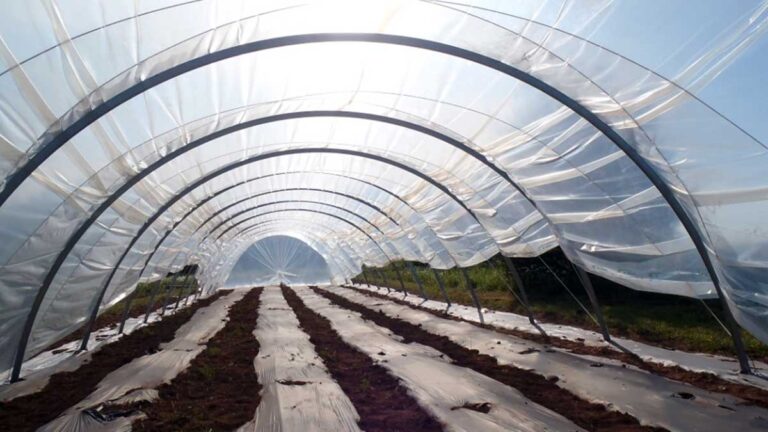
- The Findings: In their trials, researchers found that combining clear plastic covers (used as mulch and low tunnels) with a raised bed system increased early pepper seedling emergence to a staggering 60%, compared to 0% when no plastic was used during the cooler early-season planting. The clear plastic effectively trapped incoming thermal heat, keeping the Root Zone Temperature (RZT) consistently above 15°C (59°F), which is biologically mandatory for pepper root development and nutrient uptake.
(Source: ASHS – Clear Plastic Mulch Improved Seedling Emergence of Direct-seeded Pepper, J. Cavero et al.)
💡 Best Practice: The Ground Game
An incredible, high-transmittance clear roof is only half the battle when farming peppers. To maximize your yield, you must control the humidity, soil temperature, and weed competition on the floor of your greenhouse.
How to do it properly: Always line your pepper rows with specialized filme de cobertura morta. As confirmed by the ASHS study mentioned above, plastic mulch prevents soil crusting, locks in expensive irrigation moisture, and completely blocks weed competition. This creates a perfect operational synergy: the clear PE roof provides the optimized light and canopy heat, while the mulch film stabilizes the root zone and prevents humidity spikes that cause fungal diseases.
The HONREL Engineering Advantage: 5-Layer Technology
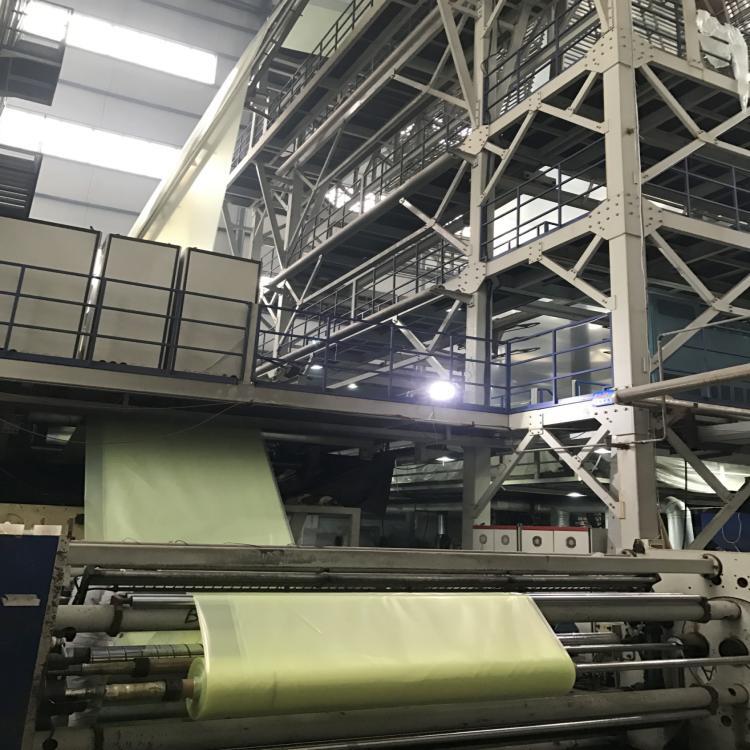
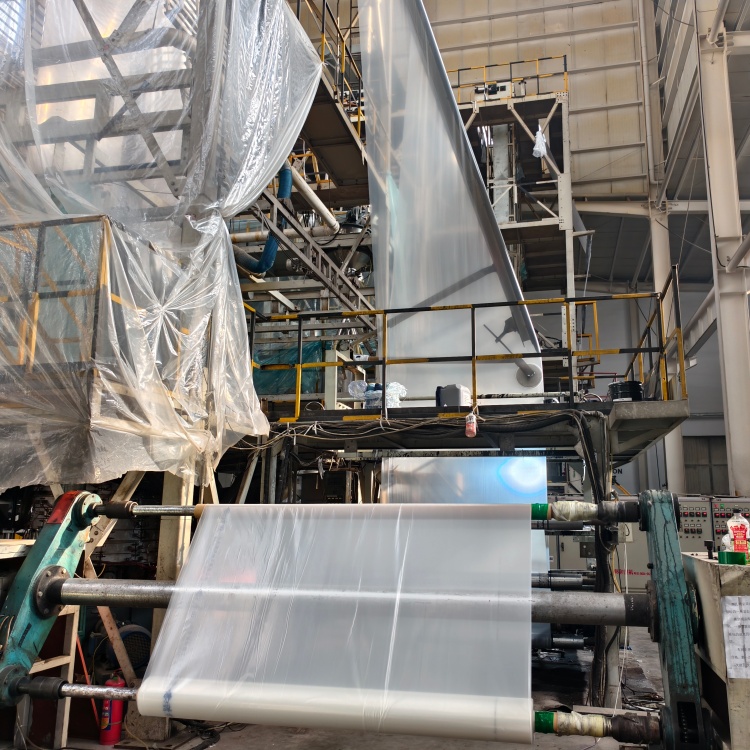
Not all greenhouse plastic is created equal. Hardware store utility plastic will turn brittle and tear during your first major storm. As a highly experienced fabricante de filme PE agrícola, we utilize advanced 5-layer co-extrusion technology to build structural covers that survive the harsh realities of commercial farming.
1. UV Blocking and Anti-Dust Exterior (Layer 1)
The sun breaks down standard plastic in a matter of months. To combat this, we load our exterior layer with premium Hindered Amine Light Stabilizers (HALS). This chemical package absorbs destructive UV radiation, ensuring the film lasts 3 to 5 years depending on your local climate. Furthermore, we integrate an anti-dust nano-coating that ensures the film sheds dirt, sand, and smog, maintaining that crucial 90% light transmittance year after year.
2. Extreme Tear Resistance (The Core: Layers 2, 3, 4)
High winds, heavy snow loads, and hail will quickly shred weak, mono-layer films. In our 5-layer process, we use a proprietary blend of Metallocene (mPE) and Linear Low-Density Polyethylene (LLDPE) in the three core layers. This provides incredible transverse and longitudinal tear strength. The film is designed with high elasticity; it stretches under severe wind or snow loads without snapping, returning to its shape once the load is removed.
3. Permanent Anti-Drip Protection (The Interior: Layer 5)
Look, you pack a greenhouse full of peppers and the humidity is gonna go nuts. You’re gonna get condensation on the roof—period.
In a cheap setup, that water bunches up into big, nasty drops. When the sun hits ’em? They turn into tiny magnifying glasses and burn the hell out of your plants. Even worse, when they finally drip, they splash dirt everywhere and kick-start a Botrytis nightmare. Once that gray mold gets a foothold, it’s game over.
That’s why we bake the anti-drip stuff right into the inner layer. Instead of big drops, the water just sheets off to the sides. No “lens effect,” no splashing, and one less thing to worry about when it comes to mold.
💡 Best Practice: Proper Tensioning
Tension is the absolute secret to a long-lasting greenhouse cover. Even our toughest, metallocene-reinforced 5-layer film will suffer from mechanical fatigue if allowed to flap violently in the wind.
The Fix: Always install your clear PE covers on a mild, warm day. Pull the plastic as tight as a drum skin before locking it into your wiggle wire channels. As the ambient temperature drops at night, the polyethylene will shrink slightly, tensioning itself perfectly against your steel frames.
Crucial Bonus Tip: Paint any metal arches that directly touch the plastic with white, water-based acrylic paint. Dark steel can easily reach 60°C (140°F) in the sun. This stops the metal from overheating and cooking the UV stabilizers out of the film, preventing localized thermal tears.
Why Source Factory Direct from HONREL AGRICULTURE?
If you are a greenhouse contractor, an agricultural distributor, or managing a massive multi-hectare farm, buying retail rolls from a middleman completely destroys your profit margins and limits your options. You need a reliable, high-volume factory partner.
No AGRICULTURA HONREL, we don’t force you into a “one-size-fits-all” retail box. We customize our extrusion lines to fit your specific B2B operational needs:
- Custom Thicknesses: Whether you need standard 150 microns (6 mil) for temporary high tunnels or heavy-duty 200 microns (8 mil) for extreme weather zones and high wind areas, we manufacture it exactly to your architectural specifications.
- Massive Roll Widths: We produce custom widths (ranging from 4 meters up to 20 meters wide) that allow you to cover massive multi-span structures with zero seams. Fewer seams mean drastically reduced installation labor costs and a significantly lower risk of wind failure.
- A Complete Holistic Supplier: If your specific pepper crop requires superior anti-fog performance and ultra-high glass-like clarity, we can seamlessly upgrade your order to our premium 5-layer greenhouse po film. If you are running an adjacent facility that requires strict light deprivation to force blooming, or you need to partition your warehouse, we also manufacture 100% opaque, heavy-duty black and white panda film. We are your one-stop factory for all agricultural polymer needs.
5 Frequently Asked Questions (FAQ) from Commercial Pepper Growers
We consult with global B2B clients and facility managers daily. Here are the five most common questions we receive regarding our clear PE covers.
Q1: Will a clear PE cover make my greenhouse too hot for chili peppers in the summer?
UM: Peppers love heat, but extreme heat (over 35°C/95°F) does cause blossom drop. Our clear PE covers with ~20% light diffusion help prevent localized “hot spots” that burn plants. However, if you farm in a severe desert climate, let us know. We can customize your film recipe with Near-Infrared (NIR) blocking additives to naturally cool the structure, or you can supplement the greenhouse with automated internal shade cloth.
Q2: How long does the anti-drip feature actually last on the interior?
UM: Standard cheap PE films use “migratory” soapy additives that wash away in 6 to 12 months. Because we utilize advanced 5-layer co-extrusion, our premium anti-drip coating is heavily integrated into the innermost layer. It is designed to last for the realistic 3 to 5-year lifespan of the film itself, ensuring your crop stays dry season after season.
Q3: Can I slap this clear PE film straight onto a PVC frame?
UM: Honestly? Don’t do it. PVC is a film-killer. When it gets hot in the sun, it starts off-gassing chlorine, and those fumes eat the UV protectors in the plastic for breakfast. You’ll see the film turn yellow and just shatter right along the arches way before it should. If you have to use PVC, you’ve got to put a barrier in between—use some felt tape or white acrylic paint so the plastic never actually touches the pipe.
Q4: Does it matter which side faces in?
UM: Yeah, big time. These are 5-layer films, and we put the anti-dust stuff on the outside and the anti-drip on the inside. If you flip it, the anti-drip just won’t work and you’ll have water dripping all over your crops. We mark “Inside” and “Outside” on every single roll, so just make sure your crew keeps an eye on the labels during the install.
Q5: What’s the MOQ for buying direct?
UM: Look, we’re a factory running massive extrusion towers, not a retail shop. Our MOQs usually start at 1 or 2 tons depending on the specs you need. It’s a bit of a jump, but that’s how you bypass the middleman and lock in the actual bottom-dollar wholesale price. Buying in bulk is the only way the numbers really make sense on the global market.
Conclusion: Stop Settling for Bad Plastic
In commercial pepper farming, your greenhouse cover is your first line of defense against the elements and your primary optical growth engine. Buying cheap, mono-layer plastic is the most expensive operational mistake you can make, leading to torn roofs, sun-scalded peppers, blossom drop, and devastated yields.
By upgrading your facility to HONREL’s 5-Layer Clear PE Covers, you are investing in a proven, data-backed agricultural tool. You maximize PAR light transmission, eliminate sun scald through intelligent light diffusion, and guarantee a resilient 3 to 5-year lifespan for your structure.
Ready to maximize your chili pepper yield and lower your facility’s overhead?
Partner with AGRICULTURA HONREL today. Contact our engineering and sales team for a custom B2B wholesale quote, and let us build the perfect polymer shield for your commercial farm.