If you manage a commercial orchard, vineyard, or a high-value vegetable farm, you already know the harsh reality of the fresh produce market: color dictates your profit margin. An apple, strawberry, or tomato that is bright, evenly colored, and vibrant is classified as “Premium Grade” and sells for top dollar. On the other hand, poorly colored, pale fruit gets downgraded to the juice processing plant for pennies.
The biggest challenge commercial growers face is light distribution. The top of your plant canopy gets plenty of sun, but the inner and lower fruits are left in deep shade, stalling their ripening process.
Here is the direct answer and the ultimate solution for your farm:
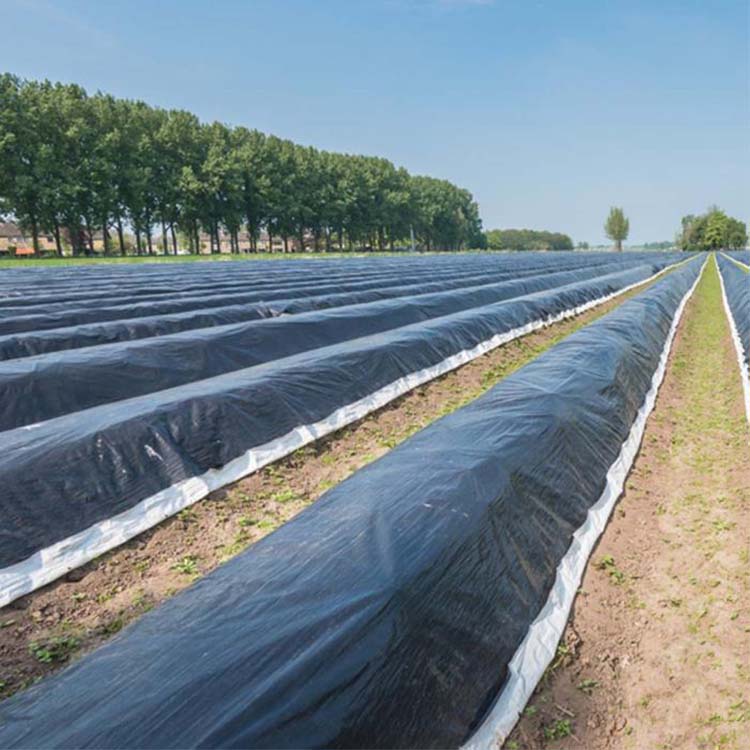
To drastically improve your fruit coloring and maximize your yield value, you need to install high-reflection black and white mulch film on your soil. By installing this film with the white side facing the sky and the black side facing the ground, you turn your entire field into a massive light reflector. The bright white surface bounces diffuse light back up into the shaded areas of your plants, triggering rapid pigment production in the fruit. Simultaneously, the opaque black underside completely blocks sunlight, instantly starving and killing weeds.
At HONREL AGRICULTURE, we specialize in engineering advanced polymer solutions for commercial agriculture. In this comprehensive guide, we are going to eliminate the guesswork. We will break down the exact plant biology of light reflection, share verifiable scientific data on how this film increases your premium harvest, and provide our expert best practices for installation.
The Science of Spectral Reflection and Plant Biology
To understand why this specific agricultural plastic is transforming commercial farming, we need to look closely at how light interacts with plant physiology. Sunlight from above is not always enough.
The White Side: Driving Anthocyanin Production
The deep red and purple colors in fruits like apples, cherries, and strawberries are caused by pigments called anthocyanins and flavonoids. However, plants do not produce these pigments automatically; they require direct stimulation from specific wavelengths of light, primarily UV and visible light (PAR – Photosynthetically Active Radiation).
- The Problem: In a dense canopy, the upper leaves absorb 90% of the PAR. The downward-facing fruits sit in dark shadows and remain green or pale.
- The HONREL Solution: The bright white surface of our specialized mulch film is engineered to reflect a massive percentage of incoming UV and PAR light. Instead of acting like a mirror that creates harsh, burning beams, the white surface creates diffuse light. This scattered light bounces at multiple angles, wrapping around the fruit and lighting up the underside of the canopy. This directly stimulates the genetic pathways responsible for red skin coloration and sugar (Brix) accumulation.
The Black Side: Total Weed and Microclimate Control
While the top of the film acts as your light engine, the bottom layer is doing the heavy lifting for your soil’s ecosystem.
- 100% Weed Suppression: Standard transparent films let light through, acting as a greenhouse for weeds. Because the black layer of our dual-color film is completely opaque, weed seeds in the soil cannot photosynthesize. They die off immediately, virtually eliminating your need for expensive, labor-intensive chemical herbicides.
- Moisture Retention: The film acts as an impermeable vapor barrier, locking irrigation water into the root zone and preventing evaporation.
Verifiable Data: How Reflective Mulch Boosts Your Profits
When B2B clients purchase wholesale agricultural plastics from our factory, they demand a Return on Investment (ROI). We do not rely on guesses; we rely on agronomic data. The scientific community has extensively proven the value of reflective groundcovers.
Case Study 1: Doubling the “Blush” in Apples
A comprehensive study published by the MDPI evaluated the spatial and temporal enhancement of color development in Fuji and Pacific Rose apples using reflective white materials.
- The Findings: The researchers found that utilizing a white reflective groundcover doubled or even tripled the blush (coloration) on fruits located near the tree trunk (deep inside the canopy) compared to the grass control group. Furthermore, the reflective mulch significantly improved the blush by 20% on fruits located on the periphery of the tree.
- The Financial Impact: By increasing the color uniformity across the entire tree, growers drastically increase the total volume of “First Pick” premium fruits.
(Source: MDPI – Spatial and Temporal Enhancement of Colour Development in Apples.)
Case Study 2: Increasing PAR Light for Honeycrisp Apples
The American Society for Horticultural Science (ASHS) conducted a specific trial measuring light penetration and skin color in ‘Honeycrisp’ apples.
- The Findings: When PAR was measured within the tree canopy, the reflected and diffuse PAR between rows was only 3% to 4% over standard grass. However, over the reflective groundcover plots, the reflected PAR jumped to a massive 27% to 31%.
- The Result: The study concluded that the use of reflective ground cover significantly increased the amount of fruit achieving greater than 25% red skin color.
(Source: ASHS Journals – Reflective Ground cover Improves Fruit Skin Color.)
💡 Best Practice: Strategic Application Timing
A common mistake commercial growers make is laying down reflective film too early in the season. If you are using this film in a perennial orchard specifically for fruit coloring, do not lay it down in the spring.The Expert Method: According to the agronomic studies mentioned above, the required timeframe for sufficient anthocyanin synthesis is incredibly fast. You should install the reflective mulch in your alleyways just 2 to 4 weeks before your anticipated harvest date. Laying it out for only this short, intense period ensures the white surface remains perfectly clean, free from dust and tractor mud, maximizing its reflective power exactly when the ripening fruit needs it most.
Beyond Color: Temperature Control and Pest Repellency
While fruit coloring is the primary economic driver, upgrading to dual-color reflective film provides two massive secondary benefits that protect your yield.
1. Root-Zone Cooling in High Heat
If you farm in a hot, arid climate, utilizing standard black plastic can be dangerous in the summer. Black absorbs solar radiation and transfers that heat into the soil, which can cook delicate root systems and cause heat stress (leading to blossom drop in vegetables).
The bright white layer on our dual-color film acts as a thermal shield. It reflects infrared heat away from the ground, keeping the soil microclimate significantly cooler and more stable than bare dirt or black plastic.
2. Optical Disorientation of Pests
Think of aphids and thrips as more than just a nuisance; they’re basically tiny, winged bioterrorists carrying nasty viruses straight to your garden. These guys navigate using a pretty simple trick—they look for the contrast between dark dirt and green leaves to find their next meal. But, if you throw down a bright, reflective white mulch, you’re essentially flash-banging them. That reflected UV light completely fries their internal GPS. They get so dizzy and disoriented that they can’t even figure out which way is up, let alone where to land. It is a total pro move because you’re basically building an invisible force field around your crops without touching a single drop of pesticide.
Manufacturing Excellence: The HONREL Advantage
As a B2B buyer, you know that plastic failure in the field is a financial disaster. At HONREL AGRICULTURE, we manufacture our films to survive the brutal realities of commercial farming. We do not just paint our plastics; we engineer them.
Virgin Resins for Ultimate Strength
We never utilize cheap, recycled resins that become brittle and tear under the weight of tractor tires or walking workers. Our films are manufactured using 100% virgin LLDPE (Linear Low-Density Polyethylene) and LDPE. This is the exact same high-tensile, puncture-resistant backbone that we use to produce our heavy-duty structural PE film for agricultural roofs.
Advanced Co-Extrusion Technology
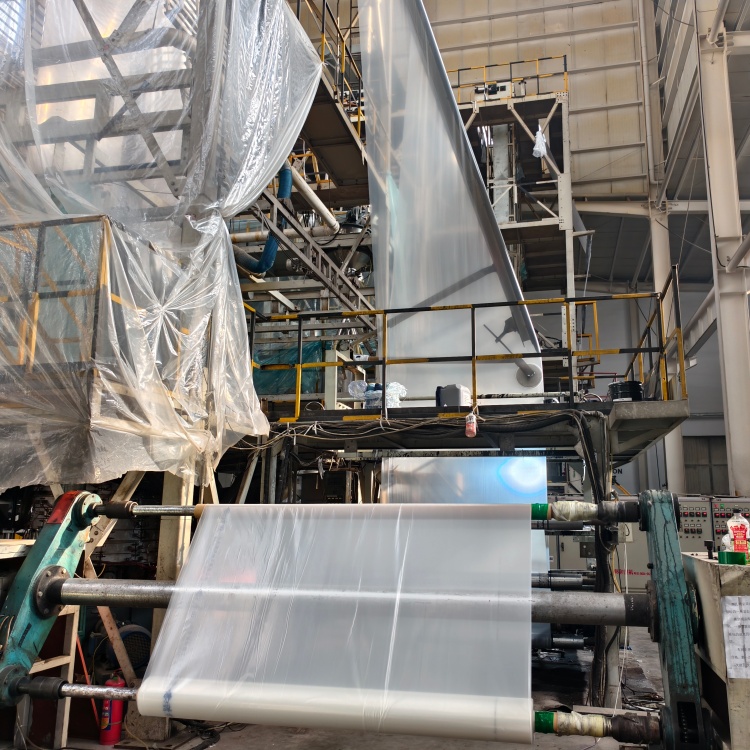
Just like our premium, highly durable PO film, our dual-color ground covers are manufactured using state-of-the-art multi-layer co-extrusion technology. This means the white reflective layer and the black light-blocking layer are fused simultaneously at the molecular level during manufacturing. They will never peel, separate, or delaminate in the field, even under extreme temperature fluctuations.
Industrial Scaling: For our clients operating massive light-deprivation setups, indoor cannabis facilities, or mushroom farms, we scale this exact same reflective, dual-color co-extrusion technology to manufacture our ultra-thick black and white panda film. It provides the same brilliant light reflection internally while acting as a 100% opaque, heavy-duty structural cover for greenhouses.
💡 Best Practice: The “Tight Drum” Installation
When laying out the film using a mechanical tractor implement (especially for row crops like tomatoes or strawberries), tension is everything. Ensure your tension wheels and burial discs are calibrated correctly. The film must be stretched tight over the soil profile like a drum skin.Why? A flat, tight surface reflects diffuse light upward in a highly uniform, predictable pattern. If the plastic is laid loosely, it creates wrinkles and valleys. These valleys trap shadows, collect rainwater, and allow the wind to catch the plastic, which creates a pumping action that pulls moisture out of your soil. Tight film means maximum light reflection and maximum durability.
5 Frequently Asked Questions (FAQ) from Commercial Growers
We speak with large-scale orchard managers and agricultural distributors every day. Here are the five most common questions regarding reflective mulching technology.
Q1: Which side of the film goes up towards the sky?
A: This is critical: The white side must face the sky, and the black side must face the soil. The white side is the engine that reflects PAR light into the plant canopy to improve fruit coloring and repel insects. The black side is the shield that blocks 100% of sunlight from reaching the dirt, preventing weed seeds from germinating.
Q2: Will the intense white reflection overheat my greenhouse or orchard canopy?
A: No. While it does increase the light intensity in the canopy (which is exactly what triggers the fruit coloring), it actually bounces thermal heat away from the soil. This keeps your root zone significantly cooler than if you were using standard black plastic. The ambient air temperature in the canopy remains stable due to natural airflow.
Q3: Can this film actually hold up for more than one season?
A: Honestly, it all comes down to the thickness you ask us to run. If you’re just doing a quick “one-and-done” crop like melons or strawberries, a standard 20 to 30-micron film is usually plenty. But if you’re planning a perennial setup where that plastic needs to sit out there for two or three years, you’ve got to go with a custom heavy-duty build—think 40 to 60+ microns—with an upgraded UV package. When you’re dealing with that much sun, you need that extra “meat” on the bone to make sure the film doesn’t get brittle and give up on you before your final harvest.
Q4: Can the reflected light actually penetrate the dense canopy of large fruit trees?
A: The short answer is yes, and it’s incredibly effective. See, when light bounces off the ground at infinite angles, it creates a “diffused” wrap-around effect. Unlike the harsh, direct sun that creates deep shadows and hot spots, this scattered light actually “bends” around the outer leaves and branches. It penetrates deep into the heart of the tree, reaching those hidden fruits near the trunk that usually stay green. It’s the difference between a spotlight and a softbox—you get much more even ripening across the whole orchard.
Q5: What’s the deal with the Minimum Order Quantity (MOQ)?
A: Let’s be straight here: HONREL is a direct-to-factory manufacturer, not a retail shop. Since we’re firing up the big extrusion towers specifically for your custom run, our MOQ is generally based on raw tonnage—usually starting around 1 to 2 tons. We know that’s a bigger commitment than picking up a few rolls at a local supplier, but for B2B distributors and mega-farms, it’s the only way to get true factory-direct pricing. By cutting out the middlemen and the retail markups, you’re looking at massive savings that go straight back into your pocket.
Conclusion: Stop Leaving Money on the Tree
In modern commercial agriculture, you cannot afford to have 20% of your crop rejected by fresh markets simply because it didn’t turn red enough. By manipulating your field’s microclimate and light environment with advanced polymer technology, you take absolute control of your harvest’s quality.
By upgrading to HONREL AGRICULTURE’s reflective dual-color film, you are making a proven, data-backed investment in higher Brix levels, superior fruit coloring, early harvest premiums, and total weed eradication.
Ready to maximize your premium crop value?
Contact our engineering and sales team today for a custom B2B wholesale quote. We offer global container shipping, exact dimension customization, and the expert technical support you need to push your farm’s profitability to the next level.