Custom Privacy Screen Supplier for Residential Fencing
The rest of this article is what we tell distributors and fence contractors who ask us which screen to stock, and why the "more privacy is better" instinct causes so many callbacks.
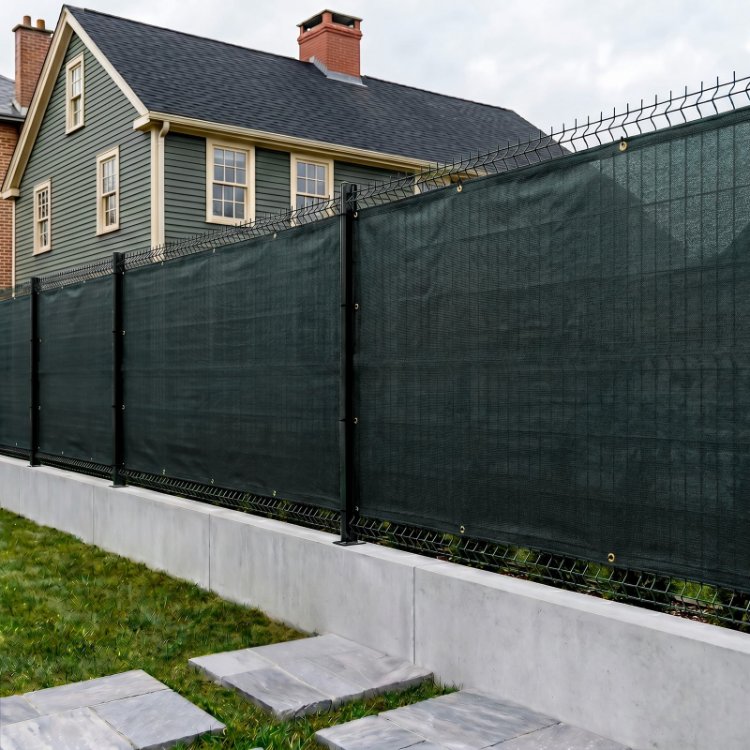
A residential privacy screen needs to do more than block outside views. For fencing distributors, wholesalers and project buyers, the challenge is finding a mesh specification that provides enough daytime privacy without creating unnecessary wind resistance for standard residential fences.
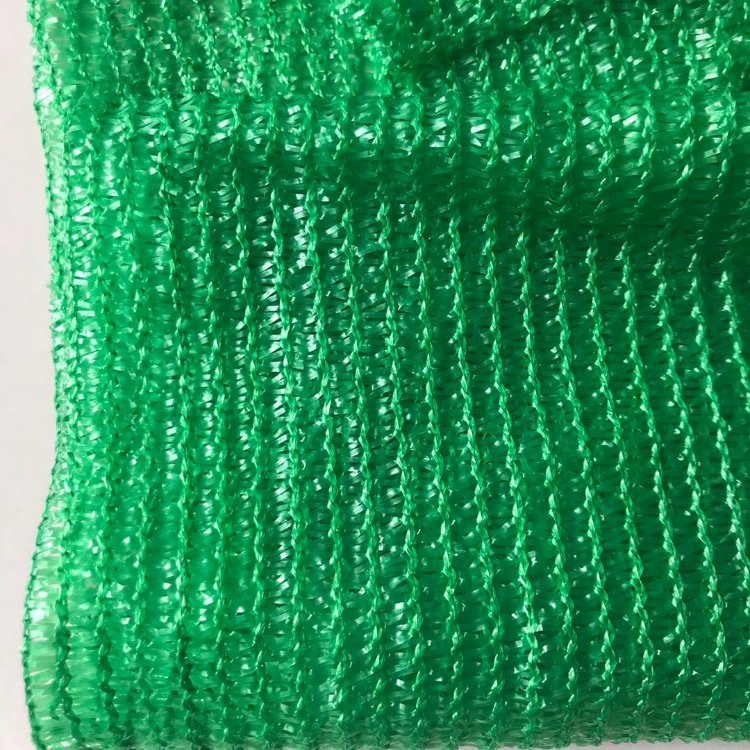
Knitted HDPE privacy screens are available in different fabric weights, mesh structures and opacity levels. Choosing the right combination helps buyers match product performance to local fencing requirements while maintaining practical installation and supply costs.
Tabla de contenido
What Level of Privacy Do Residential Fence Projects Actually Need?
Ask a homeowner and they’ll say “I don’t want to see anything.” Ask again after explaining what a solid screen does in a storm, and the answer usually becomes “I don’t want the neighbors looking at my patio.”
That second answer is the real spec. Most residential jobs are about blocking a casual view from the street or next door, not building a wall. Pools, hot tubs and dog runs are the exceptions, where people genuinely want more.
Understanding the Difference Between Shade Rate and Visual Privacy
Privacy screens come off the same knitting machines as agricultural shade cloth, so they’re often sold with a “shade %” figure. That number describes how much sunlight the fabric blocks. It matters to a fabricante de redes de sombra supplying growers, but it isn’t the same as how hard it is to see through the fabric from the sidewalk.
Two Privacy Screens both labeled ‘90%’ can look totally different from the street—it all comes down to the yarn and the weave. Flat tape yarn covers more space than round monofilament of the same weight, so it ends up looking much denser. Always get a sample first and hold it up outside at eye level. It takes two minutes and saves a lot of trouble down the road.
How Viewing Angle and Lighting Affect Visibility
Privacy mostly depends on the light. In daytime, when it’s brighter outside than in your yard, a dark 85–90% screen looks practically solid from the street. But at night, with the patio lights on, it reverses—people outside can easily see movement right through it.
If a customer wants the screen mainly for evening privacy around a hot tub, tell them up front. A 95% knit helps, and so does pointing the lights away from the fence. A fully solid material isn’t the answer on an open fence line, for reasons covered next.
How Does Privacy Screen Density Affect Airflow and Wind Load?
A bare chain-link fence is mostly holes, so wind goes straight through. Tie a screen to it and the fence starts acting more like a wall, and the force on each post goes up a lot.
Denser screens catch more wind, but the relationship isn’t linear. Even a fairly open mesh adds noticeable load, because the yarns disturb the airflow across the whole surface. Engineers who design screened fences, such as Engineering Express, work this out project by project using ASCE 7 wind provisions, the screen’s solidity, fence height, local design wind speed and post spacing.
You don’t need those calculations for every backyard, but the general pattern is worth knowing:
Screen type
Typical weight
From the street
Airflow
Where it fits
Light knit
130–150 g/m²
Shapes visible, details hidden
Alto
Windy or open sites, temporary fencing
Standard knit
150–180 g/m²
Mostly blocked in daylight
Moderado
Most suburban backyards
Dense knit
180–220 g/m²
Near solid in daylight
Bajo
Pools, dog runs, close neighbors (needs strong posts)
Solid tarp or vinyl
–
Solid
Ninguno
Only on frames designed as walls
These weights are typical market ranges, not fixed rules. Check the actual figures with your supplier.
Why Can High-Density Privacy Screens Create Installation Problems?
Residential chain-link fences are usually built light: thin-wall line posts, modest footings, and no expectation that the fence will ever carry much wind. Put a dense screen on one and a few things tend to happen after the first strong storm:
Line posts bend at ground level, where the bending stress is highest.
Footings loosen in soft or sandy soil and posts start to lean.
Grommets pull out of screens with weak hems.
Cheap cable ties go brittle in the sun and snap, leaving the screen flapping.
That isn’t really the screen failing. It’s a mismatch between the screen and the fence. Before quoting a dense screen, ask what the posts are, how deep they’re set and how exposed the site is. If the answer is “light posts, open field,” steer the customer toward a lighter knit.
How to Choose the Right Mesh Structure, Fabric Weight and Edge Reinforcement
Material. Ask for virgin HDPE with UV stabilizers. Screens with a high share of recycled material cost less but usually turn brittle sooner outdoors. Any supplier should be able to tell you what’s in the yarn.
Knit and yarn. Warp-knitted (Raschel) screens don’t unravel when they’re cut or snagged, which matters on a fence that lawnmowers and dogs run into. Tape yarn gives better coverage for its weight; monofilament is stronger. Many residential screens mix the two.
Weight. For most backyard jobs, 150–180 g/m² is the practical middle. Lighter screens are easier to hang and kinder to weak fences. Heavier ones block more but ask more of the posts.
Edges. This is where cheap screens fail first. Look for binding tape folded around the perimeter and stitched (not only heat-sealed), rust-proof grommets every 30–45 cm, and extra reinforcement at the corners.
The same choices about HDPE grade and UV protection run through our whole redes agrícolas range. A privacy screen is simply the version tuned for opacity.
What Installation Details Improve Privacy Fence Screen Stability?
Fence Structure, Attachment Points and Screen Tension
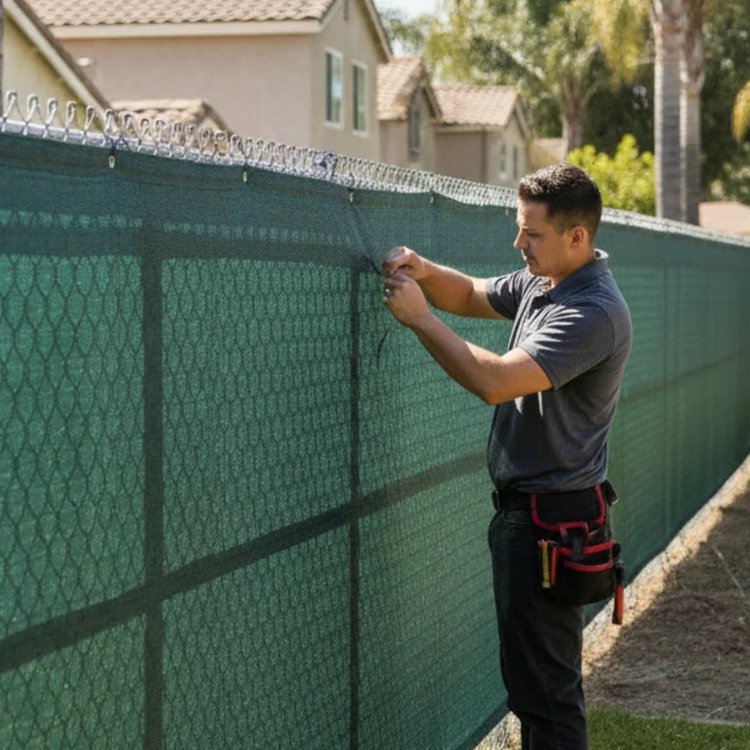
Give your fence a quick look before hanging the screen. If there’s no bottom wire or rail, the wind’s gonna get under it and whip it around. For anything 6 ft or taller, toss in a middle tension wire—it cuts that unsupported gap in half.
Hang the screen snug, not drum-tight. A loose screen slaps against the wire and wears through; one stretched too hard puts constant strain on the grommets.
Reinforced Edges, Eyelets and Fixing Accessories
Use UV-stabilized cable ties at every grommet. Some installers deliberately avoid wire ties at the posts: in an unusual gust they’d rather lose a few ties than bend a post. Replacing ties takes minutes. Replacing posts doesn’t.
It’s also worth tidying the fence line. Weeds growing into the bottom of the screen hold moisture, and string trimmers chew up the hem. A strip of cubierta vegetal tejida or a weed control mat along the base fixes that, and it’s an easy add-on for distributors.
What Customization Options Should Residential Project Buyers Consider?
Custom Widths, Lengths, Colors and Privacy Levels
Get the height right first. A “6 ft” fence is rarely exactly 6 ft from top rail to bottom wire, and a screen cut to the full nominal height ends up dragging on the ground. Plenty of contractors order screens a couple of inches shorter than the fence for that reason.
After height, the usual options are:
Pre-finished panels (say 25 ft or 50 ft) with edges and grommets on all four sides, for retail and small jobs
Long rolls with finished top and bottom edges, for crews that cut on site
Colors: dark green and black are the safe sellers, while tan, grey and brown come up more often on newer homes
Two or three opacity levels, so a distributor can offer light, standard and dense
Packaging and Labeling for Distributors
If the screens end up on retail shelves or contractor counters, packaging matters nearly as much as the fabric. Folded, compact rolls save freight. A private-label insert with the distributor’s brand, a simple install diagram and a bag of ties makes the product easier to sell. We handle these details on OEM and custom orders.
What Should Buyers Check Before Placing a Bulk Privacy Screen Order?
A short checklist before you commit to a container:
Get a physical sample and look through it outdoors, in daylight and at dusk.
Ask in writing whether the yarn is virgin HDPE and what UV stabilization it has.
Check the hem: the fold, the stitching and the grommet spacing.
Match cut sizes and tolerances to the fences your customers actually have.
Agree on color consistency between batches, especially for repeat orders.
Confirm how the panels will be packed and labeled.
If you’d like samples or a quote for your market, send us your sizes and quantities and we’ll come back with options.
Preguntas frecuentes
Q1: Does a 90% privacy screen reduce wind by 90%?
A: No. The percentage describes how much the screen blocks light or view, not wind. A dense screen still lets some air through, but it also adds a lot of wind force to the fence.
Q2: Can privacy screens go on wooden or vinyl fences?
A: Yes, mainly on open styles such as split rail. Fix the screen to the rails or to added battens rather than a few screws through the fabric, which will tear out in wind.
Q3: How long does an HDPE privacy screen last outdoors?
A: It depends on the UV stabilization, the color and how sunny the climate is. A well-made virgin HDPE screen usually lasts several years. Ask your supplier what lifespan they expect for your region and what that estimate is based on.
Q4: Do I need wind slits?
A: Usually not on a knitted screen, since the fabric already breathes. Slits are more common on denser or solid materials, and they do cost some privacy.
Obtenga información directa de fábrica y consejos de cultivo
Seleccionar lo correcto Película de efecto invernadero o malla de sombra es fundamental para el éxito del cultivo. Como empresa dedicada Fabricante de redes y películas agrícolasNuestros expertos le ayudan a personalizar la protección UV y la transmisión de luz según su clima local. Comparta los detalles de su proyecto para una solución a medida.
AGRICULTURA HONREL Ingenieros de películas, redes y tuberías de goteo adaptados a su cultivo, clima y estructura: especificaciones, colores, etiquetado y embalaje, respaldados por dibujos y hojas de especificaciones.
Respuesta rápida y revisión rápida
Cotización rápida, revisión de especificaciones y muestras, y soporte práctico de ingeniería. Adaptamos las especificaciones y la documentación rápidamente para que su proyecto se ajuste a los plazos previstos.
Calidad y trazabilidad constantes
Formulaciones estabilizadas a la luz UV, control de calidad del proceso y comprobaciones de laboratorio para componentes ópticos y mecánicos, además de seguimiento a nivel de lote. Se ofrecen informes de COA y pruebas; el embalaje y el etiquetado para exportación están estandarizados.