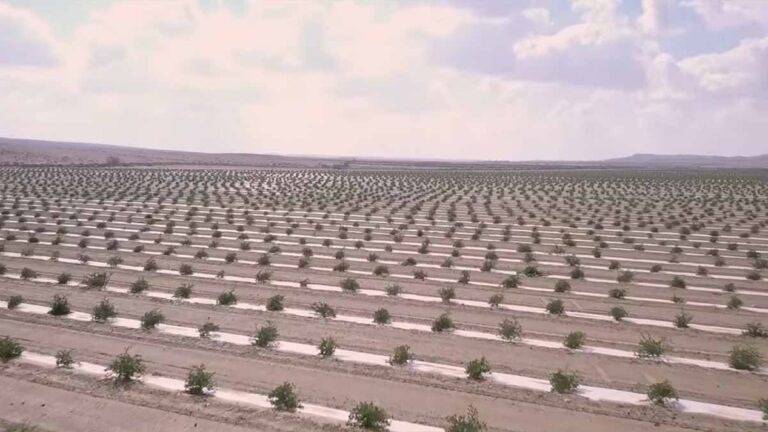
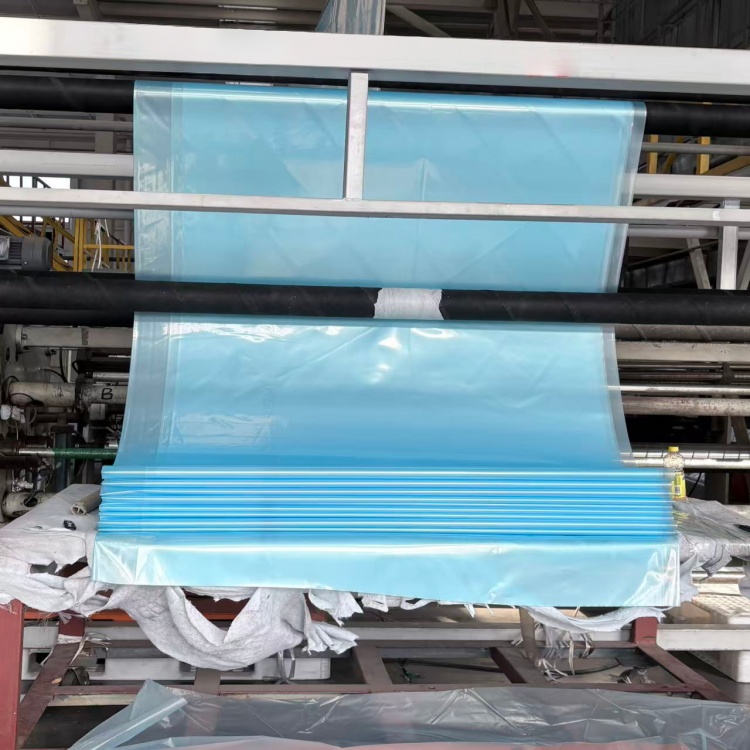
For commercial agricultural projects, you need high strength PE sheeting engineered with metallocene resins. Our special film is much stronger than regular plastic. It is very hard to poke holes in it. It does not tear easily even when it is thin.
A large-scale agricultural project—whether it is a 10-hectare greenhouse complex or a massive reservoir lining—you know that “standard” plastic does not cut it. We have seen it too many times: a grower buys generic construction plastic to save a few cents, only to have it shred during the first winter storm, destroying the crop underneath.
The solution is high-strength agricultural PE sheeting engineered with metallocene resins.
Unlike ordinary polyethylene films, advanced metallocene PE films provide significantly higher:
puncture resistance
tear strength
elasticity
UV durability
This allows the film to remain strong even at thinner gauges, making it easier to install while maintaining long-term structural integrity in harsh agricultural conditions.
Índice
The Engineering Truth: Thicker Doesn’t Always Mean Stronger
In the past, if you wanted a stronger film, you just bought a thicker one. But in modern plastic extrusion, chemistry beats bulk.
1. Metallocene Technology (mPE)
Standard plastic uses Low-Density Polyethylene (LDPE). While cheap, its molecular structure is irregular. At HONREL, we utilize Metallocene Polyethylene (mPE) in our high-strength films.
The Difference: Metallocene catalysts create a highly uniform molecular chain.
The Benefit: This creates a “net” at the microscopic level that is incredibly difficult to tear. This is why our PE film manufacturer process allows us to produce films that are thinner yet significantly tougher than competitors’ older products.
2. Multi-Layer Co-Extrusion
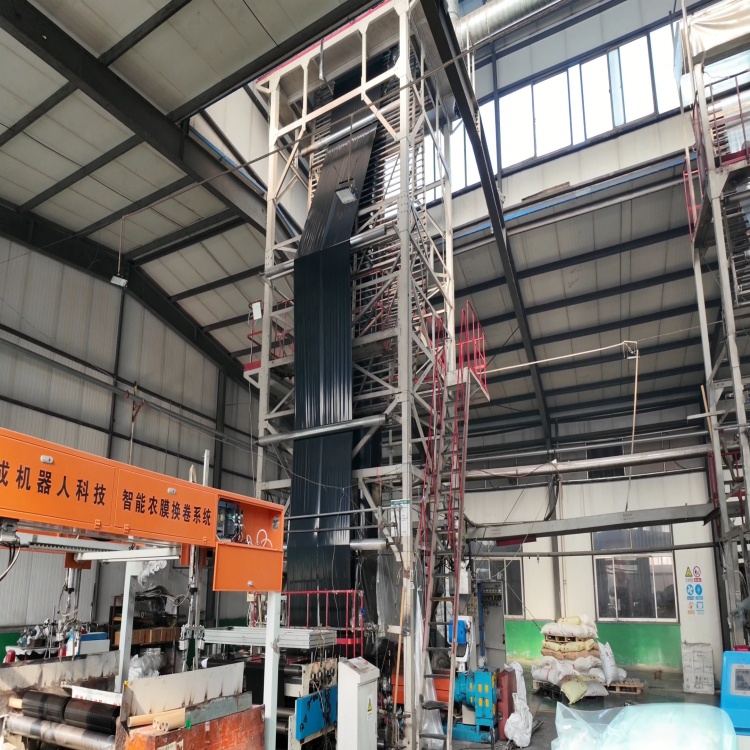
We don’t just extrude a single layer of plastic. We use 3-layer and 5-layer co-extrusion technology.
Camada externa: Loaded with UV stabilizers and anti-dust additives.
Middle Layer: This is the “muscle”—the high-strength structural polymer.
Camada interna: Functional additives like anti-drip or thermicity.
Industry Insight: When comparing specs, look for the Dart Impact Strength (ASTM D1709). This measures the energy required to puncture the film. A high-strength 150-micron film often outperforms a standard 200-micron film in this test.
Choosing the Right High Strength Film for Your Project
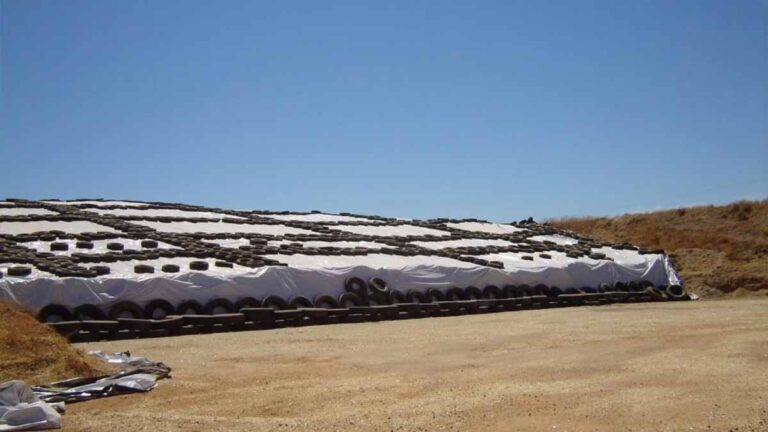
Different projects fight different enemies. A greenhouse cover fights wind; a pond liner fights water pressure; a silage cover fights punctures.
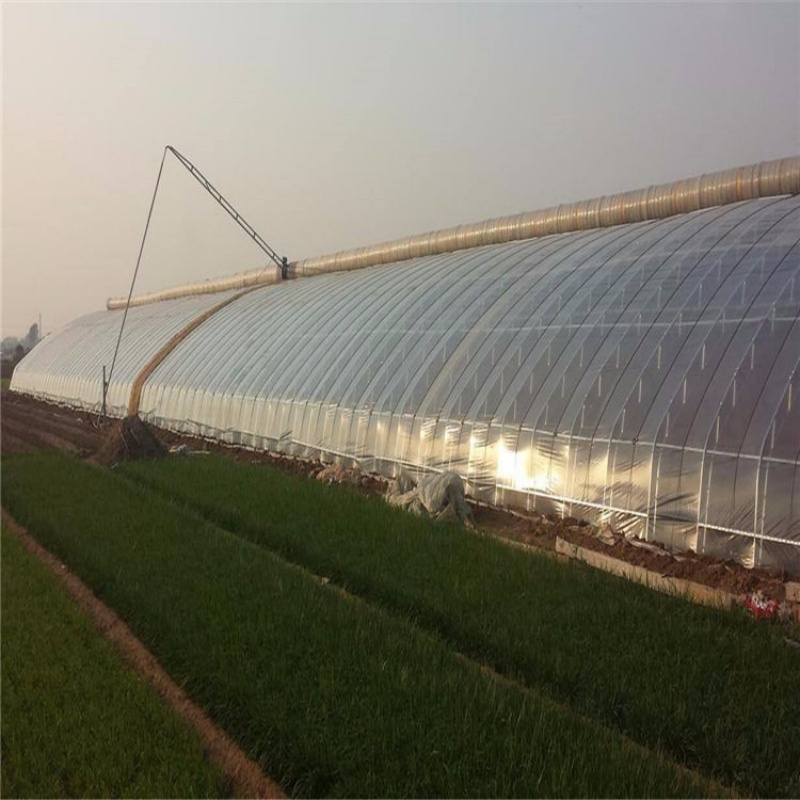
1. Greenhouse & High Tunnel Covers
The Enemy: UV Radiation and Wind Load. For permanent structures, simple PE isn’t enough. You need a film that maintains its elasticity (elongation) even after years of sun exposure. If the plastic becomes brittle, it snaps in the wind.
The Solution: We recommend our greenhouse po film. Polyolefin (PO) is the next generation of greenhouse covering. It offers superior tensile strength and light transmission compared to PE, making it the top choice for high-value crops where safety is paramount.
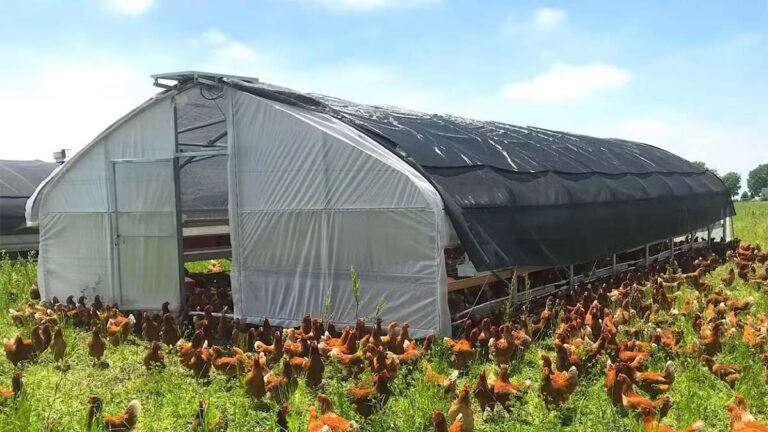
2. Light Deprivation & Silage Covers
The Enemy: Punctures and Light Leaks. When you are covering tons of silage or managing photoperiods for sensitive crops, a pinhole is a disaster. If a bird pecks the film or a worker drops a tool, you risk spoilage or light pollution.
The Solution: Nosso black and white panda film is engineered specifically for this. The white side reflects heat (keeping the underlying material cool), while the black side provides 100% opacity. The central core of this film is reinforced to resist punctures from stems and foot traffic.
3. Water Containment (Pond Liners)
The Enemy: Hydrostatic Pressure and Root Penetration. You cannot use flexible greenhouse film to line a reservoir; the weight of the water will stretch it until it bursts.
The Solution: For these projects, rigidity is key. Our hdpe geomembrane manufacturer line produces liners that are stiff, chemically resistant, and designed to last for decades underground or underwater without leaching chemicals.
Comparison: Standard vs. High Strength PE
To help you justify the investment to your procurement team, here is a breakdown of performance:
Recurso
Standard Construction Film
HONREL High Strength PE
Material Base
Recycled or Low-Grade LDPE
Virgin Metallocene & LLDPE
Puncture Resistance
Low (Tears easily on sharp points)
High (Elongates around sharp points)
UV Lifespan
6-12 meses
3-5 Years (climate dependent)
Transmissão de luz
Clouds/Yellows quickly
Remains High (90%+) for years
Best Use
Temporary dust sheets
Greenhouses, Silage, Reservoirs
Best Practices: Installation to Prevent Failure
Even the strongest film will fail if installed incorrectly. We have seen excellent material ruined by bad installation habits.
1. The “Hot and Cold” Rule
Polyethylene expands when hot and shrinks when cold.
Practice: Install your covers on a warm, calm day. Pull the film tight. As the temperature drops at night, the film will tighten further (like a drum). If you install it on a cold day, it will expand and sag when the sun comes out, leading to wind flapping and fatigue failure.
2. Smooth the Contact Points
Before laying any film, inspect your frame or soil.
Frame: If using a metal greenhouse structure, use white felt tape or white paint on the bars. Hot metal burns plastic.
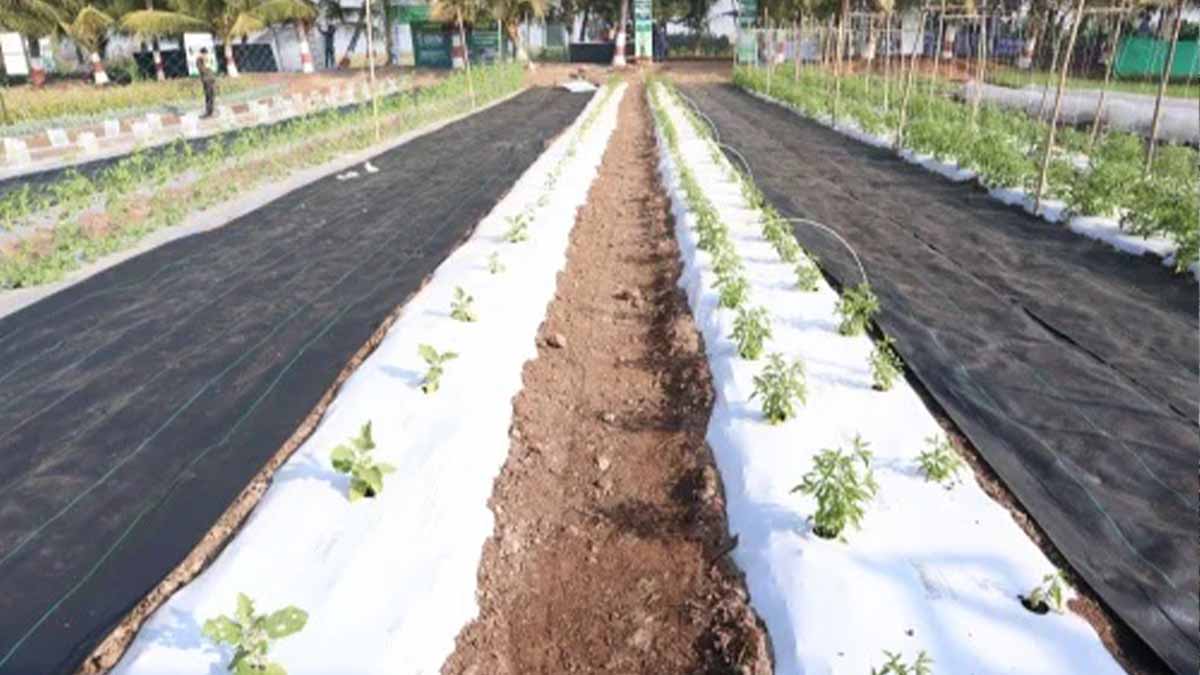
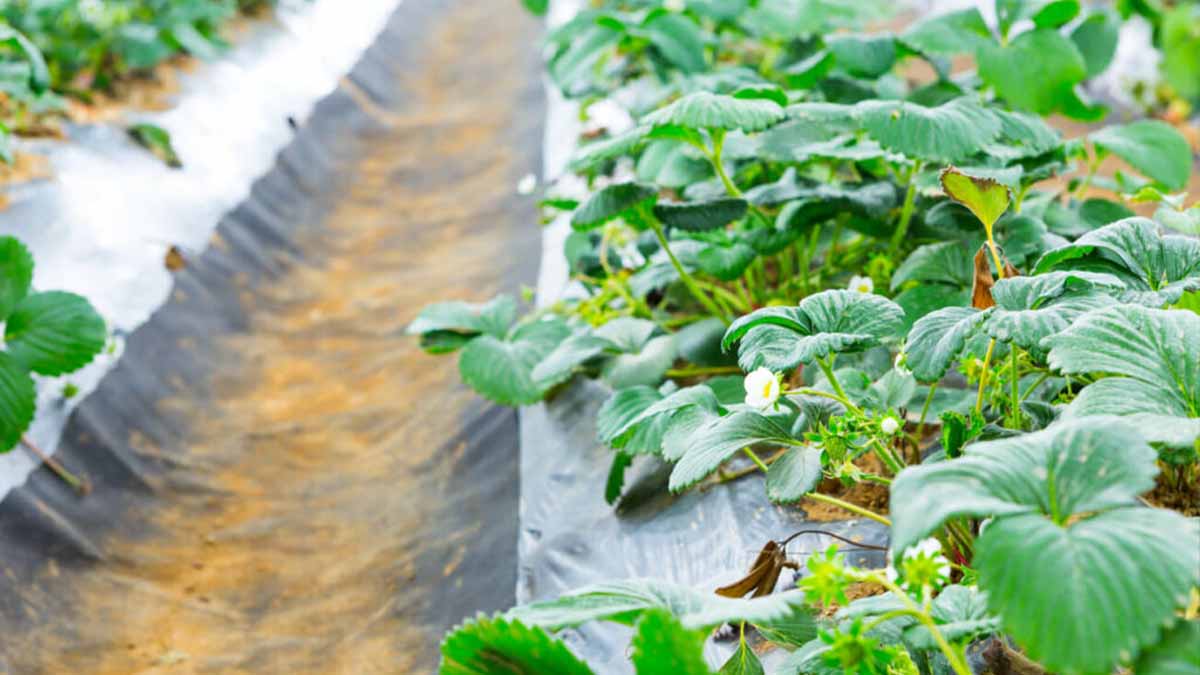
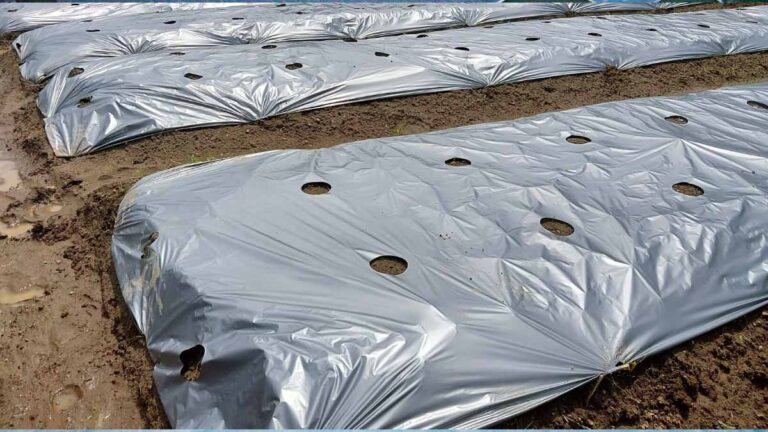
Ground: If laying filme de cobertura morta or pond liners, remove sharp rocks. For extra security, many clients install a protective layer of weed control mat manufacturer fabric underneath the liner to cushion it against the soil.
FAQ: Questions From Our B2B Partners
Q: What is the difference between PO and PE film?
A: PE (Polyethylene) is the industry standard. PO (Polyolefin) is a premium upgrade. PO is stronger, holds anti-drip additives longer, and stays cleaner because it sheds dust better than PE.
Q: Can I get custom widths for large projects?
A: Yes. While standard rolls come in 6m-12m widths, our factory capabilities allow us to weld rolls for wider applications, or slit them for narrow uses. Contact our team for specific OEM sizing.
Q: Is the strong film hard to see through?
A: No. We use a special plastic that is very strong. This lets us make the film thinner but still very tough. These thin films let in more light than old, thick plastic.
Q: Can I recycle this film?
A: Yes. Our films are 100% plastic. You can recycle them when you are done. We like it when our partners clean and recycle the film. This keeps the land healthy. It is long-lasting and perfect for shops.
Q: What if the film tears during a storm?
A: You must fix it fast. If the wind catches a hole, it can rip the whole sheet. Do not use regular duct tape. The glue on that tape will hurt the plastic in the sun. You should use our special repair tape instead. It is easy to use and stays on in the wind. We recommend keeping specialized repair tape in your inventory. As a acessórios para estufa provider, we advise cleaning the area with alcohol and applying the repair tape on both sides of the film (inside and outside) to create a permanent bond that maintains the high-strength integrity of the cover.
Q: Will pesticides or sulfur burners damage the high-strength sheeting?
A: Yes, chemical interaction is the #1 cause of premature failure. Sulfur and chlorine can deactivate the UV stabilizers in the plastic, turning even the strongest greenhouse film brittle in months. When ordering, you must check the “Pesticide Resistance” rating (usually measured in ppm of Sulfur/Chlorine). If you plan to use heavy chemical fogging, let us know so we can supply a film with a special anti-acid stabilizer package.
Obtenha informações diretamente da fábrica e dicas de cultivo.
Selecionar o certo Filme de estufa ou tela de sombreamento é fundamental para o sucesso da colheita. Como um dedicado Fabricante de redes e filmes agrícolasNossos especialistas ajudam você a personalizar a proteção UV e a transmissão de luz de acordo com o clima da sua região. Compartilhe os detalhes do seu projeto para obter uma solução sob medida.
AGRICULTURA HONREL Engenheiros desenvolvem filmes, telas e tubos de gotejamento adequados à sua cultura, clima e estrutura — especificações, cores, rotulagem e embalagem — com base em desenhos e fichas técnicas.
Resposta rápida e revisão imediata
Orçamentos rápidos, aprovação de especificações/amostras e suporte técnico prático. Alinhamos especificações e documentação rapidamente para manter o cronograma do seu projeto em dia.
Qualidade consistente e rastreabilidade
Formulações estabilizadas contra raios UV, controle de qualidade do processo e verificações laboratoriais de óptica/mecânica, além de rastreamento em nível de lote. Certificados de análise/relatórios de teste disponíveis; embalagem e rotulagem para exportação padronizadas.