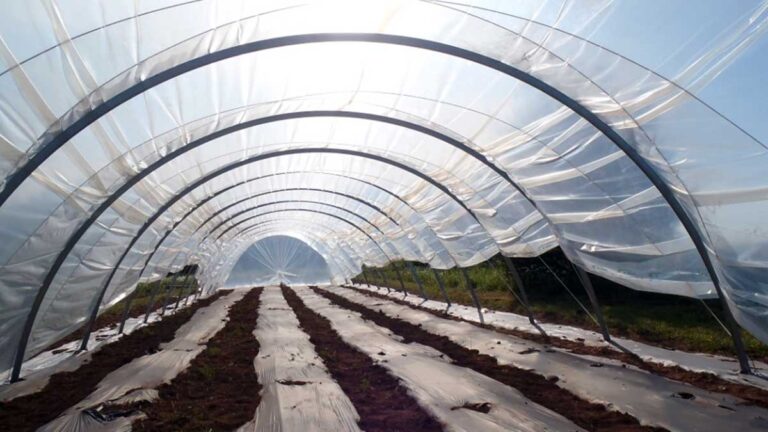
Wholesale Greenhouse PO Film | 5-Layer Co-Extruded Technology Guide
The UV blockers, the anti-dust surface, and the permanent anti-drip coating are placed in different layers so they never interfere with each other. The result is a film that delivers up to 95% light transmission, features a permanent anti-drip surface that never washes off, and lasts years longer than standard plastics.
If you run a commercial farming operation or supply agricultural materials, you know the headache of replacing greenhouse covers. Standard plastics get cloudy, degrade under UV light, and start dripping condensation onto your crops, causing fungal diseases that wipe out your profits.
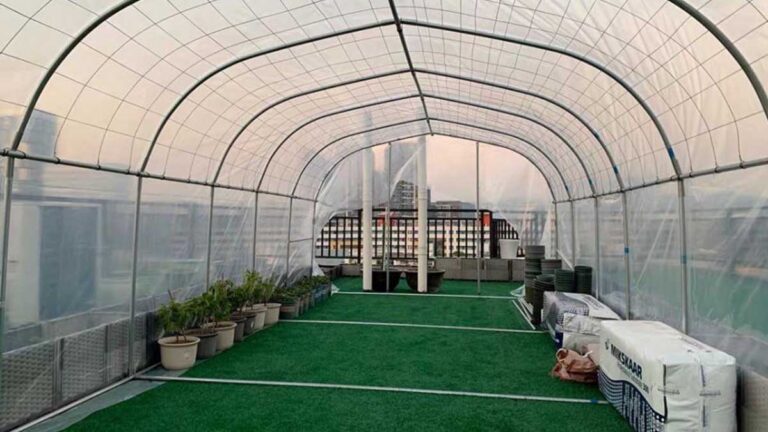
Here is the direct answer to your problem: To maximize yield and drastically cut down on replacement labor, you need to upgrade from standard PE to 5-Layer Co-Extruded PO (Polyolefin) Greenhouse Film. Why? Because our 5-layer extrusion process allows us to separate vital chemical additives. The UV blockers, the anti-dust surface, and the permanent anti-drip coating are placed in different layers so they never interfere with each other. The result is a film that delivers up to 95% light transmission, features a permanent anti-drip surface that never washes off, and lasts years longer than standard plastics.
At HONREL AGRICULTURE, we specialize in engineering these climate control solutions. In this guide, we will break down the exact engineering behind 5-layer technology, compare the performance data, and show you why sourcing wholesale PO greenhouse film is the smartest investment for your business.
Table of Contents
The Engineering: Why 5 Layers Beat 3 Layers
You might be asking, “If a film is 150 microns thick, why does the number of layers matter?” The answer is polymer chemistry.
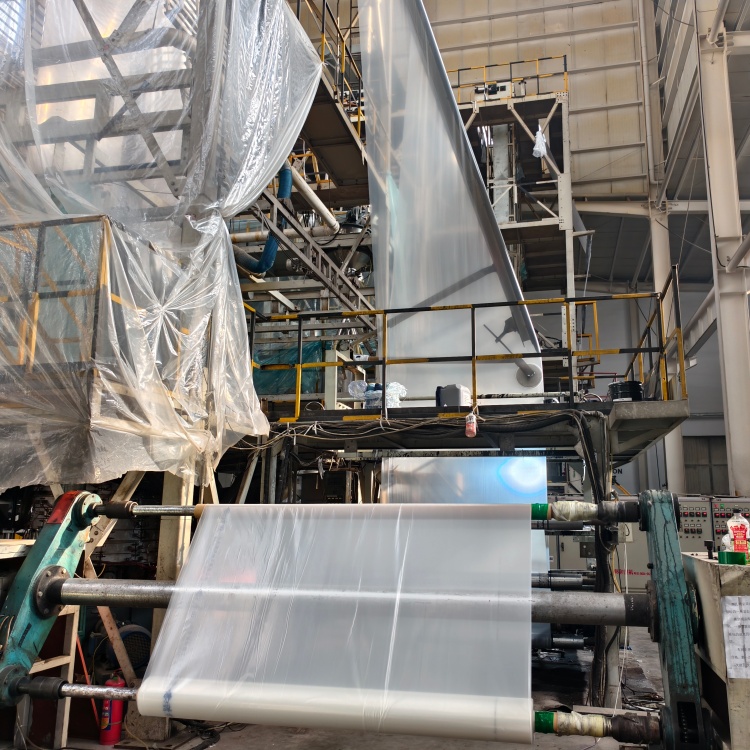
In older 3-layer co-extrusion manufacturing, engineers had to mix multiple additives (like UV stabilizers, anti-fog agents, and thermal minerals) into the same layer of plastic. These chemicals often fight each other, which reduces their effectiveness and weakens the film’s structure.
By upgrading to our 5-layer co-extrusion technology, we isolate these functions to create a perfect agricultural shield:
Layer 1 (Exterior): This layer is loaded with UV protectors and a nano-coating that repels dust. It keeps the roof clear so light can enter.
Layers 2, 3, and 4 (The Core): We use a blend of high-strength Metallocene (mPE) and EVA (Ethylene Vinyl Acetate). This gives the film extreme puncture resistance, high elasticity for snow loads, and thermic properties to hold heat at night.
Layer 5 (Interior): This is where the magic happens. We apply a permanent, chemically bonded anti-drip and anti-fog coating facing the crops.
Head-to-Head Data: PO Film vs. PE Film
When our B2B wholesale clients ask about the price difference between advanced PO film and standard PE greenhouse film, we let the performance data do the talking. While PE film is a great budget option for temporary seasonal tunnels, PO film is a long-term investment in crop yield.
Performance Comparison Table
Feature
Standard PE Film (3-Layer)
HONREL PO Film (5-Layer)
Initial Light Transmission
85% – 88%
92% – 95% (Glass-like clarity)
Light Transmission (Year 2)
Drops to ~70% (Hazy/Yellow)
Stays above 90%
Anti-Drip Mechanism
Migratory additives (Washes off)
Permanent Nano-Coating
Anti-Drip Lifespan
6 to 18 Months
Lifetime of the film (3-5+ Years)
Tensile & Tear Strength
Moderate
High (Superior wind/snow resistance)
Dust Resistance
Low (Static attracts dirt)
High (Surface sheds dust easily)
The Condensation Problem Solved
One of the biggest failures of standard PE film is how it handles interior moisture. PE relies on “migratory” additives—soapy substances mixed into the plastic that slowly move to the surface to break water tension. Within 12 to 18 months, these wash away. Once gone, heavy water droplets form on your roof. These droplets block up to 15% of sunlight and drip onto your plants, triggering diseases like Botrytis (Gray Mold).
Because our PO film uses a permanently bonded coating on the 5th layer, the water simply sheets flat and runs down the sidewalls into your gutters, keeping your plants dry and your light transmission high.
Best Practice: Directional InstallationBecause our 5-layer co-extrusion applies specific coatings to specific sides, PO film is strictly directional. The side with the permanent anti-drip coating MUST face the inside of the greenhouse (towards the crops). If you install it upside down, you will ruin the anti-fog properties and experience heavy dripping. We clearly mark the “Inside/Outside” on our roll packaging—always check the label before you unroll the plastic!
Case Study: Maximizing Tomato Yields with Diffused Optics
Location: Commercial Tomato Facility, Mediterranean Climate. The Challenge: The grower was using a standard clear PE film. During peak summer, direct harsh sunlight created “hot spots,” scorching the upper canopy of the tomato vines, while the lower leaves remained shaded and unproductive. The Solution: We supplied them with a custom 150-micron (6 mil) Diffused 5-Layer PO Film.
The Results:
Light Penetration: The high-haze PO film scattered the Photosynthetically Active Radiation (PAR) evenly. The light bypassed the top leaves and penetrated deep into the lower canopy.
Disease Reduction: The permanent anti-drip coating completely stopped morning condensation from falling onto the tomatoes, cutting their fungicide applications by 20%.
Yield Increase: By activating photosynthesis in the lower leaves and reducing heat stress at the top, their marketable yield increased by 14%.
Best Practice: Maximize Light ReflectionTo further boost the diffused light bouncing around your greenhouse canopy, we highly recommend lining your floor walkways with white mulch film. This reflects the scattered light back up to the undersides of the leaves, speeding up the ripening process for heavy vine crops.
A Holistic Approach to Greenhouse Protection
A premium roof is only one part of your agricultural defense system. To fully protect your investment from pests and climate extremes, you must secure the entire structure.
Ventilation Defense: If you have an incredibly clear roof, insects will naturally be attracted to your crop. Ensure all side vents and intake fans are covered with high-mesh insect netting manufacturer grade screens. This stops thrips and whiteflies from entering while maintaining crucial airflow.
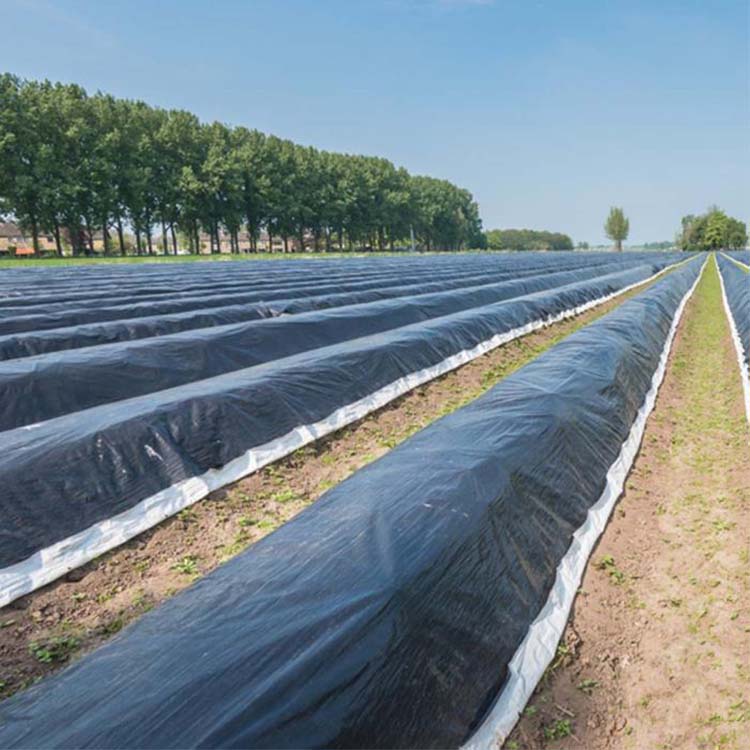
Light Deprivation Needs: If you are running a facility that requires absolute light deprivation (such as for mushroom farming or medicinal cannabis flowering cycles), standard PO film won’t work. Instead, we utilize our advanced co-extrusion technology to produce black and white panda film. The white side reflects heat to keep the structure cool, while the black core ensures 100% opacity with maximum tear resistance.
Secure Fastening: Never use nails or cheap staples to hold down a 5-year film. Always use proper locking profiles and wiggle wires from our greenhouse accessories line to ensure the film doesn’t tear during high winds.
Best Practice: The “Warm Install” Method. Polyolefin is incredibly strong, but like all plastics, it expands and contracts with temperature. Always install your film on a warm, calm day. Pull it tight. As the temperature drops at night, the film will shrink slightly and tighten up like a drum skin. If you install it tight on a freezing cold morning, it will expand and sag when the sun comes out, leading to wind flapping that causes premature wear and tear.
Financial ROI: Why B2B Buyers Choose PO Film
If you are an agricultural distributor or a mega-farm operator, the initial cost per square meter of PO film is higher than PE film. However, the Return on Investment (ROI) makes it the obvious choice.
Labor Savings: Replacing a greenhouse roof is an incredibly labor-intensive and dangerous job. If you’re a distributor or a large-scale grower, the “sticker price” of PO film is higher than basic PE. There’s no skipping that. But when you look at the Total Cost of Ownership, the math changes fast.
Slash Your Labor Costs: Replacing a greenhouse roof is a dangerous, labor-intensive nightmare. Because our PO film stays crystal clear for 3 to 5+ years, you aren’t paying a crew to climb up there every season. That’s a 60% saving on long-term labor right off the bat.
Keep Your Chemical Budget in Check: A drier greenhouse isn’t just “nice to have”—it’s a financial win. By stopping the “indoor rain” caused by condensation, you’re cutting off fungal outbreaks before they start. Our clients often save thousands of dollars per season simply because they don’t have to spray as much fungicide.
Higher Margins for Wholesalers: If you’re a distributor, selling commodity plastics is a “race to the bottom” on price. Stocking premium 5-layer PO film lets you pivot to high-end commercial growers. These are the clients who care about performance and yield—and they are willing to pay for it, which means healthier profit margins for your business.
FAQs: What Commercial Buyers Usually Ask Us
Q1: Can I get custom sizes, or do I have to stick to “standard”?
A: Since we’re the ones actually running the factory, you aren’t stuck with “off-the-shelf” sizes. We can customize the thickness anywhere from 60 to 200 microns and blow the film in widths from 4 to 20 meters. Whatever your greenhouse span looks like, we can extrude a roll that fits it perfectly without a bunch of wasted material.
Q2: Can this film help me manage pests?
A: Definitely. We can “tune” the chemical recipe depending on what you’re growing. If you’re fighting thrips or whiteflies, we can make a UV-blocking film—it basically “blinds” the bugs so they can’t find your crops. But, if you’re using bumblebees for pollination, just let us know. We’ll provide a UV-open film so your bees can navigate and work effectively.
Q3: Is it a pain to repair if it gets a puncture?
A: Honestly, it’s a lot tougher to rip than standard PE because of the Metallocene core—it has a bit more “stretch” to it. But accidents happen. If a branch or a tool pokes a hole in it, just make sure you use specialized PO repair tape. Regular duct tape won’t cut it because our anti-dust nano-coating is so slick that cheap adhesives just won’t stick to it.
Q4: What’s the “real talk” on Minimum Order Quantities (MOQ)?
A: For our standard clear films, we usually look at 1 to 2 tons to get the machines running. If you need something highly specific—like a custom light diffusion rate or a specific tint—we usually bump that to 3 to 5 tons. Why? Because we have to completely shut down, clean, and recalibrate our 5-layer towers to make sure your custom recipe is perfect from the first meter to the last.
Q5: Does PO film handle snow loads better than PE film?
A: Absolutely. The 5-layer structure gives PO film superior elasticity and tensile strength. It can stretch to absorb the heavy weight of snow and strong wind forces much better than traditional, brittle PE films, returning to its original tight shape once the load melts away.
Conclusion: Stop Settling for Bad Plastic
Farming is already a high-stakes game—the last thing you need is your own equipment working against you. When you partner with HONREL, you’re not just buying a roll of film; you’re eliminating the constant headaches of “yellowing” plastic, crop-killing condensation, and the massive labor costs of annual roof replacements.
We give you more light, healthier plants, and a structure that actually lasts. You get more light, healthier plants, and lower labor costs.
Ready to upgrade your commercial facility or stock your B2B distribution warehouse? Contact our team today for a custom wholesale quote. We offer global container shipping, OEM packaging, and the expert engineering support you need to maximize your harvest.
Get Factory-Direct Insights & Growing Tips
Selecting the right Greenhouse Film or shade mesh is critical for crop success. As a dedicated Agricultural Netting and Film Manufacturer, our experts help you customize UV protection and light transmission based on your local climate. Share your project details for a tailored solution.
HONREL AGRICULTURE engineers films, netting, and drip pipe to your crop, climate, and structure—specs, colors, labeling, and packaging—backed by drawings and spec sheets.
Fast Response & Quick Proofing
Rapid quoting, spec-sheet/sample proofing, and practical engineering support. We align specifications and documentation quickly to keep your project timeline on track.
Consistent Quality & Traceability
UV-stabilized formulations, process QC, and lab checks for optics/mechanics—plus lot-level tracking. COA/test reports available; export packing and labeling are standardized.