Silver Black Mulch Film Manufacturer for Asparagus Farms: Reflective Mulching Options for Commercial Production
It won't get your first spears out earlier in spring. Black or clear film does that better. And for white asparagus it's usually the wrong product altogether.
Silver black mulch can be a good fit for green asparagus, but mostly for one job: keeping the bed cooler and weed-free through the hot part of the season, with some help against aphids early on. It won’t get your first spears out earlier in spring. Black or clear film does that better. And for white asparagus it’s usually the wrong product altogether.
If you grow asparagus, or sell film to people who do, that’s the honest summary. Below is how we’d think it through before ordering película de mantillo negro plateado in volume.
Tabla de contenido
What Growing Conditions Should Asparagus Farmers Evaluate Before Using Silver Black Mulch Film?
Start with three questions.
Is it green or white asparagus? This matters more than anything else, and we come back to it below.
How hot does the soil actually get? In sunny, dry areas with sandy dirt, bare ridges bake in the summer sun—and that’s where a reflective surface really pays off. But if you’re in a cool, cloudy climate, you don’t need that extra cooling. In fact, it can slow things down in the spring.
How well does the soil drain? Plastic sheds rain off the bed. On light soils that’s manageable with drip irrigation. On heavy clay, a covered bed can stay wet around the crowns for longer than you’d like, so drainage and bed shape need sorting out before any film goes down.
Also keep in mind that asparagus is a perennial. A field stays in production for many years, so whatever you lay down has to work around harvest crews, fern growth and the crowns, not just get through one season.
How Does Silver Black Mulch Film Affect Soil Temperature?
Reflective Silver Surface and Solar Radiation
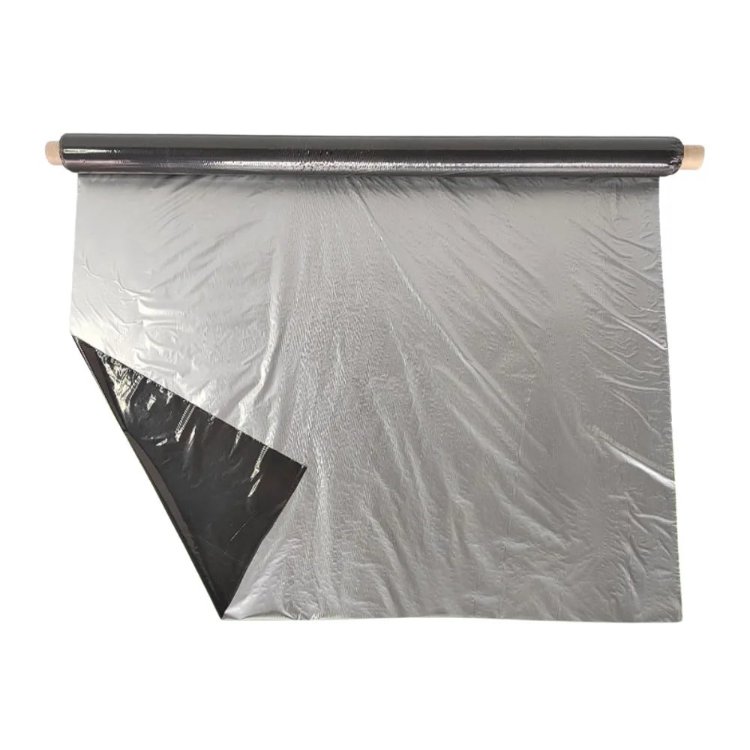
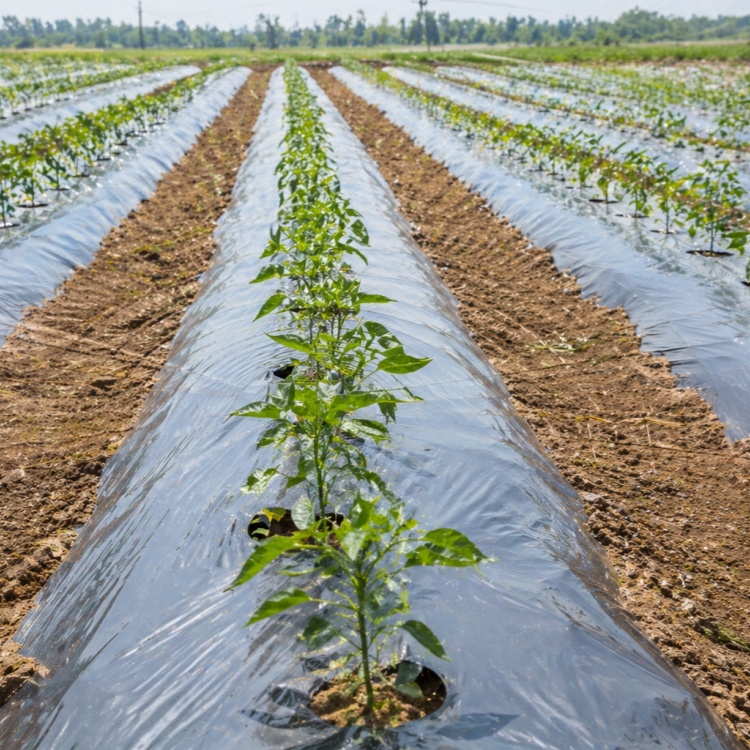
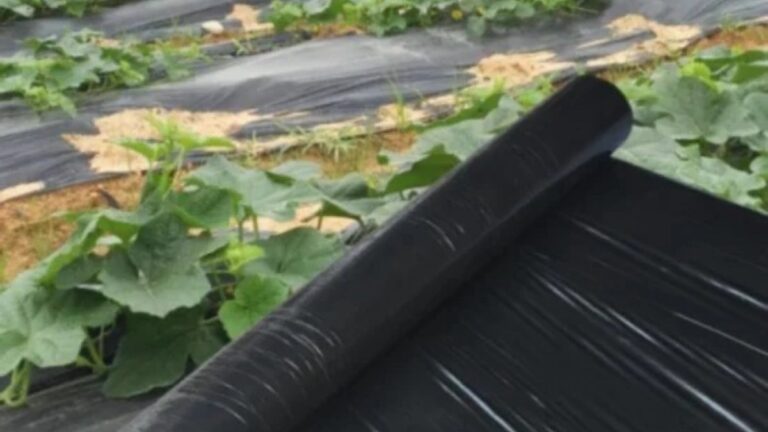
The film has two layers. The black side faces down and blocks light, which is what stops weeds. The silver side faces up and reflects a good share of the sunlight away from the bed instead of absorbing it.
Unlike plain black mulch that soaks up the heat, silver-black film actually keeps the soil underneath cooler. Compared to bare ground the gap isn’t as big, and it really depends on how much of the bed is already shaded by the canopy. Exact numbers change depending on the weather, the quality of the film, and the time of year—so don’t take any single percentage as gospel.
A simple way to compare the common options:
Film
Effect on soil temperature
Weed control
Clear
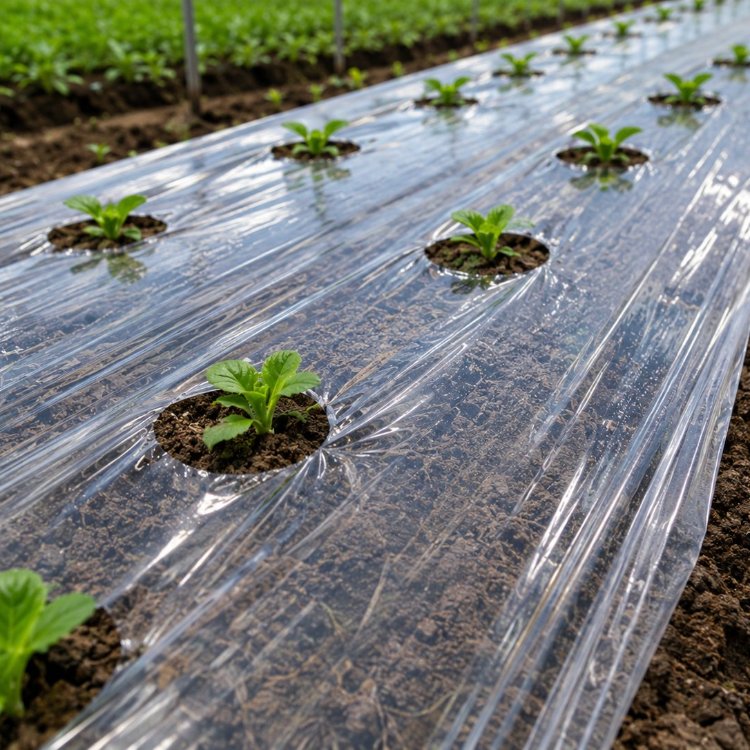
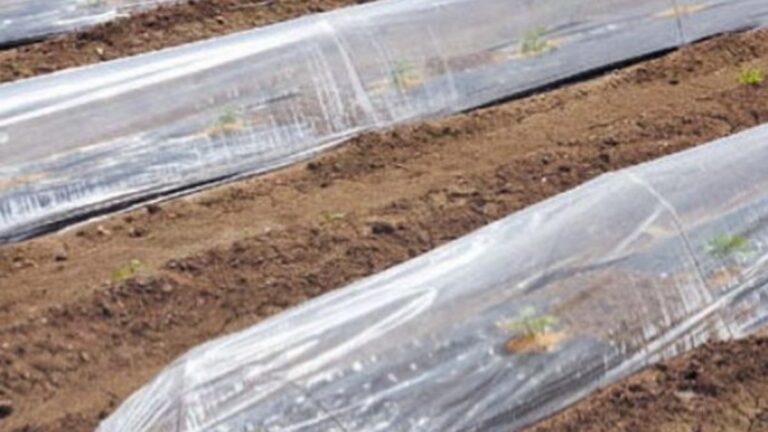
Warms the most
Poor, weeds grow underneath
Negro
Warms
Bien
Silver black
Cooler than black
Bien
Blanco y negro
Warms with black side up, cools with white side up
Bien
Seasonal and Regional Differences in Soil Temperature Requirements
Spears start growing once the soil warms in spring, and growth speeds up as it gets warmer. That’s why growers chasing the early market want heat in March and April, and why silver film isn’t their tool at that stage.
Later in the season it’s a different story. In hot regions, a cooler and more stable root zone is easier on the plants during the fern period, when they’re building reserves for next year. Silver black film suits that window, and it suits farms where summer heat is a bigger problem than spring cold.
How Can Silver Black Mulch Film Support Weed Management in Asparagus Fields?
Weeds are expensive in asparagus because the crop stays in the ground for years and the crowns sit shallow, so you can’t cultivate close to the row without damaging them. The black underside of the film blocks light completely, which stops most annual weeds from establishing on the bed.
It doesn’t do much for perennial weeds pushing up through the planting holes or creeping in from the edges, and it won’t touch the paths between beds at all. Most growers handle the paths by mowing, tilling, or laying down a strip of woven ground cover.
One thing to check when buying: the black layer has to be properly opaque. Cheap films with a thin or patchy black layer let enough light through for weeds to grow underneath, which defeats the point.
Is Silver Black Mulch Film Suitable for Both Green and White Asparagus Production?
Differences in Cultivation and Harvesting Systems
Green asparagus is harvested above ground in daylight. The film lies on the bed and spears come up through holes or a slit, so silver black film can work well there.
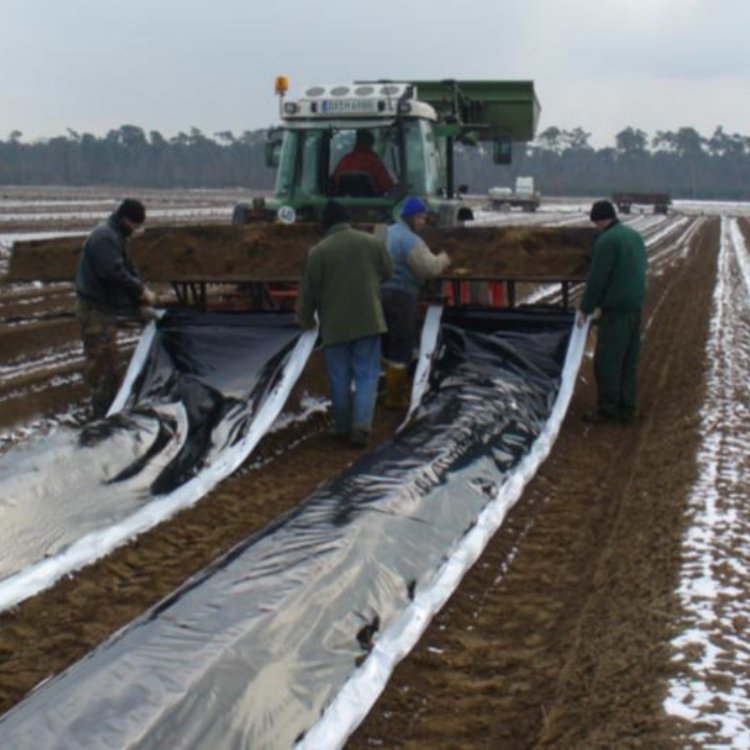
White asparagus is a different system. Spears grow inside soil ridges and are cut before they see light. Germany alone grows white asparagus on more than 20,000 hectares, and growers there cover the ridges with opaque black and white film to keep spears white, control weeds and speed up growth, according to the Leibniz Institute for Agricultural Engineering and Bioeconomy (ATB). Growers turn the black side up to warm the ridge early and the white side up to cool it when the weather gets hot. These films are heavier and stay in use for several seasons.
Situations Where Reflective Mulching May Not Be Appropriate
Silver film is probably the wrong choice if:
you grow white asparagus on ridges (use a reversible black and white ridge film instead)
your main goal is the earliest possible harvest in a cool region
your beds drain poorly and you can’t fix that first
harvest crews walk on the beds constantly, since thin film won’t survive it
How to Choose Mulch Film Width, Thickness and Planting Layout for Asparagus
Width depends on your bed, not on a standard size. Measure the bed top and both shoulders, then add enough on each side to bury the edges firmly, usually 10 to 20 cm a side. Film that’s too narrow pulls out of the soil and flaps in the wind.
Thickness is a trade-off between price and how long the film has to last. Thinner film is fine for a single season. If it needs to stay down through harvest traffic and a long, sunny summer, go heavier and ask for stronger UV stabilization. We’d rather a customer buy thicker film once than replace it halfway through the season.
For layout, decide between pre-punched holes and slitting or punching on site. Pre-punched rolls save labor on new plantings, but the hole pattern has to match your crown spacing exactly.
On pests, reflective mulches are known to repel aphids and other insects that spread viruses, mainly while plants are small and the film is still exposed, as UC IPM notes. Once fern covers the bed, the effect fades. Treat it as a useful bonus, not a pest program.
What Are the Practical Limitations of Reflective Mulch Film in Commercial Asparagus Farming?
Soil Moisture, Irrigation and Field Maintenance
Under plastic, rain and overhead sprinklers don’t reach the bed well, so plan on drip tape under the film, laid in the same pass. Very little water evaporates from a covered bed, which makes it easy to overwater. Check soil moisture under the film rather than judging by the paths.
Installation, Film Removal and Seasonal Costs
The film is only part of the cost. Add the bed shaper and mulch layer, labor for punching or slitting, repairs after wind, and removal at the end. Removal is where poor film gets expensive: film that has gone brittle in the sun breaks into pieces that have to be picked up by hand.
Disposal is worth planning for too. The ATB article above describes how much soil sticks to used asparagus film and why recyclers won’t take it until most of that is removed.
Lay the film snug on a firm, smooth bed. Film stretched hard in the cool morning can loosen in the afternoon heat.
What Should Asparagus Farms and Agricultural Distributors Confirm Before Bulk Ordering?
Before ordering a container, confirm:
Width, thickness and roll length, matched to your actual beds and to the core size your mulch layer takes.
How opaque the black layer is. Ask for a sample and hold it up to the sun.
Expected field life in your climate, and the UV stabilization behind that estimate.
Whether you need pre-punched holes, and the exact pattern.
Packing and pallet weight, so rolls arrive undamaged and can be handled on the farm.
Distributors who serve several crops often combine silver black film with other película de mantillo grades in one shipment. If you’d like specs or samples, send us your bed sizes and quantities.
Preguntas frecuentes
Q1: Does silver black mulch make spears come up earlier?
A: Usually not. It keeps the soil cooler than black film, so in a cool spring it can slow early emergence. Its value is heat and weed control later in the season.
Q2: Can it be used for white asparagus?
A: Generally no. White asparagus is grown in ridges covered with reversible black and white film, which is heavier and made to last several seasons.
Q3: How long does silver black film last on an asparagus bed?
A: It depends on thickness, UV stabilization, sun and traffic. Ask your supplier for an expected lifespan in your climate and what that is based on.
Q4: Is used mulch film recyclable?
A: It can be, but used film carries a lot of soil and many recyclers won’t accept it until most of that is removed. Check local collection and recycling options before you buy.
Obtenga información directa de fábrica y consejos de cultivo
Seleccionar lo correcto Película de efecto invernadero o malla de sombra es fundamental para el éxito del cultivo. Como empresa dedicada Fabricante de redes y películas agrícolasNuestros expertos le ayudan a personalizar la protección UV y la transmisión de luz según su clima local. Comparta los detalles de su proyecto para una solución a medida.
AGRICULTURA HONREL Ingenieros de películas, redes y tuberías de goteo adaptados a su cultivo, clima y estructura: especificaciones, colores, etiquetado y embalaje, respaldados por dibujos y hojas de especificaciones.
Respuesta rápida y revisión rápida
Cotización rápida, revisión de especificaciones y muestras, y soporte práctico de ingeniería. Adaptamos las especificaciones y la documentación rápidamente para que su proyecto se ajuste a los plazos previstos.
Calidad y trazabilidad constantes
Formulaciones estabilizadas a la luz UV, control de calidad del proceso y comprobaciones de laboratorio para componentes ópticos y mecánicos, además de seguimiento a nivel de lote. Se ofrecen informes de COA y pruebas; el embalaje y el etiquetado para exportación están estandarizados.