걱정하지 마세요, 바로 사장님께 연락하세요.
서둘러 닫지 마시고, 저희 사장님과 직접 통화해 주세요. 보통 1시간 이내에 답변드립니다.
온실용 필름 및 농업용 네트
온실 농업 솔루션 분야의 글로벌 파트너.
저희는 SSL/3.0을 사용하여 고객님의 개인정보를 암호화합니다.

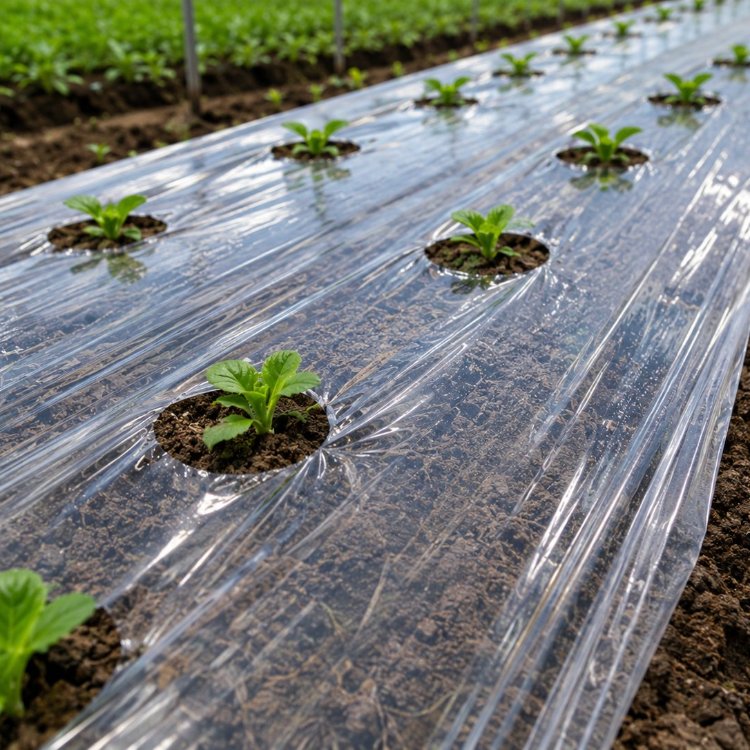
It warms the seedbed faster than any other film, so seeds come up sooner and more evenly.
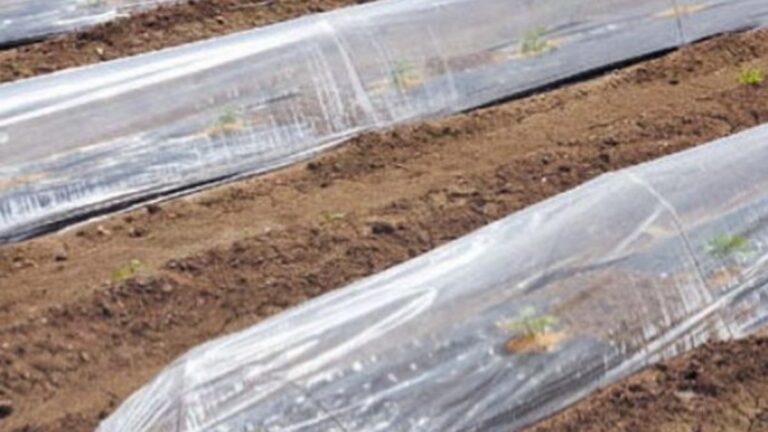
Clear mulch film is worth it for peanuts when the soil is still too cold at the planting date you want. It warms the seedbed faster than any other film, so seeds come up sooner and more evenly. The price is weeds: light goes straight through clear film, so weeds grow under it too, and you need a plan for that before the first roll goes on the tractor.
If your soil is already warm enough when you plant, you probably don’t need clear film at all. A black or two-color film will give you weed control with less trouble.
Peanuts love the heat. If you stick ’em in cold, wet dirt, the seeds just sit there forever—and the longer they sit, the more likely they are to rot or get nailed by disease. You end up with a spotty, uneven stand that matures all over the place, making it a nightmare to figure out when to dig.
How warm is warm enough? The peanut team over at UGA says to wait until the soil temp holds steady above 68°F (20°C) for three days straight before putting seeds in the ground, according to their field reports. Recommendations shift a bit depending on where you are and what you’re growing, but the golden rule is universal: wait for dirt that’s warm and actually staying warm.
In cooler areas, waiting for that naturally can push planting late into spring. That’s the problem clear film solves.
Clear film lets the sun right through to bake the soil directly, then traps all that heat and moisture inside—kind of like a mini greenhouse over each bed. Black film works totally differently: it hogs the sunlight itself and only lets part of that heat soak down into the dirt.
That’s why clear film warms the seedbed more in daytime than black film does. A two-year trial in Shandong, China, published in Plant, Soil and Environment(source: https://pse.agriculturejournals.cz/pdfs/pse/2015/02/06.pdf), found the soil under clear film was the warmest of the films tested in the early afternoon. The same trial also found colored films held heat better overnight and swung less between day and night, so “clear is warmer” is true mainly during the day.
The film also slows evaporation, so the seedbed stays moist longer after planting. On light, dry soils that matters almost as much as the heat.
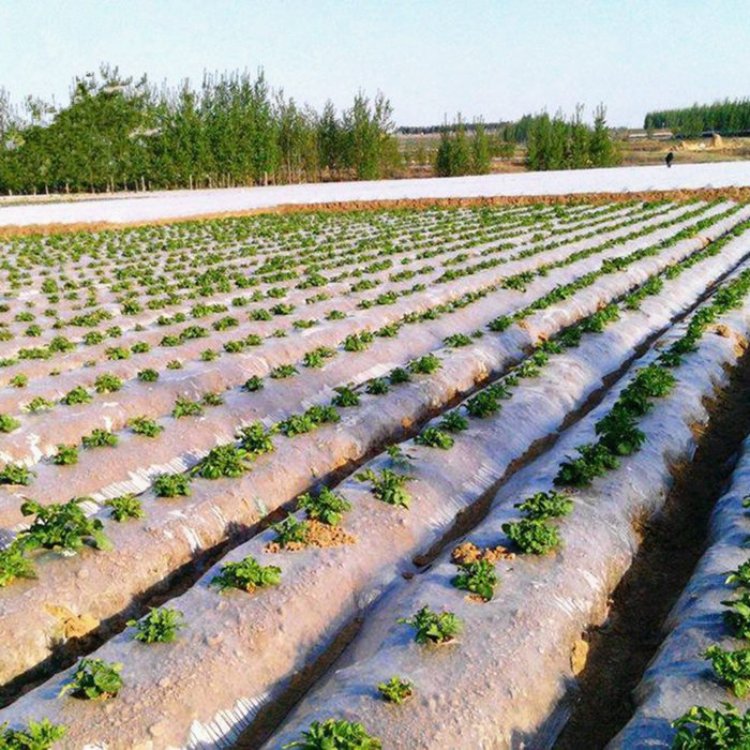
Clear film makes the most sense where spring is cool and the season is short. That covers northern peanut areas such as parts of northern China, where film mulching of peanuts is common, and other places where growers want to plant earlier than bare soil allows. Earlier planting can also mean an earlier harvest, which helps if autumn rain or cold is a risk at digging time.
It tends to work best on:
It’s less useful, or even risky, where the soil is already warm when you plant. Under clear film on a hot, sunny day, the air pocket above the soil gets very hot, and seedlings trapped under the film can be scorched.
This is the main drawback, and the Shandong trial shows it clearly. Over two seasons, weed numbers and weed weight under clear film were more than double those under black film. Weeds under the film compete with the crop and can lift the film off the bed.
Growers who use clear film usually handle this with:
If weeds are your bigger problem than cold soil, look at 검은색 멀칭 필름 instead. Some growers also use films with a clear center strip over the row and black edges, which warm the seed row and shade the rest of the bed. In the Shandong trial, the colored films, including that black-clear-black type, gave higher pod yields than clear film, probably because of better weed control.
| Film | Daytime soil warming | Weed control | Best fit |
|---|---|---|---|
| Clear | Highest | Poor, weeds grow underneath | Cold spring, herbicide program in place |
| 검은색 | 낮추다 | 좋은 | Soil warm enough, weeds the main problem |
| Clear center, black edges | High over the row | Good between rows | Cold spring with heavy weed pressure |
A simple comparison based on how each film works and on the Shandong trial results. Actual performance depends on your soil, climate and film quality.
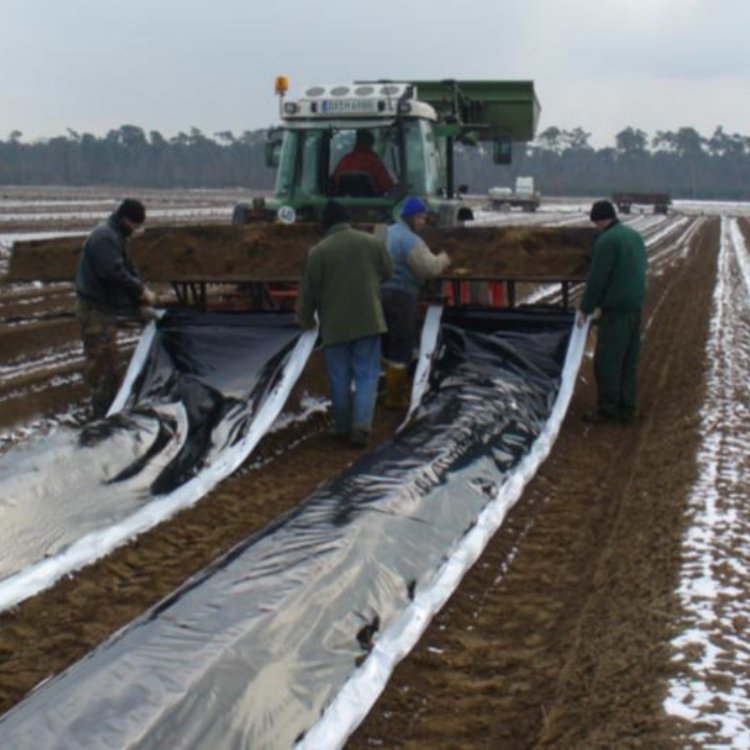
Peanut film is usually thin, because it covers large areas and price per hectare matters. The thinner the film, the more care it needs: it tears more easily on stony or cloddy beds, during fast laying, and when it’s pulled up after harvest.
As a rough guide:
Ask your supplier for a sample and try it on your own machine before ordering a full container.
Measure your bed, then add enough on each side to bury the edges properly, usually 10 to 15 cm. Film that’s too narrow pulls out at the edges; film that’s too wide wastes money.
Also check the core size your laying machine takes and the heaviest roll it can handle. Longer rolls mean fewer stops in long fields, but they’re heavier to load.
Many film-mulched peanut systems use a raised bed with two rows on top. Set film width, hole spacing and the planter so they all match. If you buy pre-punched film, the hole pattern has to fit your seed spacing exactly.
Lay the film snug against the bed. Loose film flaps in the wind, and air gaps between film and soil slow down the warming you’re paying for.
There are two common ways to get seedlings out from under the film:
After planting, watch soil moisture under the film rather than in the open paths, which dry out much faster.
Peanuts also need to peg into the soil after flowering, so the film can’t stay as a solid barrier over the row all season. Depending on the system, growers rely on the film weakening in the sun, open the row by hand or machine before pegging, or use a film designed for it. Ask your supplier which approach their film is made for.
Film is only one line in the budget. A fair comparison with bare-soil planting includes:
On the other side of the ledger: a more even stand, possibly an earlier harvest, and less risk from cold planting weather. Whether that pays depends on your prices, your labor cost and how cold your spring really is.
Results from one region don’t carry over neatly to another. The most useful thing you can do before switching a whole farm to clear film is a side-by-side strip trial: clear film, black or two-color film, and bare soil, planted the same day, with stand counts and yield recorded for each. One season of your own numbers beats any brochure, ours included.
Before ordering a container of clear 멀칭 필름 for peanut growers, confirm:
Many distributors carry clear film alongside black and two-color grades so growers can match the film to the field. We make all three, along with pe 필름 for other uses, and can supply them as 도매 멀치 필름 in mixed loads.
올바른 것을 선택하세요 그린하우스 필름 또는 차광망은 작물 성공에 매우 중요합니다. 헌신적인 사람으로서 농업용 그물 및 필름 제조업체저희 전문가들이 고객님의 지역 기후에 맞춰 자외선 차단 및 광투과율을 맞춤 설정해 드립니다. 맞춤 솔루션을 위해 프로젝트 세부 정보를 알려주세요.