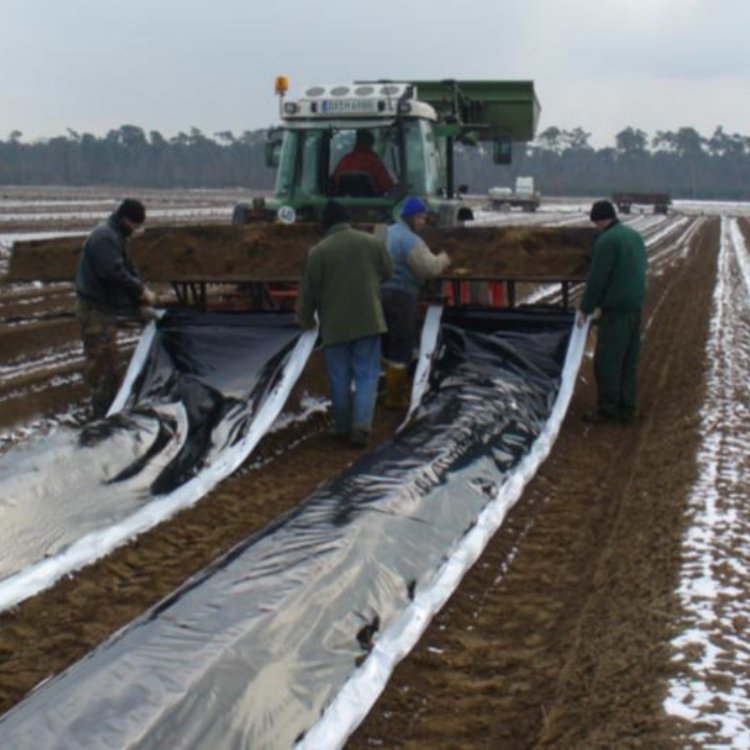
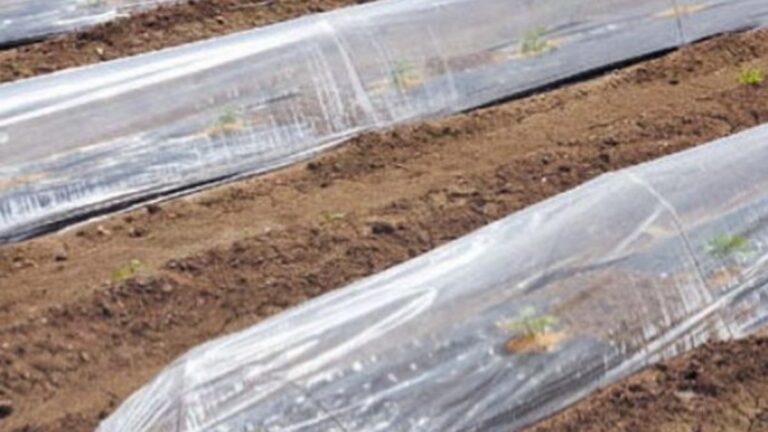
Clear mulch film is worth it for peanuts when the soil is still too cold at the planting date you want. It warms the seedbed faster than any other film, so seeds come up sooner and more evenly. The price is weeds: light goes straight through clear film, so weeds grow under it too, and you need a plan for that before the first roll goes on the tractor.
If your soil is already warm enough when you plant, you probably don’t need clear film at all. A black or two-color film will give you weed control with less trouble.
Оглавление
Why Is Soil Temperature Important for Early-Season Peanut Germination?
Peanuts love the heat. If you stick ’em in cold, wet dirt, the seeds just sit there forever—and the longer they sit, the more likely they are to rot or get nailed by disease. You end up with a spotty, uneven stand that matures all over the place, making it a nightmare to figure out when to dig.
How warm is warm enough? The peanut team over at UGA says to wait until the soil temp holds steady above 68°F (20°C) for three days straight before putting seeds in the ground, according to their field reports. Recommendations shift a bit depending on where you are and what you’re growing, but the golden rule is universal: wait for dirt that’s warm and actually staying warm.
In cooler areas, waiting for that naturally can push planting late into spring. That’s the problem clear film solves.
How Does Transparent Mulch Film Help Warm Soil Before and After Planting?
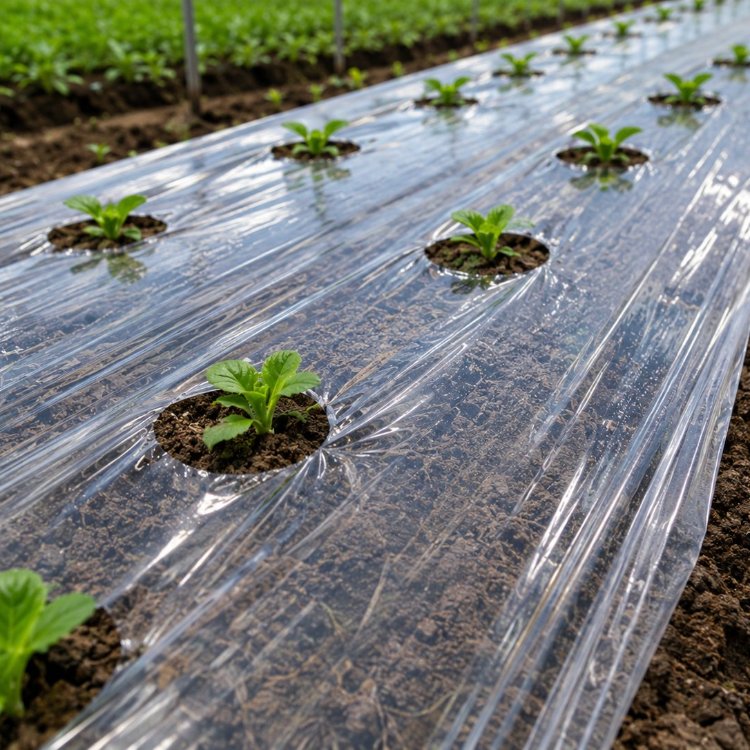
Clear film lets the sun right through to bake the soil directly, then traps all that heat and moisture inside—kind of like a mini greenhouse over each bed. Black film works totally differently: it hogs the sunlight itself and only lets part of that heat soak down into the dirt.
That’s why clear film warms the seedbed more in daytime than black film does. A two-year trial in Shandong, China, published in Plant, Soil and Environment(source: https://pse.agriculturejournals.cz/pdfs/pse/2015/02/06.pdf), found the soil under clear film was the warmest of the films tested in the early afternoon. The same trial also found colored films held heat better overnight and swung less between day and night, so “clear is warmer” is true mainly during the day.
The film also slows evaporation, so the seedbed stays moist longer after planting. On light, dry soils that matters almost as much as the heat.
When Is Transparent Mulch Film Most Suitable for Commercial Peanut Farming?
Early-Spring Planting in Cooler Growing Regions
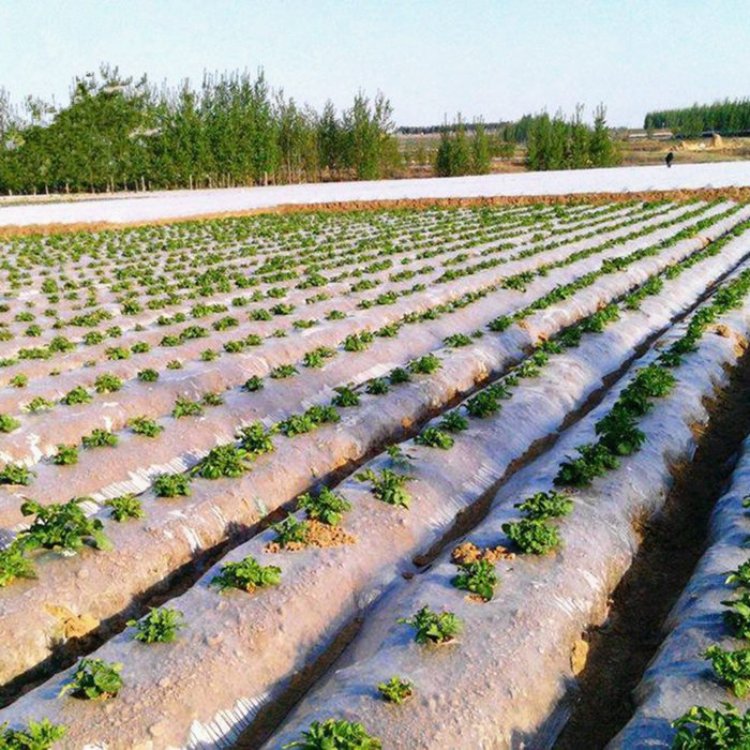
Clear film makes the most sense where spring is cool and the season is short. That covers northern peanut areas such as parts of northern China, where film mulching of peanuts is common, and other places where growers want to plant earlier than bare soil allows. Earlier planting can also mean an earlier harvest, which helps if autumn rain or cold is a risk at digging time.
Soil Conditions, Planting Dates and Local Climate
It tends to work best on:
sandy or sandy-loam soils that warm quickly and drain well
fields where moisture in the seedbed is a concern at planting
farms that can lay film and plant in one pass, or punch holes quickly
It’s less useful, or even risky, where the soil is already warm when you plant. Under clear film on a hot, sunny day, the air pocket above the soil gets very hot, and seedlings trapped under the film can be scorched.
What Weed Management Problems Can Occur Under Transparent Mulch Film?
This is the main drawback, and the Shandong trial shows it clearly. Over two seasons, weed numbers and weed weight under clear film were more than double those under black film. Weeds under the film compete with the crop and can lift the film off the bed.
Growers who use clear film usually handle this with:
a pre-emergence herbicide applied to the bed just before laying film, following the label and local rules
laying the film tight and immediately after shaping and treating the bed
good bed preparation, so there’s no loose trash or clods to hold the film up
If weeds are your bigger problem than cold soil, look at черная мульчирующая пленка instead. Some growers also use films with a clear center strip over the row and black edges, which warm the seed row and shade the rest of the bed. In the Shandong trial, the colored films, including that black-clear-black type, gave higher pod yields than clear film, probably because of better weed control.
Film
Daytime soil warming
Weed control
Best fit
Clear
Highest
Poor, weeds grow underneath
Cold spring, herbicide program in place
Черный
Ниже
Хороший
Soil warm enough, weeds the main problem
Clear center, black edges
High over the row
Good between rows
Cold spring with heavy weed pressure
A simple comparison based on how each film works and on the Shandong trial results. Actual performance depends on your soil, climate and film quality.
How to Choose Transparent Mulch Film Thickness, Width and Mechanical Strength
Film Thickness and Resistance to Installation Damage
Peanut film is usually thin, because it covers large areas and price per hectare matters. The thinner the film, the more care it needs: it tears more easily on stony or cloddy beds, during fast laying, and when it’s pulled up after harvest.
As a rough guide:
the thinnest grades suit smooth, well-prepared beds and good laying machines
slightly thicker film is safer on rougher ground or where the film has to come out in one piece at the end
whatever the thickness, ask for virgin resin and consistent gauge across the roll
Ask your supplier for a sample and try it on your own machine before ordering a full container.
Roll Dimensions and Compatibility With Mulch-Laying Equipment
Measure your bed, then add enough on each side to bury the edges properly, usually 10 to 15 cm. Film that’s too narrow pulls out at the edges; film that’s too wide wastes money.
Also check the core size your laying machine takes and the heaviest roll it can handle. Longer rolls mean fewer stops in long fields, but they’re heavier to load.
How Should Peanut Growers Manage Planting Holes, Soil Moisture and Film Installation?
Matching Film Layout With Peanut Row Spacing
Many film-mulched peanut systems use a raised bed with two rows on top. Set film width, hole spacing and the planter so they all match. If you buy pre-punched film, the hole pattern has to fit your seed spacing exactly.
Lay the film snug against the bed. Loose film flaps in the wind, and air gaps between film and soil slow down the warming you’re paying for.
Preventing Poor Emergence and Excessive Heat Accumulation
There are two common ways to get seedlings out from under the film:
Plant through holes. The film is laid and holed in one pass, and seed is placed in the holes. Seedlings come up through the opening.
Plant first, then release. Seed is sown and the film laid over it. As soon as seedlings emerge, someone walks the rows and cuts them free. This has to be done promptly, because on a sunny day seedlings stuck under clear film can be damaged quickly.
After planting, watch soil moisture under the film rather than in the open paths, which dry out much faster.
Peanuts also need to peg into the soil after flowering, so the film can’t stay as a solid barrier over the row all season. Depending on the system, growers rely on the film weakening in the sun, open the row by hand or machine before pegging, or use a film designed for it. Ask your supplier which approach their film is made for.
How Can Farmers Compare Mulching Costs With Early-Season Crop Benefits?
Film, Machinery, Labor and Removal Costs
Film is only one line in the budget. A fair comparison with bare-soil planting includes:
the film itself, which depends mostly on thickness and width
herbicide for under the film
machine time for shaping beds and laying film
labor to punch holes or release seedlings, if your planter doesn’t do it
labor and machine time to remove the film after harvest
disposal or recycling of the used film
On the other side of the ledger: a more even stand, possibly an earlier harvest, and less risk from cold planting weather. Whether that pays depends on your prices, your labor cost and how cold your spring really is.
Field Trial Results and Local Growing Conditions
Results from one region don’t carry over neatly to another. The most useful thing you can do before switching a whole farm to clear film is a side-by-side strip trial: clear film, black or two-color film, and bare soil, planted the same day, with stand counts and yield recorded for each. One season of your own numbers beats any brochure, ours included.
What Should Agricultural Distributors Confirm Before Wholesale Purchasing?
Before ordering a container of clear мульчирующая пленка for peanut growers, confirm:
The thickness and width your customers’ beds and machines actually need.
Virgin resin and an even gauge, since thin film with weak spots tears on the tractor.
How long the film has to last in the field, and whether it must come out in one piece after harvest.
Core size, roll length and roll weight.
Whether growers need pre-punched holes, and in what pattern.
Packing that keeps rolls round and clean through shipping.
Many distributors carry clear film alongside black and two-color grades so growers can match the film to the field. We make all three, along with пленка for other uses, and can supply them as оптовую пленку для мульчи in mixed loads.
Получите информацию непосредственно от производителя и советы по выращиванию.
Выбор правильного Greenhouse Film Затеняющая сетка имеет решающее значение для успешного выращивания урожая. Как преданный своему делу специалист, я считаю, что она крайне важна. Производитель сельскохозяйственных сеток и пленокНаши эксперты помогут вам подобрать оптимальную защиту от УФ-излучения и светопропускание с учетом климатических условий вашего региона. Предоставьте подробную информацию о вашем проекте для получения индивидуального решения.
OEM-производство и персонализация под собственной торговой маркой
СЕЛЬСКОЕ ХОЗЯЙСТВО ХОНРЕЛ Инженеры подбирают пленки, сетки и капельные трубы в соответствии с вашими культурами, климатом и конструктивными особенностями — технические характеристики, цвета, маркировка и упаковка — подкрепленные чертежами и техническими спецификациями.
Быстрый отклик и оперативная проверка.
Быстрое составление смет, проверка спецификаций/образцов и практическая инженерная поддержка. Мы оперативно согласовываем спецификации и документацию, чтобы ваш проект выполнялся в срок.
Стабильное качество и отслеживаемость.
УФ-стабилизированные составы, контроль качества процесса и лабораторные проверки оптических и механических характеристик, а также отслеживание партий. Доступны сертификаты анализа/отчеты об испытаниях; стандартизированы экспортная упаковка и маркировка.