Black White Panda Film Manufacturer for Silage Bunker Covers: Custom Widths, UV Protection and Tear Resistance
The white side faces up to reflect sunlight, and the black side faces down to keep light out. On larger bunkers, many farms also put a thin oxygen-barrier film under it.
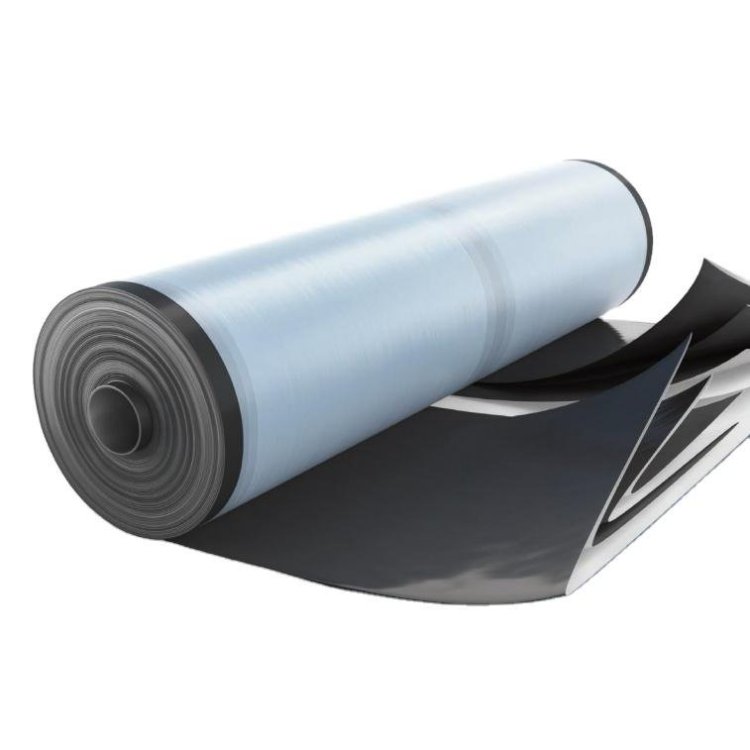
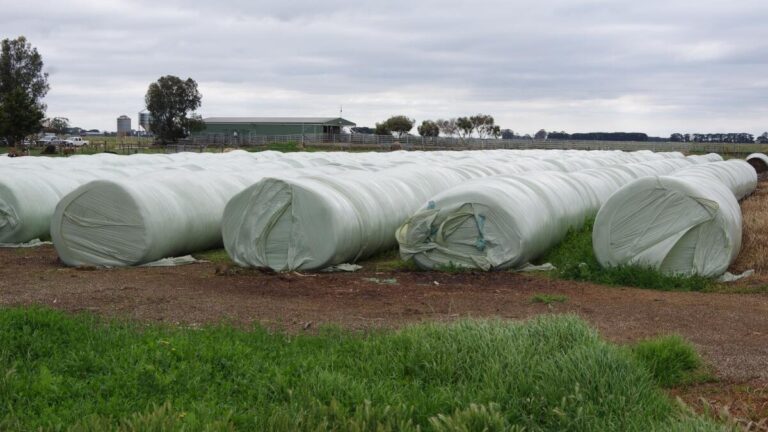
A silage bunker loses the most feed at the top, where air gets in. Good covering comes down to keeping air out: a UV-stabilized plastic cover that stays in full contact with the silage, weighted down well, with the edges sealed. Black and white panda film is a common choice for the top sheet. The white side faces up to reflect sunlight, and the black side faces down to keep light out. On larger bunkers, many farms also put a thin oxygen-barrier film under it.
This article covers how the film works, how to size it for your bunker, how to lay it, and what to check before you order in bulk.
Índice
Why Do Commercial Silage Bunkers Need Properly Selected Covering Films?
Silage keeps because the bacteria in it work without oxygen. Wherever air gets into the pile, yeasts and molds take over, the silage heats, and feed is lost. The top layer and the edges along the walls are where this happens first.
The losses can be large. A University of Wisconsin extension paper on bunker covers describes a dark spoiled layer on top of poorly protected silage that represents a 50–65% loss of dry matter, with another 20–30% lost in the zone just below it. It recommends 6–8 mil polyethylene with UV protection to keep air and rain out.
That’s why the cover is worth getting right. It’s a small cost compared with the feed underneath.
How Does Black White Panda Film Work in Silage Bunker Covering?
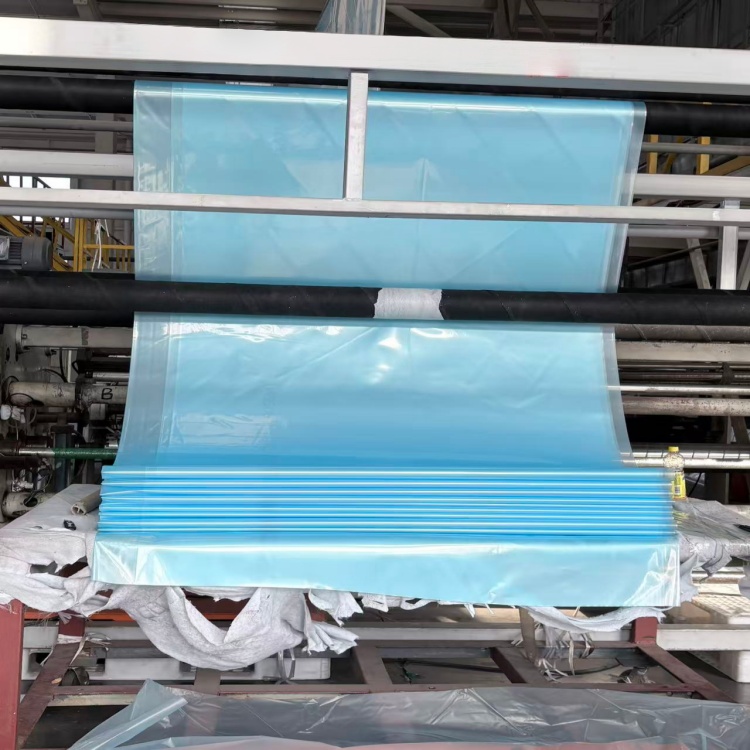
Filme panda is made with two colored layers in one sheet, white on one side and black on the other.
White Outer Surface for Solar Reflection
With the white side facing up, the cover reflects much of the sunlight instead of absorbing it, so the silage just under the plastic stays cooler than it would under a plain black sheet. That matters most in hot, sunny climates and on bunkers that will be fed out slowly over summer.
Black Inner Surface for Light Blocking
The black side faces down. It blocks light completely and makes the sheet opaque. Lay the film the wrong way up and you lose the benefit of the white side, so check orientation before the tires go on.
How Do LDPE, LLDPE and Multilayer Film Structures Affect Cover Performance?
Most panda film is made by co-extruding several polyethylene layers together. In simple terms:
LDPE makes the sheet soft and easy to lay over an uneven pile.
LLDPE adds stretch and tear resistance, so the sheet copes with wind and people walking on it.
Separate layers let us put the white pigment on the outside, the black on the inside, and the UV stabilizers where they’re needed.
Ask for virgin resin. Covers made with a lot of recycled material tend to have weak spots and turn brittle sooner in the sun.
It’s also worth knowing what standard polyethylene doesn’t do well: it still lets a small amount of oxygen through. That’s the reason for oxygen-barrier film, covered below.
Why Are UV Resistance and Tear Strength Important for Silage Bunker Covers?
Long-Term Outdoor Exposure and Weather Conditions
A bunker cover can sit in the sun, rain and cold for many months while the bunker is fed out. Without proper UV stabilization, polyethylene turns brittle and cracks, and once it cracks, air and water get in. Tell your supplier how long the cover has to last and what your climate is like, so the UV package matches.
Puncture and Tear Risks During Installation and Removal
Covering day is hard on plastic. People walk on it, tires get dragged across it, and stalks push up from below. Later in the season, wind, birds and animals do their share. A tougher film helps, but so does a habit of walking the bunker regularly and taping any holes straight away.
How to Choose Custom Film Widths and Thicknesses for Large Silage Bunkers
Measuring Bunker Dimensions and Calculating Film Coverage
To size the cover:
Measure the width between the walls and add the extra needed to go over the crown of the pile.
Add enough on each side to come down over the walls or tuck in along the edges.
Measure the length, including the slope at each end, and add extra at both ends for weighting.
It’s better to order a little wide than a little narrow. A sheet that only just reaches the walls leaves gaps when the pile settles.
For thickness, the Wisconsin paper’s 6–8 mil range is a good starting point. Go toward the heavier end on bigger bunkers, where people walk on the cover a lot, and where the cover has to last a long time.
Reducing Seams, Overlaps and Installation Waste
Every overlap is a place where air can get in. One wide sheet is easier to seal than several narrow ones. If you do need to overlap sheets, make the overlaps generous and weight them heavily. Ask your supplier which widths they can produce as a single sheet. Folded wide sheets are easier to handle on site than very large flat rolls.
How Should Panda Film Be Installed and Secured Over a Silage Bunker?
Cover Placement, Weighting and Edge Sealing
If you use sidewall plastic, hang it down the inside of the walls before filling, with plenty left over the top to fold in.
Cover as soon as filling and packing are finished.
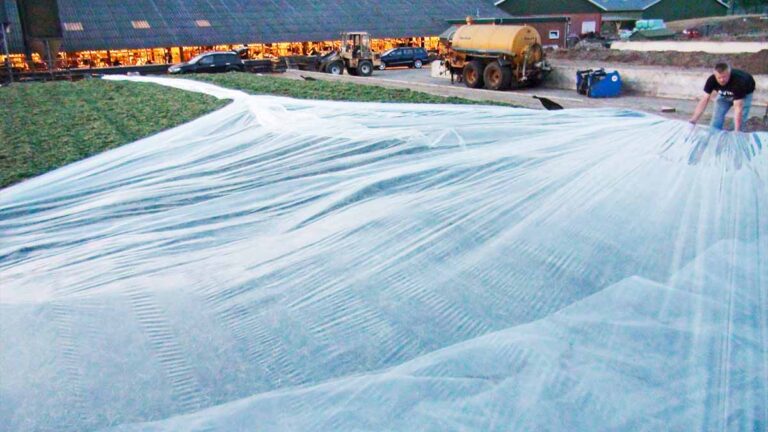
Lay the film white side up, in full contact with the silage, and pull out large wrinkles.
Weight the whole surface. The Wisconsin paper notes that tires should touch each other for even weighting. Many farms use tire sidewalls or gravel bags, which are easier to handle and hold less water.
Put extra weight along the walls, at overlaps and at the feeding face, where air is most likely to get under.
Check the cover regularly and repair damage quickly, as University of Kentucky guidance also advises.
When a Separate Oxygen-Barrier Layer May Be Needed
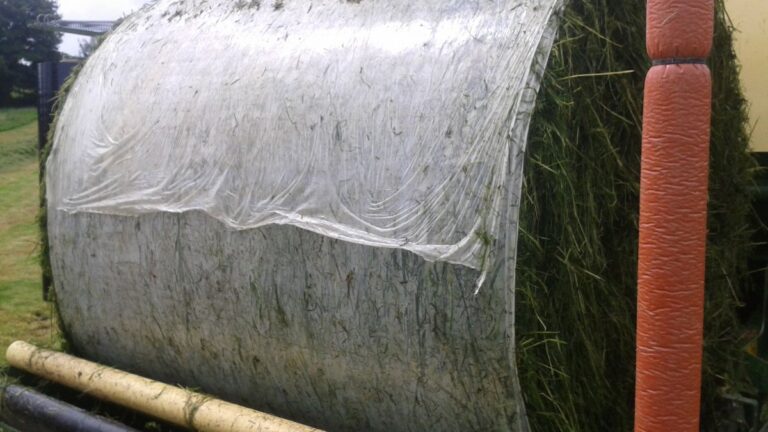
An oxygen-barrier film is a thin sheet laid directly on the silage under the main cover. It lets much less oxygen through than standard polyethylene. The main cover, such as panda film, goes on top to protect it from sun and damage.
The research behind it is fairly strong. A meta-analysis by Wilkinson and Fenlon, reported by Feedstuffs, found that in bunker and clamp silos, losses in the top layer fell from 19.5% of the crop ensiled under standard film to 11.4% under oxygen-barrier film. In corn silage, aerobic stability rose from about 75 to 135 hours.
It costs more and adds a step on covering day. For large bunkers, or where top spoilage is already a problem, it’s usually worth considering.
Cover setup
What to expect
No cover or poor cover
Heavy spoilage on top and at the edges
Single UV-stabilized PE or panda cover, well weighted
Much better protection; most losses at the edges and the feeding face
Oxygen-barrier film under a panda cover
Lowest top-layer losses in the research above; higher material cost
What Specifications Should Farms and Distributors Confirm Before Bulk Ordering?
Thickness, Width, Roll Length and Material Performance
Confirm:
Thickness, and how evenly it holds across the sheet.
Width and length as a single sheet, matched to your bunkers.
Virgin resin, with UV stabilization matched to how long the cover will be on.
White outside, black inside, and fully opaque.
Whether you also need oxygen-barrier film, and in what width.
Quality Inspection, Packaging and Custom Manufacturing
Ask for a sample before a full order and check it in the sun for opacity. Make sure rolls are packed well enough to arrive without cuts or crushed cores, and that each roll is labeled with size and thickness.
We make black and white panda film and preto e branco para silagem for bunker and pile covers, with custom widths and lengths. For round bales, that’s a different product: silage stretch film. Distributors can combine these with our other silage film grades in one shipment. send us your bunker sizes and quantities for a quote.
Perguntas frequentes
Q1: Which side of panda film faces up?
A: The white side faces up, toward the sun. The black side goes down against the silage.
Q2: Is panda film enough on its own, or do I need an oxygen-barrier film?
A: A well-laid, well-weighted panda cover works on its own. An oxygen-barrier film underneath reduces top-layer losses further, according to the research above, but it costs more.
Q3: How thick should a bunker cover be?
A: A UW-Madison extension paper suggests 6–8 mil polyethylene with UV protection. Go heavier for large bunkers, heavy foot traffic or long storage.
Q4: Can I reuse a bunker cover?
A: Heavier covers sometimes get a second use if they’re clean and undamaged, but any hole lets air in. Many farms prefer a new cover each season for the main sheet.
Obtenha informações diretamente da fábrica e dicas de cultivo.
Selecionar o certo Filme de estufa ou tela de sombreamento é fundamental para o sucesso da colheita. Como um dedicado Fabricante de redes e filmes agrícolasNossos especialistas ajudam você a personalizar a proteção UV e a transmissão de luz de acordo com o clima da sua região. Compartilhe os detalhes do seu projeto para obter uma solução sob medida.
AGRICULTURA HONREL Engenheiros desenvolvem filmes, telas e tubos de gotejamento adequados à sua cultura, clima e estrutura — especificações, cores, rotulagem e embalagem — com base em desenhos e fichas técnicas.
Resposta rápida e revisão imediata
Orçamentos rápidos, aprovação de especificações/amostras e suporte técnico prático. Alinhamos especificações e documentação rapidamente para manter o cronograma do seu projeto em dia.
Qualidade consistente e rastreabilidade
Formulações estabilizadas contra raios UV, controle de qualidade do processo e verificações laboratoriais de óptica/mecânica, além de rastreamento em nível de lote. Certificados de análise/relatórios de teste disponíveis; embalagem e rotulagem para exportação padronizadas.