PE Film Manufacturer for Concrete Curing: Custom Thickness and Bulk Rolls for Construction Contractors
The film has to be thick enough not to tear on site, it has to lie flat against the concrete, and the edges and laps have to stay sealed for the whole curing period.
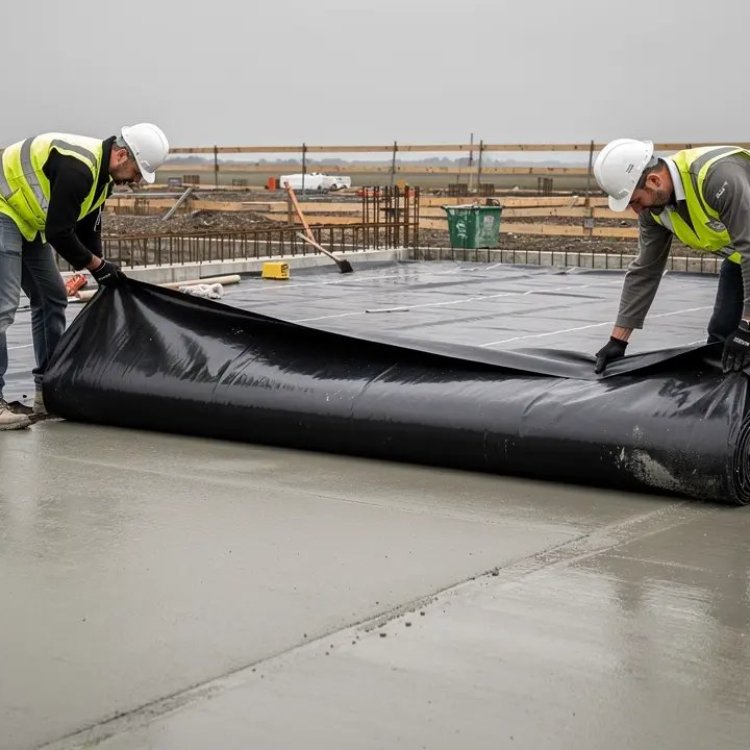
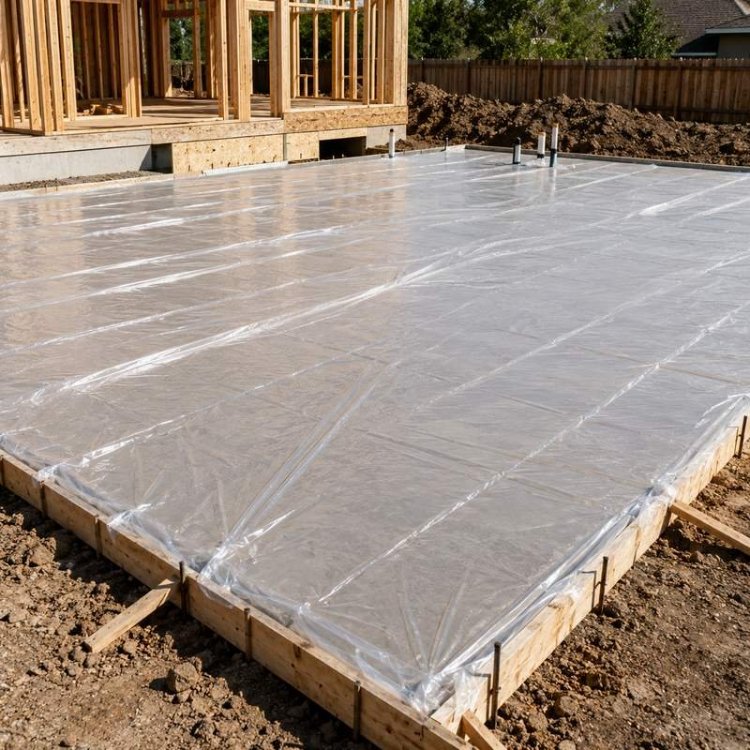
Polyethylene sheeting is one of the simplest ways to cure a slab: you cover the fresh concrete and the water stays in. It works well as long as three things are right. The film has to be thick enough not to tear on site, it has to lie flat against the concrete, and the edges and laps have to stay sealed for the whole curing period. Get those right and Filme PE is cheap, quick to lay and leaves nothing on the surface.
This article covers how to choose thickness and roll size, how to lay it, and what to check with a supplier before ordering in bulk.
Índice
Why Is Moisture Retention Important During Concrete Curing?
Look, concrete cures because the cement actually needs water to react, not because it just sits there and dries out. If the top layer bakes in the sun, wind, or dry air too early, you’re screwed—that surface ends up way weaker than the rest of the pour, and it’s gonna crack, dust up, and wear out in no time.
Bottom line, curing is just keeping the moisture and temp dialed in for a while. How long? Hell, that depends entirely on your mix, the weather, and what site you’re on. Throw out any old rules of thumb—just do whatever’s on the engineer’s specs, which usually points right back to ACI 308 or local code.
How Does PE Film Help Reduce Moisture Loss From Fresh Concrete?
The film is a sheet that water vapor can’t pass through easily. Laid over the slab, it traps the moisture that would otherwise evaporate, so the surface stays damp underneath.
Compared with other curing methods:
Unlike wet burlap, it doesn’t need re-wetting, as long as it stays sealed.
Unlike spray-on curing compounds, it leaves no film on the surface, which matters if flooring, coatings or tile go on later.
It’s light and easy to lay over large or awkward areas. Penn State’s notes on curing(source: https://www.engr.psu.edu/ce/courses/ce584/concrete/library/construction/curing/Preventing%20water%20loss.htm) describe it as more versatile than burlap for that reason.
The trade-off is that plastic sheeting needs attention. It can blow off, tear, or leave a blotchy surface if it isn’t laid properly. The installation section covers that.
How to Select the Right PE Film Thickness for Construction Projects
Thickness Uniformity and Puncture Resistance
Thickness is mostly about how much abuse the sheet will take. A common minimum quoted for curing is 4 mil (about 0.1 mm), and heavier sheeting is used where there’s more traffic or wind.
Espessura
Typical use
4 mil (about 0.1 mm)
Indoor slabs, small pours, little foot traffic
6 mil (about 0.15 mm)
Most site work, outdoor slabs, some foot traffic
8–10 mil (about 0.2–0.25 mm)
Windy sites, heavy traffic, sheets you want to reuse
The nominal number isn’t the whole story. A sheet sold as 6 mil that’s thin in places will tear in those places. Ask for virgin resin and an even gauge across the width, and measure a few points on a sample roll yourself.
Handling Requirements and Installation Damage
Think about what happens on the slab during curing. If trades need to walk across it to cut joints or check work, go thicker. If the film will be dragged over rebar or rough edges while it’s laid, go thicker. If it’s a quiet indoor slab and nobody walks on it, the lighter grade is fine.
If you want to reuse sheets across several pours, heavier film holds up better, but inspect it each time. A sheet full of small holes no longer cures properly.
How Do Roll Width and Length Affect Concrete Curing Efficiency?
Matching Film Width to Slab Dimensions
Every seam is just another spot for moisture to leak out and more work for whoever has to tape or weigh down the overlaps. Wider sheets mean way fewer seams to worry about. On big pours, contractors usually go for folded wide rolls that unfold to cover an entire bay in one shot.
When choosing width, measure the slab and add enough to run down the edges and overlap any adjoining sheet.
Reducing Overlaps, Waste and Installation Labor
A quick way to compare roll sizes: count how many sheets you need across the slab. Each extra sheet adds one more lap down the full length of the pour. On a long, wide slab, going from narrow rolls to wide ones can cut the number of laps from several to one or two, which saves both film and labor.
Roll length matters too. Long rolls mean fewer joints along the pour, but they’re heavier to carry and unroll by hand. Choose what your crew can actually handle on site.
How Should Contractors Install PE Film for Effective Concrete Curing?
Surface Contact, Overlaps and Edge Securing
Lay the film once the surface is hard enough not to be marked, as soon as finishing allows.
Lay it flat and in full contact with the concrete. Smooth out wrinkles.
Overlap adjoining sheets. Guidance varies, but around 6 inches (150 mm) is often quoted as a minimum, and wider laps are safer. Tape or weigh down the laps.
Weigh down all the edges continuously, with sand, boards or similar. Wind getting under one edge can lift a whole sheet.
Preventing Gaps, Tears and Premature Removal
The number one headache with plastic curing is getting that ugly, blotchy, mottled surface. According to For Construction Pros, when the plastic wrinkles up, water evaporates and condenses underneath, making the concrete dry unevenly and leaving dark stains all over. The main fix? Keep the sheet pulled tight and flat right against the surface. If a perfectly even color is critical, as with decorative or stained concrete, a different curing method may be the better choice.
Color matters in hot and cold weather. The same article suggests white sheeting in hot weather and dark sheeting in cold weather. White reflects sunlight and helps keep the slab cooler; dark sheeting absorbs heat.
Finally, leave the film on for the full curing period. Check edges and laps daily, especially after wind, and patch any tears.
What Material Properties and Project Standards Should Buyers Check?
Moisture Retention, Thickness and Mechanical Properties
When it comes to curing blankets, what you really need is something that locks moisture in, doesn’t tear or puncture easily when you’re dragging it around the site, and has an even thickness all the way through. Hit up your supplier for test data on thickness and strength, and actually check a sample against your project specs before you buy.
Checking Applicable Specifications Such as ASTM C171
Many project specifications refer to ASTM C171, the standard for sheet materials for curing concrete. According to ASTM’s summary, it covers curing paper, clear or white polyethylene film, and white burlap-polyethylene sheet. It also requires white polyethylene film to have a daylight reflectance of at least 70%.
If your project calls for C171, ask the supplier to confirm in writing that the film meets it and to provide test reports. Public and infrastructure projects usually check.
What Should Contractors Confirm Before Ordering Bulk Concrete Curing Film?
Before placing a bulk order, confirm:
Thickness, with tolerance, and whether the project requires ASTM C171 or another standard.
Clear, white or black, depending on climate and the time of year you’re pouring.
Width, fold and roll length, matched to your typical slab sizes and crew.
Virgin resin and an even gauge. Ask for a sample roll.
Whether the film will sit in sunlight for a long time, in which case ask about UV stabilization.
Core strength and packing, so rolls arrive round and undamaged.
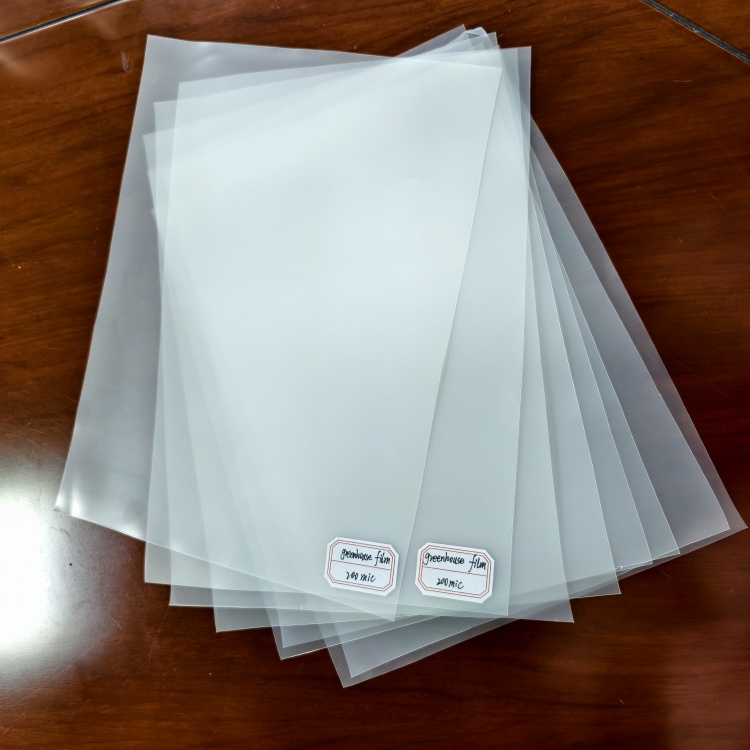
We make pe film in custom thickness, width and color on the same lines that produce our agricultural films. For below-slab or containment work, see our hdpe geomembrane, and for tough reusable site covers, our pe woven fabric. We also handle custom sizes and private labeling.
Perguntas frequentes
Q1: Why does concrete cured under plastic sometimes look blotchy?
A: Usually because the sheet wasn’t flat. Wrinkles let moisture evaporate and condense under the film, so the slab dries unevenly. Lay the film flat and in full contact with the concrete.
Q2: Is PE film better than a spray-on curing compound?
A: It depends on the job. Film leaves nothing on the surface, which helps when flooring or coatings go on later. Spray compounds are quicker on large or exposed areas and don’t blow away. Many specifications allow either.
Q3: What thickness should I use?
A: At least 4 mil is commonly quoted. Most outdoor site work uses 6 mil or heavier so the sheet survives foot traffic and wind. Check your project specification.
Q4: Can curing film be reused?
A: Heavier film can sometimes be reused if it’s clean and free of holes. Inspect it before each pour, since a punctured sheet won’t hold moisture.
Obtenha informações diretamente da fábrica e dicas de cultivo.
Selecionar o certo Filme de estufa ou tela de sombreamento é fundamental para o sucesso da colheita. Como um dedicado Fabricante de redes e filmes agrícolasNossos especialistas ajudam você a personalizar a proteção UV e a transmissão de luz de acordo com o clima da sua região. Compartilhe os detalhes do seu projeto para obter uma solução sob medida.
AGRICULTURA HONREL Engenheiros desenvolvem filmes, telas e tubos de gotejamento adequados à sua cultura, clima e estrutura — especificações, cores, rotulagem e embalagem — com base em desenhos e fichas técnicas.
Resposta rápida e revisão imediata
Orçamentos rápidos, aprovação de especificações/amostras e suporte técnico prático. Alinhamos especificações e documentação rapidamente para manter o cronograma do seu projeto em dia.
Qualidade consistente e rastreabilidade
Formulações estabilizadas contra raios UV, controle de qualidade do processo e verificações laboratoriais de óptica/mecânica, além de rastreamento em nível de lote. Certificados de análise/relatórios de teste disponíveis; embalagem e rotulagem para exportação padronizadas.