Knitted vs Woven HDPE Shade Net: A Manufacturer’s Guide to Choosing the Right Construction for Bulk Orders
Woven net is made of yarns crossing over and under each other, so it's flatter and more stable, but its cut edges have to be finished or they fray. For most farm, greenhouse and nursery work, where nets get cut to fit and take wind, knitted is the easier choice.
Knitted and woven shade nets come off two very different machines, and most of what buyers need to know follows from that. Knitted net is made of yarns looped into each other, so it doesn’t unravel when it’s cut and it gives a little under load. Woven net is made of yarns crossing over and under each other, so it’s flatter and more stable, but its cut edges have to be finished or they fray. For most farm, greenhouse and nursery work, where nets get cut to fit and take wind, knitted is the easier choice. Woven makes sense where you want a flat, stable panel on a fixed frame and the edges are finished at the factory.
สารบัญ
What Is the Difference Between Knitted and Woven HDPE Shade Nets?
Knitted Loop Structures vs Woven Yarn Structures
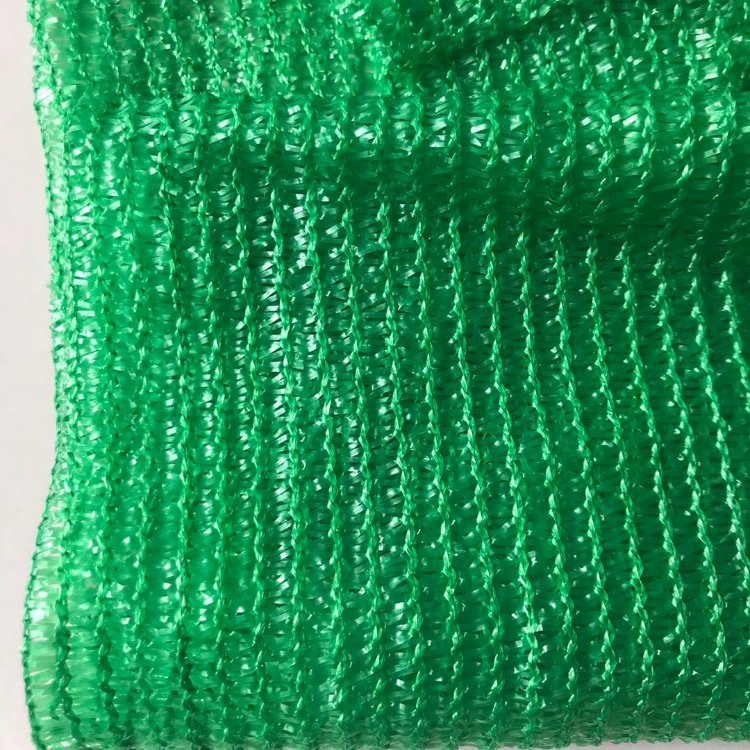
On a warp-knitting machine, hundreds of HDPE yarns run lengthwise and are looped into a chain, each loop locked into the next. The result is a net where every yarn is tied to its neighbors. Cut it with scissors and the edge stays put. Greenhouse Megastore’s product guide describes the same thing: knitted shade cloth is made in a lock-stitch pattern that resists unraveling (Greenhouse Megastore).
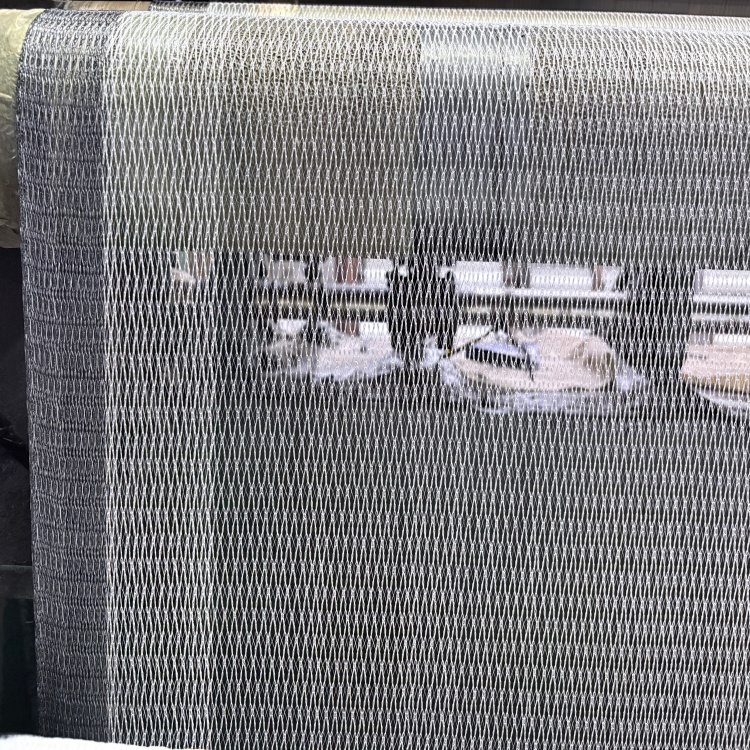
A loom works differently. Lengthwise yarns are held under tension, and crosswise yarns are passed over and under them. Nothing locks the crossing points except friction, so once you cut through, the yarns at the edge start to slip. The same guide notes that woven cloth is normally finished with tape and grommets to stop it unraveling.
If you’ve only ever bought “shade net” by percentage, it’s worth asking your ผู้ผลิตตาข่ายบังแดด which of the two you’re actually getting. Catalogs don’t always make it obvious.
Round Monofilament, Flat Tape and Mixed-Yarn Construction
Don’t forget, the actual yarn matters just as much as how the machine weaves it. Round monofilament is basically a solid, sturdy strand—tough as nails and hard-wearing, plus it leaves a more open grid that breathes really well. Flat tape, on the other hand, is a thin, wide strip that covers way more ground per gram, meaning you get a higher shade rate without adding a ton of weight. A lot of knitted nets actually mix the two together: round yarn for raw strength, and flat tape to bulk up the shading.
In practice this shows up in how the net behaves. Greenhouse Megastore describes tape-knit cloth as having significant stretch and mono-knit cloth as having minimal stretch, while woven cloth won’t stretch once it’s taped and grommeted. So two “knitted 50%” nets can feel and hang quite differently depending on the yarn. When you look at our ตาข่ายบังแดด range, or anyone else’s, check the yarn type as well as the shade rate.
Which Shade Net Construction Offers Better Tear Resistance?
How Each Structure Responds to Tension, Cuts and Wind
When a knitted net is punctured, by hail, a branch or a careless knife, the damage usually stays local, because the loops around the hole keep holding each other. The net also flexes a little in gusts rather than taking the full shock at the fixing points.
Woven net is stiffer. It holds its shape well under steady tension, which is what you want on a tight frame. But a cut or puncture can run along the line of the yarns, and because it stretches so little, wind loads go more directly into the frame, cables and fixings. That doesn’t make woven a bad product. It means the frame and fixings have to be designed for it.
Edge Stability and Resistance to Damage During Installation
Most net damage happens during installation, not after. Knitted net can be cut to length on site, tied with clips or ties anywhere along the edge, and patched without much fuss. Woven net needs its edges bound and its fixing points reinforced, usually with tape and grommets, before it goes up. Cut woven net in the field without finishing the edge and it will start to fray where it’s pulled tight. If what you really need is a tough, flat woven sheet rather than a net, for ground covers or tarps, PE woven fabric is often the better product.
How Do Knitted and Woven Shade Nets Compare in UV Resistance and Service Life?
Construction has less to do with UV life than most people expect. What the net is made of matters more: the grade of HDPE, the UV stabilizer package, the color, and the thickness of the yarn. A knitted net and a woven net made from the same stabilized resin will age at broadly similar rates in the same sun.
Where construction does come in is how a net fails once it starts to age. A knitted net that loses a few yarns usually keeps working. A woven net can open up along a weakened line. Either way, ask your supplier how long the net is expected to last in your climate, and what that estimate is based on, rather than relying on a single number in a brochure.
How Do Shade Percentage, Fabric Weight and Airflow Affect Performance?
Shade percentage just tells you how much sunlight the net cuts out. Take Greenhouse Megastore—they list densities anywhere from 20% all the way up to 90%, and that number is literally just the share of light the fabric blocks. Don’t let it fool you, though: that single percentage doesn’t tell you a damn thing about how heavy the net is, how much abuse it can take, or how well the air is actually going to breathe through it.
Fabric weight—measured in grams per square meter—tells you straight up how much physical material is packed into the net. You can easily have two nets with the exact same shade rating that weigh completely different amounts depending on the yarn and how it’s built, so you always want to compare both specs side by side. As for airflow, that mostly comes down to how open the weave is; nets built with round yarn tend to breathe way better than tape-heavy ones, even if they’re pulling the exact same shade percentage.
Color plays a part too. The same guide notes that darker colors absorb more UV, while lighter colors are better at deflecting heat. That’s why white and aluminized nets are popular over hot greenhouses, and black is common where durability and simple shade are the priority.
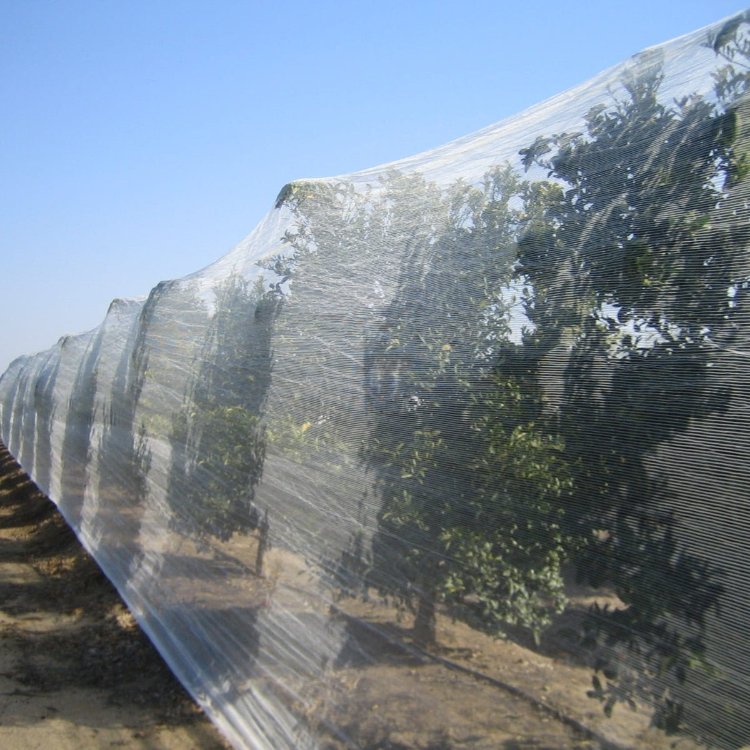
If you’re also keeping insects out, remember that ตาข่ายกันแมลง restricts airflow far more than shade net does, so plan the two together.
Which Construction Is More Suitable for Agriculture, Fencing and Construction Sites?
ใช้
Usually chosen
Why
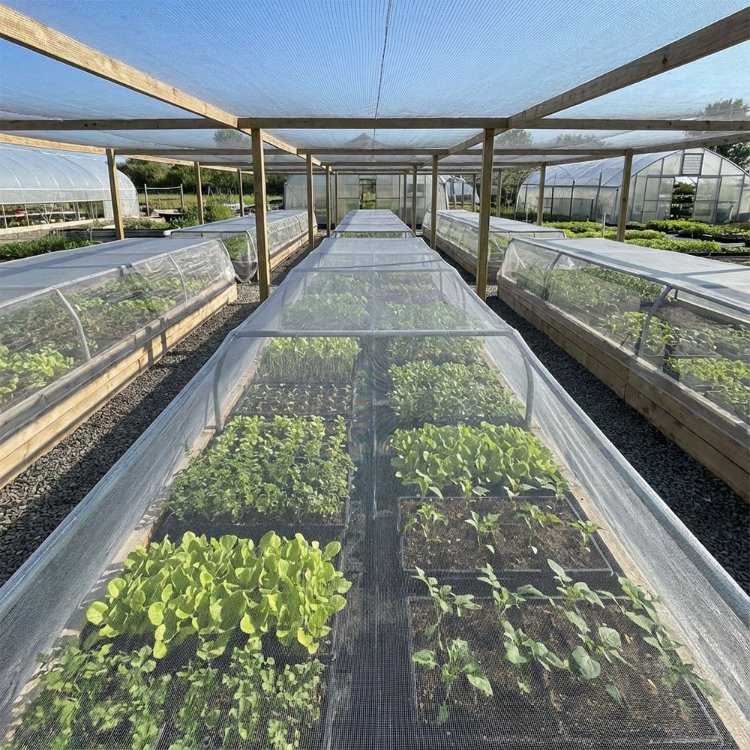
Greenhouse and nursery shading
Knitted
Cut to fit on site, flexes in wind, breathes well
Open-field crops and shade houses on cables
Knitted
Better tolerance of wind and punctures
Livestock shade
Knitted
Handles wind and rough treatment
Fixed frames needing a flat, tight panel
Woven or knitted
Woven holds its shape if the edges are finished
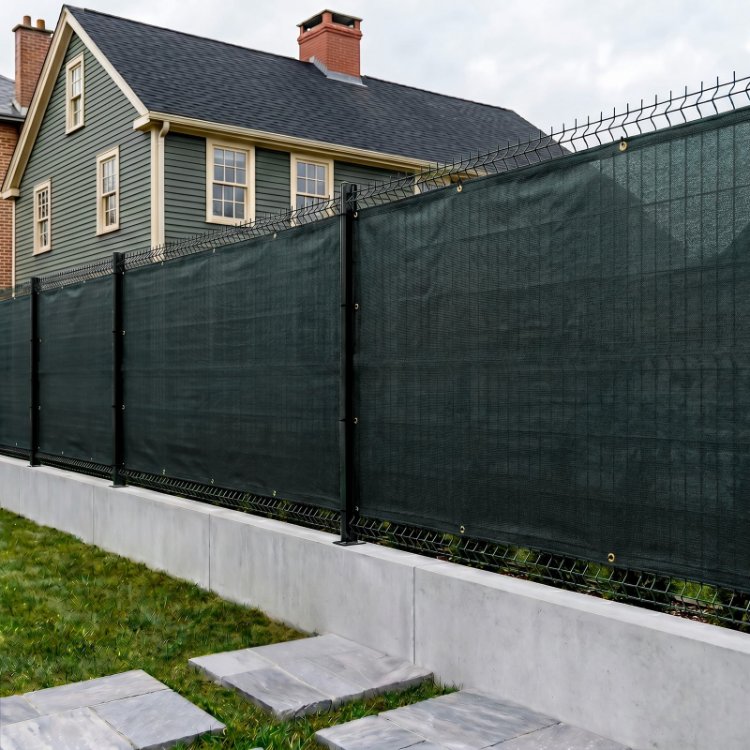
Fence screens and site hoarding
Either
Depends on opacity needed and wind exposure
These are tendencies, not rules. Habits vary by market, and some buyers are used to woven nets for certain jobs and will expect them.
On fruit farms, shade is sometimes combined with or replaced by ตาข่ายกันลูกเห็บ, which uses a more open knit to stop hail while keeping light loss low.
How Should Importers Compare Purchase Price and Long-Term Replacement Costs?
The cheapest quote per square meter is often a lighter net, a lower-grade resin, or a woven net without finished edges. Each of those costs money later, in shorter life, more damage during installation, or more labor finishing edges on site.
A fairer comparison asks a few more questions. What’s the weight per square meter? Is the resin virgin? How long is the net expected to last in the target market? Who finishes the edges, and how? Then divide the landed cost, including installation, by the years of service you can realistically expect. A net that costs a bit more and lasts noticeably longer usually wins.
Freight matters too. Roll size, folding and packing decide how much net fits in a container, and that changes the cost per square meter once it lands.
What Specifications Should Buyers Confirm Before Ordering HDPE Shade Net in Bulk?
Yarn Type, GSM, Shade Rate, Width and Roll Length
Put these on the order:
knitted or woven
yarn type: round monofilament, flat tape, or mixed
virgin HDPE, or the share of recycled content
weight in g/m², with tolerance
shade rate, and how it’s measured
width and roll length, with tolerance
color, against a reference sample
UV Stabilization, Edge Finishing and Quality Inspection
Before you sign off, make sure to double-check the UV stabilization and what kind of service life you can actually expect in your local climate, how the edges are finished—which is a massive deal for woven stuff—and exactly how the rolls are packed and labeled. Always demand a pre-production sample first and hold onto it like gold as your master reference for the bulk shipment.
We make both knitted and woven nets and can supply either to your specification. Send us your application, market and target specs, and we’ll recommend a construction and send samples before production.