Black Mulch Film Manufacturer for Garlic Farms | Bulk Weed Control and Soil Moisture Management
The procurement team should begin with planting method. Some farms plant through pre-punched holes. Some lay film after bed preparation and then plant.
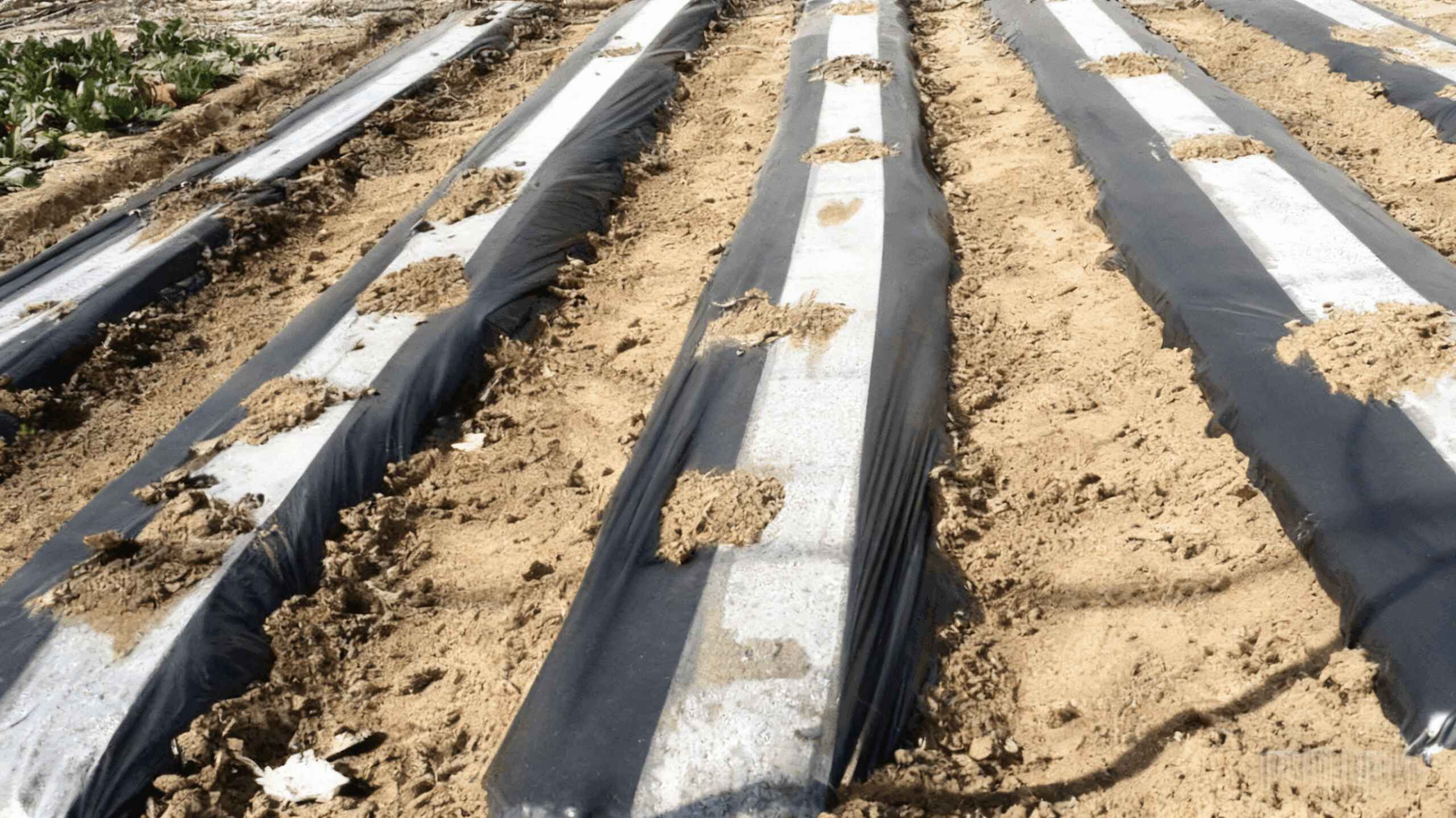
Black mulch film for garlic farms helps suppress weeds between densely planted rows while reducing evaporation from covered soil. For commercial garlic production, film width, planting-hole pattern, thickness and field life need to match the bed system and growing season. HONREL manufactures black mulch film for large garlic farms with custom roll and planting specifications.
Garlic creates a different mulch-film problem from many short-season vegetables. The crop can remain in the field for months, planting density is high, and once the plants are established, correcting the film or irrigation layout becomes difficult.
The film therefore has to work from planting through bulb development—not just survive the laying machine.
Table of Contents
Black Mulch Film for High-Density Garlic Planting
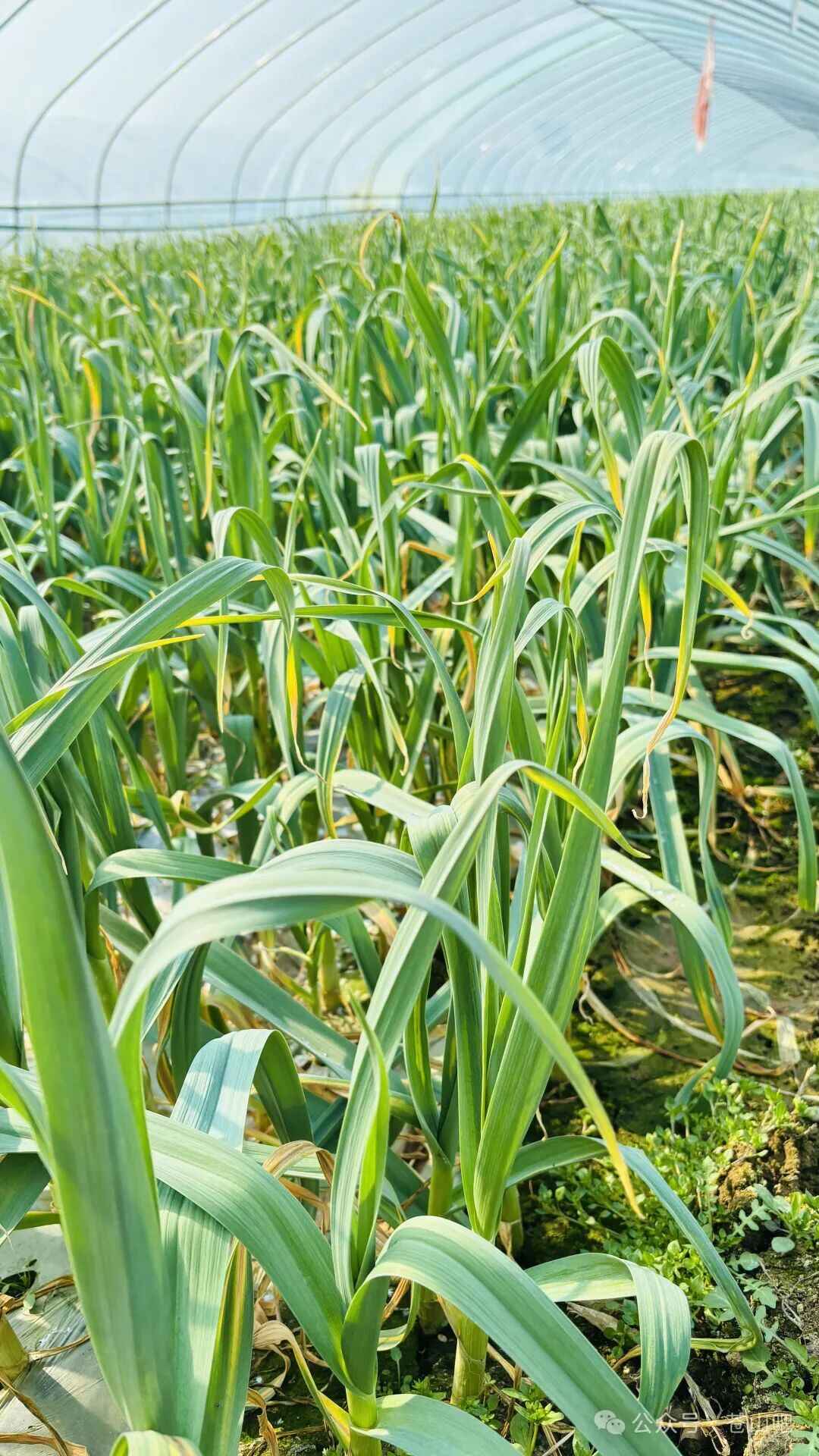
Garlic is commonly planted at much closer spacing than crops such as melons, pumpkins or peppers.
That changes how mulch film should be designed.
A melon bed may only need relatively large openings at wide intervals. Garlic can require many smaller planting positions arranged across several rows.
With this type of crop, the relationship between film width, row number and hole spacing becomes especially important.
Garlic Bed Detail
Mulch Film Decision
Number of planting rows
Hole layout across the film
Plant spacing
Distance between planting holes
Bed top width
Usable planting area
Bed shoulders
Additional film coverage
Edge burial
Final film width
Mechanical planting
Hole and machine compatibility
A standard roll with the wrong hole pattern can create more labour rather than reduce it.
For pre-punched film, the garlic planting layout should therefore be confirmed before production.
Weed Control Between Garlic Plants
Garlic does not develop a broad, fast-closing canopy like pumpkin or zucchini.
That leaves more opportunity for weeds to compete for space, water and nutrients.
Black plastic mulch film creates an opaque barrier over the bed. By preventing sunlight from reaching covered soil, it suppresses weed emergence beneath the film.
If holes are unnecessarily large, weeds can establish beside the garlic plants. If the film tears between closely spaced holes, several openings can merge into a larger exposed area.
For garlic, effective weed suppression therefore depends on more than using black film.
Hole size matters almost as much as film colour.
The opening needs to provide enough room for planting and crop emergence without exposing substantially more soil than necessary.
Garlic Mulch Film Must Last Longer Than Installation
Film performance is sometimes judged immediately after laying:
Did it unwind properly? Did it tear? Are the edges buried?
Depending on the production system and planting season, the film may remain exposed through substantial changes in temperature, rainfall, wind and solar radiation.
The material needs to retain enough integrity to continue covering the bed during the required crop period.
This makes field duration an important part of the specification.
A film suitable for a short vegetable cycle should not automatically be assumed suitable for a longer garlic program.
UV stabilisation, thickness and mechanical strength need to be considered against the expected time in the field.
Soil Moisture Under Black Mulch Film
The second major reason garlic farms use mulch is water management.
Bare soil loses water directly from its surface. Black mulch covers much of that exposed area and reduces evaporation.
This can help maintain a more stable moisture environment around the planted bed.
But mulch does not determine how much water garlic receives.
That remains the job of irrigation.
Where drip irrigation is used, the tape must supply water to the actual root zone beneath the covered bed. Its position becomes particularly important when several garlic rows share one bed.
If the wetting pattern does not reach the outer rows properly, reducing surface evaporation will not solve the distribution problem.
The irrigation layout and mulch layout should therefore be designed together.
Moisture Requirements Change During Bulb Development
Garlic does not need exactly the same water strategy throughout the entire crop cycle.
During active vegetative growth and bulb development, insufficient soil moisture can restrict crop development.
Later, irrigation management changes as harvest approaches.
That means “moisture retention” should not be interpreted as keeping the bed permanently wet.
The role of mulch is to reduce uncontrolled evaporation.
The grower still controls irrigation volume and timing according to crop stage, soil and weather.
This distinction is important in garlic production because excessive moisture and poor drainage can create a very different set of field problems from drought stress.
Black mulch film is a moisture-management tool, not a substitute for irrigation scheduling.
Black Mulch Film for Mechanised Garlic Farms
Bulk garlic production also changes the importance of roll consistency.
Mechanical laying depends on predictable film width, winding and roll dimensions.
If one roll runs correctly and the next does not, the problem is no longer just material quality—it interrupts field preparation during the planting window.
The film should feed through the laying equipment without excessive wrinkles or uncontrolled stretching.
Roll dimensions should therefore be selected around the equipment being used rather than simply maximising metres per roll.
HONREL can match the black mulch film specification to the bed and laying requirements when the relevant dimensions are provided before production.
Should Garlic Farms Use Black or Silver Black Mulch?
Not every garlic field needs the same mulch colour.
Standard black mulch is primarily selected where the priorities are weed suppression, covered-soil moisture conservation and bed management.
Silver black mulch film adds a reflective upper surface and is more relevant where reflection is part of the required field-management strategy.
The choice should follow the actual growing objective rather than assuming one colour is universally better.
For a garlic project focused mainly on suppressing weeds across densely planted beds, black mulch provides the more direct specification.
Bulk Black Mulch Film for Commercial Garlic Farms
HONREL AGRICULTURE manufactures agricultural mulch film for commercial crop production.
For garlic farms, the useful starting point is not simply:
“We need black mulch film.”
Instead, provide the planting system:
bed width + number of garlic rows + row spacing + plant spacing + hole requirement + film thickness + field period + laying method.
From these details, film width, roll length and other production requirements can be matched more closely to the field.
Buyers managing several agricultural applications can review HONREL’s mulch film range, while larger seasonal requirements can be planned through its wholesale mulch film supply.
For garlic farms using pre-punched mulch, the hole drawing should be confirmed before bulk production rather than relying only on a verbal spacing description.
FAQ About Black Mulch Film for Garlic
Why do garlic farms use black mulch film?
Black mulch blocks sunlight from reaching covered soil, helping suppress weeds between garlic plants. It also reduces direct evaporation from the bed surface.
Is black mulch film suitable for long-season garlic?
It can be, but the film specification should match the expected field duration. Thickness, UV stabilisation, mechanical strength and local weather conditions all affect required durability.
Can garlic mulch film be supplied with planting holes?
Pre-punched film can be produced where the required planting pattern is confirmed. Row number, row spacing, plant spacing, hole diameter and bed dimensions should be provided before production.
Why is hole size important for garlic mulch film?
Garlic uses relatively dense planting patterns. Oversized holes expose additional soil where weeds can emerge, while poorly designed hole layouts can make planting more difficult.
Does black mulch film reduce garlic irrigation requirements?
Mulch reduces direct evaporation from covered soil, but actual irrigation requirements still depend on crop stage, weather, soil and irrigation design. It should not be used as a fixed substitute for irrigation management.
Can several garlic rows share drip irrigation under the mulch?
That depends on the bed width, soil and wetting pattern of the drip system. Water needs to reach the required root zone across the planted rows, so the irrigation layout should be confirmed before covering the bed.
What information does HONREL need for bulk garlic mulch film?
Provide bed width, row number, row spacing, plant spacing, required hole diameter, film thickness, expected field period and laying equipment. For pre-punched film, a planting-layout drawing is preferable.
Get Factory-Direct Insights & Growing Tips
Selecting the right Greenhouse Film or shade mesh is critical for crop success. As a dedicated Agricultural Netting and Film Manufacturer, our experts help you customize UV protection and light transmission based on your local climate. Share your project details for a tailored solution.
HONREL AGRICULTURE engineers films, netting, and drip pipe to your crop, climate, and structure—specs, colors, labeling, and packaging—backed by drawings and spec sheets.
Fast Response & Quick Proofing
Rapid quoting, spec-sheet/sample proofing, and practical engineering support. We align specifications and documentation quickly to keep your project timeline on track.
Consistent Quality & Traceability
UV-stabilized formulations, process QC, and lab checks for optics/mechanics—plus lot-level tracking. COA/test reports available; export packing and labeling are standardized.