PO Greenhouse Film Supplier for Flower Growers | Custom Light Diffusion for Commercial Nurseries
Flower nurseries need PO greenhouse film that spreads light evenly, reduces harsh shadows, and keeps the growing environment stable without sacrificing too much usable radiation.
Flower nurseries need PO greenhouse film that spreads light evenly, reduces harsh shadows, and keeps the growing environment stable without sacrificing too much usable radiation. The best specification depends on crop species, bench layout, roof shape, humidity, UV life, and local climate.
Table of Contents
Flower Quality Depends On Light Uniformity
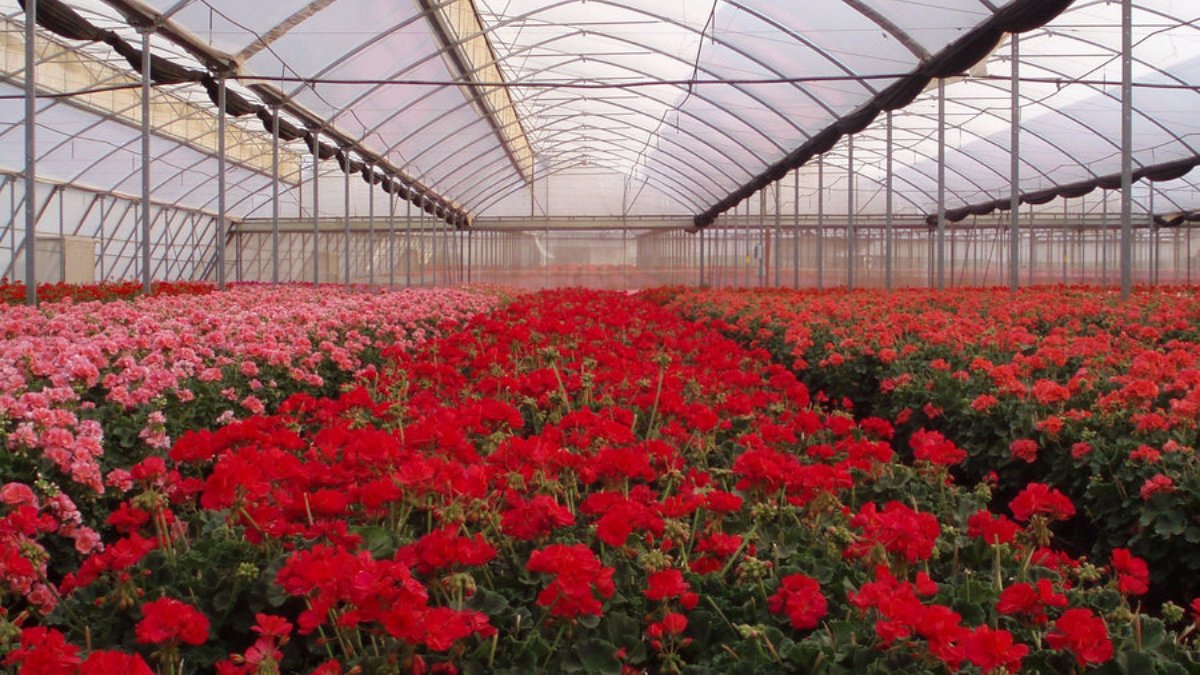
In commercial nurseries, PO greenhouse film is often selected for a more stable roof cover and customizable optical behavior. Flowers do not respond only to total light. They respond to how light reaches the canopy, how shadows move during the day, and how temperature builds under the cover.
Cut flowers, potted ornamentals, young nursery stock, and propagation material do not need the same diffusion level. Too little diffusion can create hot spots and uneven growth. Too much haze may reduce the direct intensity needed in a low-light season. The useful target is uniform crop development, not a number chosen from a catalogue.
Nursery situation
Film priority
dense bench layout
diffusion and reduced shadow contrast
propagation area
soft light, humidity stability, anti-drip control
flower finishing house
balanced light and temperature
hot climate
heat control and UV stability
long roof span
mechanical strength and roll width
Custom Diffusion Should Be Crop-Specific
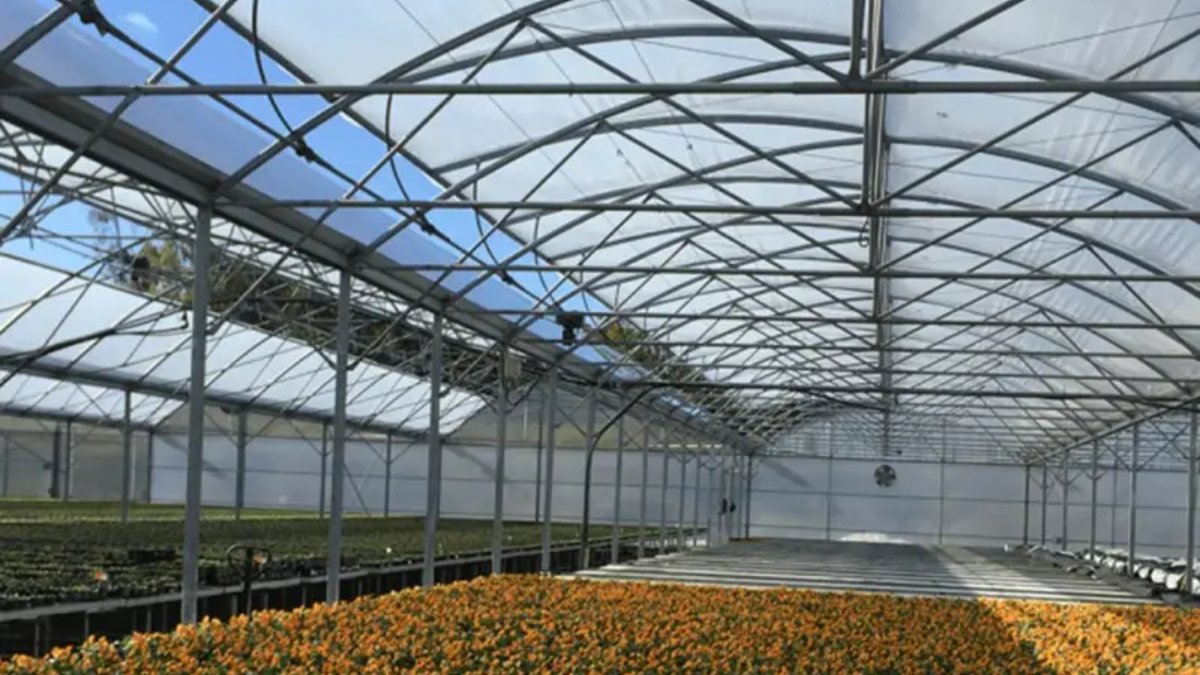
greenhouse PO film can be produced with different light transmission and diffusion targets. For roses, carnations, chrysanthemums, seedlings, or bedding plants, the same film label may not be enough. The technical file should state the crop group, roof height, local light level, season, and whether shading nets are used together with film.
A flower nursery with high plant density may benefit from better side penetration of scattered light. A nursery in a cloudy region may prioritize transmission first and diffusion second. A nursery in a hot region may need a balance between light and heat control. These decisions are made from crop behavior, not from a general idea that more diffusion is always better.
Condensation And Drip Control Matter Around Flowers
High-value flowers are sensitive to uncontrolled dripping. Water falling from the roof can mark petals, increase disease pressure, or disturb young plants. Anti-fog and anti-drip behavior should be discussed together with roof slope, ventilation, heating, irrigation timing, and night temperature difference. Film supports the system; it does not replace climate management.
Keep the film tensioned so water does not collect in sagging pockets.
Match anti-fog expectation to service life and humidity pattern.
Review ventilation timing after irrigation and during cool nights.
Use separate specifications for propagation zones and finishing zones when needed.
If a project also uses greenhouse film categories such as sidewall PE or shade support materials, each material should remain under a separate product code.
Roll Width, Installation And Repeat Production
Nursery roofs often have repeated bays and controlled installation schedules. Roll width should reduce seams without making rolls too heavy for the crew. Wider rolls can improve roof coverage, but installation equipment and manpower must be considered. The most technically correct width is the one that gives clean coverage and controlled tension on the actual structure.
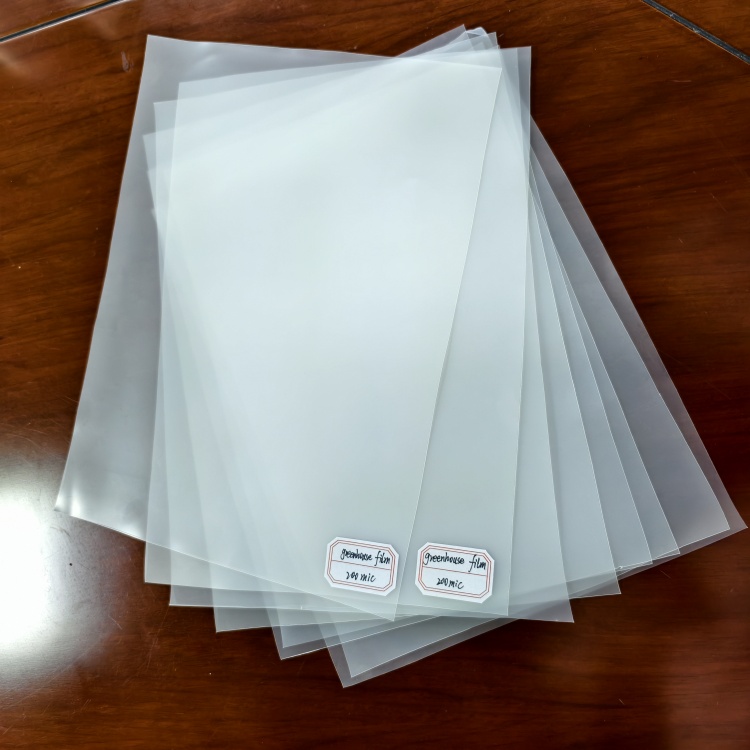
HONREL AGRICULTURE can support nursery film programs with custom width, thickness, diffusion level, anti-fog package, UV life, roll length, and export packing. When several greenhouse materials ship together, greenhouse films wholesale planning helps coordinate timing while keeping every roll label clear.
Nursery Film Should Be Reviewed By Crop Stage
Flower production usually has several stages: propagation, vegetative growth, bud formation, finishing, and holding before dispatch. Each stage reads the greenhouse environment differently. Young plants need gentle light and stable humidity. Finished flowers need quality protection, good color development, and controlled heat. One PO film can support the whole house only when these stages have compatible environmental needs.
If one nursery block produces several flower types, the film specification should be based on the most sensitive crop and the most difficult season. It is better to define a stable optical target than to chase an extreme transmission or haze value. In real production, uniformity across benches often matters more than one impressive number on a sample sheet.
Record current hot-spot areas before selecting diffusion level.
Separate propagation houses from finishing houses when humidity differs strongly.
Check how shade nets and PO film work together before changing both at once.
Review crop color, stem strength, and uniformity after one production cycle.
How A Nursery Should Read Crop Response
After installation, the film should be evaluated through plant response, not only roof appearance. Look at bench-to-bench uniformity, stem strength, flower timing, leaf temperature, and condensation marks. If one side of the house finishes earlier than the other, light distribution or airflow may need review. If petals show water marks, anti-drip behavior and night humidity should be checked.
For commercial flower production, a one-cycle observation file is useful. Note the date of covering, film batch, shade net use, ventilation pattern, and crop result. This gives the technical team a real basis for adjusting diffusion level or anti-fog package in the next production run.
Technical Check Before Production
Before production starts, the specification should be checked against real use rather than a generic product name. This final review keeps the roll format, material behavior, and field or site installation method aligned. It also creates a cleaner record for repeat production, quality review, and future specification adjustment.
Diffusion target is matched to flower crop and season.
Propagation and finishing zones are reviewed separately.
Anti-fog expectations are connected to roof slope and humidity.
Roll width, thickness, UV life, and labels are fixed before production.
FAQ
Q1: Why is light diffusion important for flower nurseries?
A: Diffusion helps spread light more evenly through the crop canopy, reducing harsh shadows and supporting more uniform flower and plant development.
Q2: Is higher diffusion always better?
A: No. Diffusion must be balanced with light transmission, crop type, season, and local climate. Excess haze can reduce useful light in low-light regions.
Q3: Can PO greenhouse film be customized for different flowers?
A: Yes. Light transmission, diffusion, anti-fog behavior, thickness, width, and UV life can be discussed according to the flower crop and nursery structure.
Q4: Does anti-fog film stop all dripping?
A: No. Anti-fog film helps manage condensation, but roof slope, ventilation, humidity, heating, and installation tension also affect dripping.
Q5: What details should be confirmed before nursery film production?
A: Confirm crop type, greenhouse dimensions, roll width, thickness, diffusion target, UV life, anti-fog needs, packing, labels, and delivery schedule.
Get Factory-Direct Insights & Growing Tips
Selecting the right Greenhouse Film or shade mesh is critical for crop success. As a dedicated Agricultural Netting and Film Manufacturer, our experts help you customize UV protection and light transmission based on your local climate. Share your project details for a tailored solution.
HONREL AGRICULTURE engineers films, netting, and drip pipe to your crop, climate, and structure—specs, colors, labeling, and packaging—backed by drawings and spec sheets.
Fast Response & Quick Proofing
Rapid quoting, spec-sheet/sample proofing, and practical engineering support. We align specifications and documentation quickly to keep your project timeline on track.
Consistent Quality & Traceability
UV-stabilized formulations, process QC, and lab checks for optics/mechanics—plus lot-level tracking. COA/test reports available; export packing and labeling are standardized.