PO Greenhouse Film Manufacturer for Mushroom Cultivation | Managing Humidity, Condensation and Growing Conditions
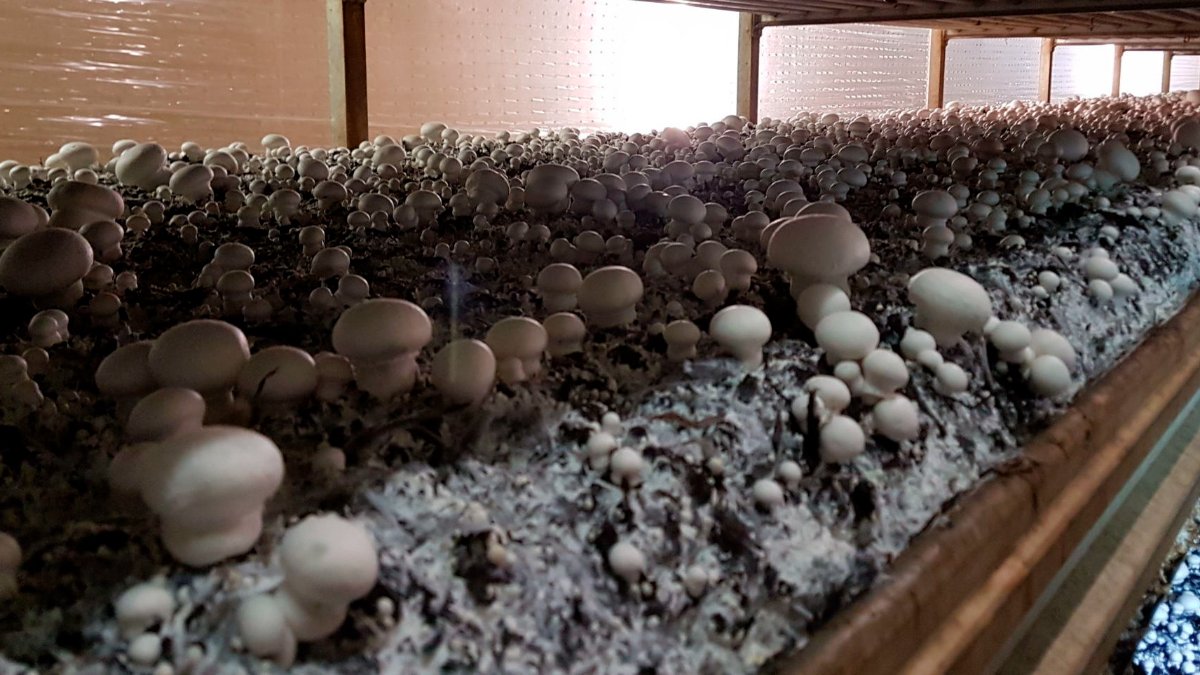
Mushroom cultivation is different from vegetable greenhouse production. The crop needs high humidity, controlled air movement, stable temperature, and a surface environment that does not create uncontrolled dripping.
Mushroom houses operate under very different conditions from most vegetable greenhouses. High humidity, limited or controlled light, temperature changes and frequent condensation all affect the covering film.
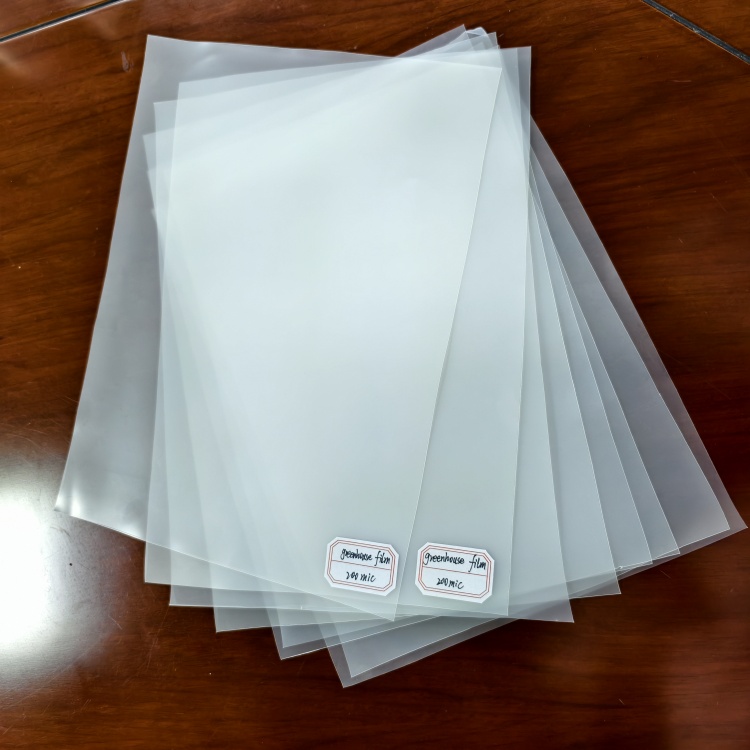
For commercial mushroom cultivation, PO greenhouse film should be selected around condensation control, light requirements, house structure and expected service conditions—not thickness alone.
HONREL AGRICULTURE supplies PO greenhouse film for mushroom houses and other controlled agricultural structures, with specifications matched to project and growing requirements.
Table of Contents
Why Mushroom Houses Need Different Greenhouse Film
High humidity is part of mushroom production, but uncontrolled dripping is not.
Warm, humid air can condense when it reaches a cooler greenhouse film surface. Large droplets may then fall onto growing beds, shelves, mushroom bags or working areas.
Suitable anti-fog or anti-drip performance helps condensed moisture spread more evenly across the film surface rather than remaining as large droplets. Film slope, installation tension, ventilation and airflow remain important because greenhouse film alone cannot eliminate condensation.
Mushroom houses may also require different light conditions from vegetable greenhouses. Maximum light transmission should therefore not be treated as the default specification. The required film properties should match the mushroom type, production stage and growing-room design.
Control Condensation with the Right PO Film
Condensation control is one of the main reasons to specify mushroom greenhouse film carefully.
Anti-fog or anti-drip properties can improve the way condensed moisture behaves on the film surface. When the structure has suitable roof slope and the film is installed with correct tension, moisture can move toward the sides instead of collecting in sagging areas and dripping onto the crop.
The film still works as part of the complete growing environment. Ventilation, heating, airflow, indoor humidity and the temperature difference between the inside and outside of the house all influence condensation.
For this reason, buyers should describe the actual growing conditions when discussing greenhouse film rather than simply requesting a general anti-fog film.
Match PO Film to the Mushroom House
Not every mushroom production structure needs the same film.
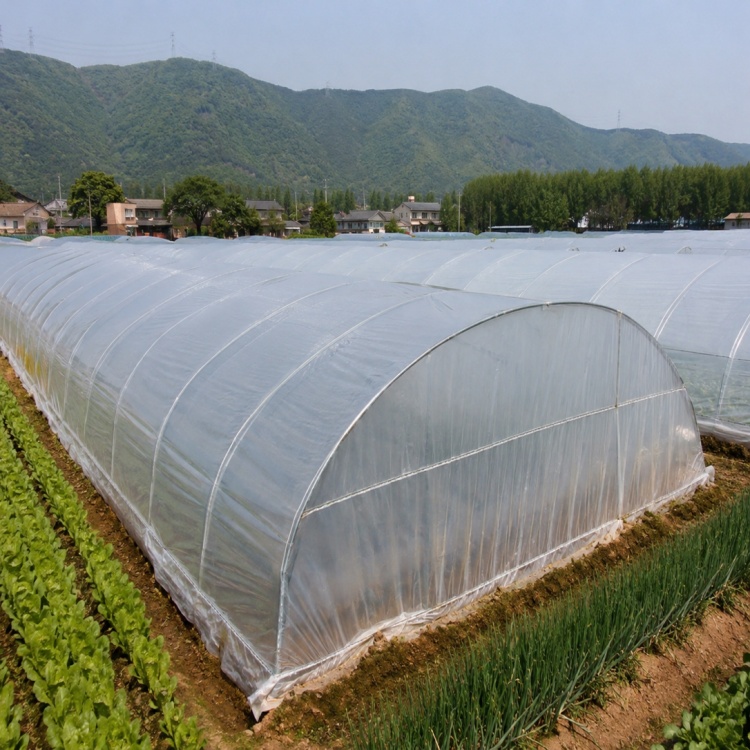
Commercial farms may use tunnels, seasonal houses, insulated growing structures or film as part of a multi-layer covering system. The correct specification depends on where and how the film will be installed.
Growing Condition
Film Requirement
High humidity
Anti-fog or anti-drip performance
Temperature variation
Suitable thermal performance
Low or controlled light
Light properties matched to the crop
Wide growing structure
Suitable film and roll width
Regular production cycles
Film durability matched to the intended use
Large installation project
Consistent roll dimensions and identification
Roll width is particularly important for larger projects. Correct sizing can reduce unnecessary seams and simplify installation across multiple mushroom houses.
Light requirements should also be confirmed before production. Some mushrooms need very little light, while others use controlled light during specific growth stages. The buyer should state whether the film is being used for the roof, sidewall, tunnel cover or another part of the growing structure.
Installation and Crop Cycles Matter
Even correctly specified PO film can perform poorly if it is installed loosely.
Sagging areas can collect condensed water instead of allowing it to move toward the edge of the structure. Film tension, roof slope and drainage should therefore be considered during installation.
Commercial mushroom facilities may also operate repeated growing, cleaning and room-reset cycles. If the covering will be exposed to regular moisture, cleaning contact and temperature changes, the intended use period should be discussed when selecting the film.
After installation, check the film during actual humid operating conditions. Look for unusual dripping points, sagging areas, loose film and surface damage. This helps distinguish between an installation issue, climate-control issue and a film specification that may need adjustment.
What to Specify Before a Bulk Order
A mushroom greenhouse film order should describe the actual project rather than rely on a generic product name.
Before production, confirm the mushroom growing system, house dimensions, installation position, required width and thickness, roll length, expected service period, light requirement, anti-fog or anti-drip requirement, packing and labeling.
For larger projects, drawings or basic house dimensions can also help clarify roll sizing and installation requirements.
If several types of agricultural film are included in one shipment, each specification should remain clearly separated. For example, PE greenhouse film used for a temporary structure should not automatically follow the same specification as PO film intended for the main mushroom house.
A sample or trial order can also be used to check film handling and suitability before moving to a larger seasonal or project quantity.
Bulk PO Greenhouse Film from HONREL AGRICULTURE
HONREL AGRICULTURE supplies greenhouse films for commercial growers, agricultural projects and distributors.
For mushroom cultivation, the specification can be discussed around the actual house structure, humidity conditions, light requirements, film dimensions, expected use period, packing and delivery requirements.
This is particularly important for repeat projects. Once the required specification has been confirmed, keeping roll dimensions, film requirements, packing and labeling consistent makes later orders easier to manage across multiple houses or growing sites.
For a bulk quotation, provide your mushroom house dimensions, growing system, required film specification, quantity and destination. HONREL AGRICULTURE can then review the requirements before production.
FAQ for Mushroom Greenhouse Film Buyers
What type of greenhouse film is suitable for mushroom cultivation?
The specification should match the mushroom house rather than only the crop name. High humidity, condensation, light requirements, house structure, film dimensions and intended service period should all be considered.
Does anti-fog PO film stop condensation completely?
No. Condensation can still form when humid air contacts a colder film surface. Anti-fog or anti-drip performance helps manage how this moisture behaves, while ventilation, airflow, temperature control, roof slope and film tension remain important.
Does mushroom greenhouse film need high light transmission?
Not necessarily. Mushroom species and production systems have different light requirements. Buyers should specify the required light conditions instead of automatically choosing maximum light transmission.
What information is needed for a bulk quotation?
Provide the mushroom growing system, house dimensions, installation position, required width, thickness and roll length, light requirements, anti-fog or anti-drip requirements, quantity, packing needs and delivery destination.
Should PO greenhouse film be tested before a large order?
For a new growing structure or film specification, a sample or trial can help check handling, installation and performance under the actual mushroom-house conditions before committing to a larger quantity.
What should be checked after installation?
Inspect film tension, sagging areas, condensation patterns, dripping points and surface condition during normal humid production. These observations can help identify whether adjustments are needed to installation, ventilation or the film specification.
Get Factory-Direct Insights & Growing Tips
Selecting the right Greenhouse Film or shade mesh is critical for crop success. As a dedicated Agricultural Netting and Film Manufacturer, our experts help you customize UV protection and light transmission based on your local climate. Share your project details for a tailored solution.
HONREL AGRICULTURE engineers films, netting, and drip pipe to your crop, climate, and structure—specs, colors, labeling, and packaging—backed by drawings and spec sheets.
Fast Response & Quick Proofing
Rapid quoting, spec-sheet/sample proofing, and practical engineering support. We align specifications and documentation quickly to keep your project timeline on track.
Consistent Quality & Traceability
UV-stabilized formulations, process QC, and lab checks for optics/mechanics—plus lot-level tracking. COA/test reports available; export packing and labeling are standardized.