PE Greenhouse Film for Nursery Seedling Production
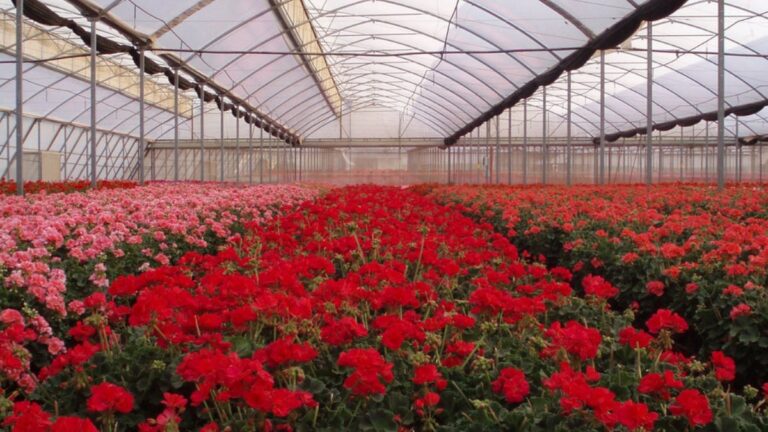
PE greenhouse film for commercial nurseries and seedling production. Select film by crop cycle, light conditions, greenhouse structure and installation needs.
Commercial nurseries need more than a transparent greenhouse covering. The film must help maintain consistent growing conditions across thousands of trays while fitting the nursery’s structure, production schedule and operating budget.
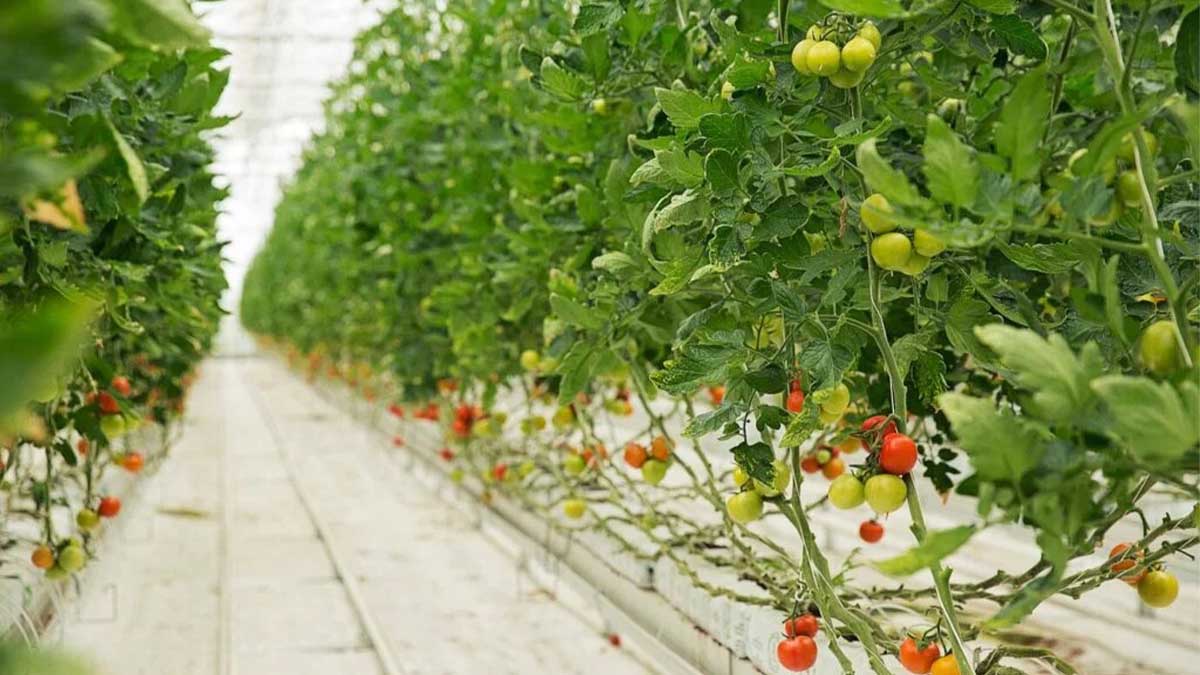
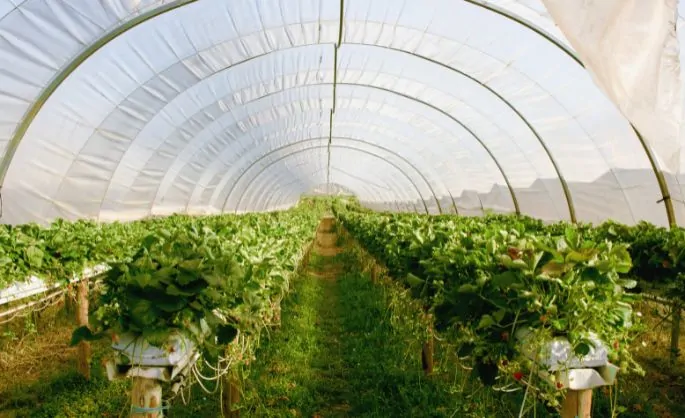
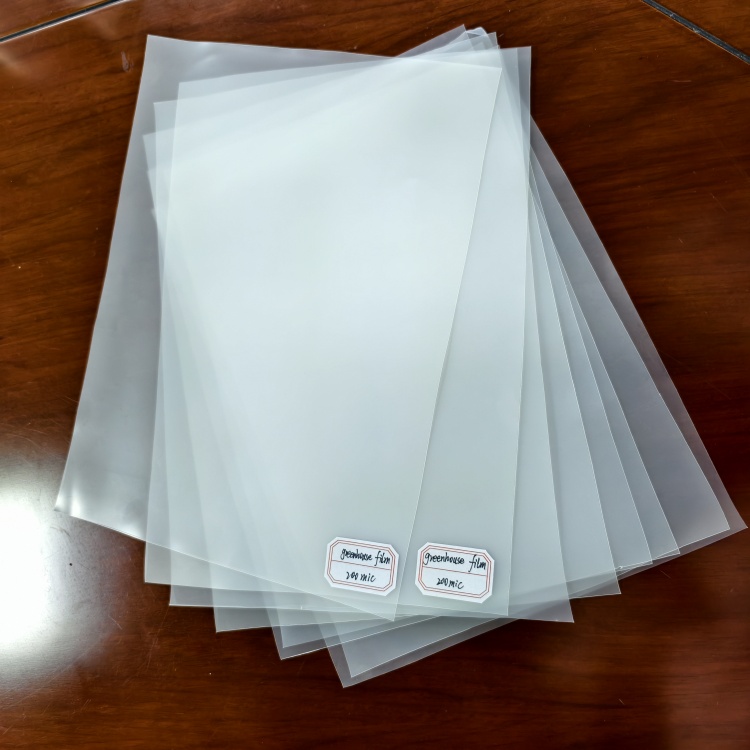
HONREL AGRICULTURE supplies custom PE greenhouse film for vegetable seedlings, flower plugs, young trees, ornamental plants and other nursery applications. Film width, thickness, roll length, UV stabilisation, optical properties and packing can be configured around the intended greenhouse and order requirements.
Table of Contents
One Greenhouse Cover, Thousands of Young Plants
Seedlings respond quickly to changes in light, temperature and humidity. Uneven conditions can produce differences in plant height, stem strength and transplant readiness, even when irrigation and nutrition remain consistent.
The greenhouse film is therefore part of the nursery production system. Its optical performance affects the light reaching each tray, while its mechanical properties influence installation reliability and resistance to movement around the greenhouse structure.
For large nurseries, performance must also remain consistent between rolls. A single roll with incorrect width, unstable thickness or poor winding can delay installation and affect an entire production block.
Start With the Nursery Production Cycle
Film selection should begin with how the nursery operates—not with the longest available service life.
A seasonal propagation tunnel may only need film for a defined production period. A permanent multi-span nursery may require a covering intended for several growing cycles. Tree seedlings and ornamental plants may remain under cover longer than fast-turnover vegetable plugs.
Matching the film to the actual production cycle helps buyers avoid two common problems:
Selecting insufficient UV stabilisation and replacing the cover earlier than planned.
Paying for a higher specification that the nursery does not require.
Expected service life should be evaluated together with local solar radiation, film thickness, chemical exposure, greenhouse design and installation conditions.
Film Selection by Nursery Application
Nursery application
Production priority
Film consideration
Vegetable seedlings
Fast turnover and uniform transplant size
Stable light transmission and economical coverage
Flower plugs
Compact growth and consistent appearance
Light distribution and condensation management
Fruit tree rootstocks
Longer production periods
UV stabilisation and mechanical durability
Ornamental plants
Crop appearance and controlled growth
Optical balance based on crop sensitivity
Mixed nursery production
Flexible use across different blocks
Standardised specifications and clear roll identification
Seasonal propagation tunnels
Planned short-term coverage
Practical service life and efficient installation
This table provides a starting point. The final specification should also consider climate, greenhouse orientation, ventilation, shade systems and fixing methods.
Light Performance Should Be Specified Clearly
“Clear film” alone does not adequately describe how a greenhouse covering will perform.
Nursery buyers should consider several optical properties:
Light Transmission
Adequate transmission is important for photosynthesis and compact seedling development. However, the required level depends on crop type, season, latitude and any shade net installed inside or above the greenhouse.
Light Diffusion
Diffuse light can improve light distribution and reduce strong contrasts between exposed and shaded areas. This may be useful in dense tray production, but the appropriate diffusion level depends on the nursery environment.
Optical Stability
A new film sample may provide good initial transmission, but buyers should also consider how its optical properties are expected to change during use. UV exposure, dust, agrochemicals and surface contamination can all affect long-term performance.
UV Transmission or Blocking
UV requirements vary between crops and production systems. Buyers should not assume that maximum UV blocking is automatically the best choice. The required spectral properties should be confirmed according to the intended application.
Film evaluation should therefore be based on measurable optical data rather than appearance alone.
Condensation Requires a Complete Greenhouse Approach
Condensation is common when a warm, humid greenhouse interior meets a cooler film surface. If water forms large droplets and falls onto young plants, it may increase leaf wetness and interfere with nursery management.
An anti-drip function can help water spread into a more continuous layer instead of forming individual droplets. However, anti-drip film does not control greenhouse humidity by itself.
Condensation management should combine:
Appropriate film selection;
Effective roof and side ventilation;
Suitable irrigation timing;
Air circulation within the nursery;
Temperature and humidity management.
When anti-drip performance is required, buyers should confirm which side of the film must face the greenhouse interior and follow the supplier’s installation instructions.
Select Thickness According to the Structure
Film thickness should not be selected only by comparing prices. The greenhouse structure and installation method determine how much mechanical stress the film will experience.
Important conditions include:
Wind exposure around the greenhouse;
Distance between structural supports;
Condition of pipes, clips and fixing channels;
Sharp or rough contact points;
Manual or mechanical film installation;
Required tension during installation;
Frequency of opening, removing or repositioning the cover.
A heavier film is not a substitute for repairing an unsuitable structure. Before installation, contact surfaces should be inspected for sharp edges, excessive heat and damaged fixing components.
PE Film or Premium PO-Type Film?
In greenhouse trade, “PO film” usually refers to a premium multilayer polyolefin film designed with enhanced optical, anti-drip or service-life properties. However, polyethylene is itself a polyolefin, and product names are not a reliable substitute for technical data.
Functional PE greenhouse film can also be produced with UV stabilisation, diffusion, anti-drip and thermal additives. Buyers should compare the actual specification rather than assuming that every PO-labelled film will outperform every PE film.
Buying consideration
PE greenhouse film
Premium PO-type film
Main advantage
Flexible and cost-efficient for large covered areas
Often designed for enhanced or longer-term performance
Suitable use
Standard nursery blocks and planned replacement cycles
Higher-value production or extended covering cycles
Available functions
Depend on film formulation and additives
Depend on film formulation and layer design
Purchase decision
Based on verified specification and use conditions
Based on verified specification and use conditions
The appropriate choice depends on crop value, expected service period, climate and required functions.
Build the Order Around Each Nursery Site
Large nursery groups may operate different greenhouse structures at several locations. Using one film specification everywhere may simplify purchasing, but it can also create a mismatch between the film and the greenhouse.
A more reliable approach is to prepare a site-based specification matrix.
Information to confirm
Why it matters
Nursery location
Indicates climate and solar exposure
Greenhouse type
Determines installation and mechanical requirements
Structure width and length
Establishes film and roll dimensions
Crop type
Helps define optical and climate priorities
Production period
Supports service-life selection
Shade and ventilation systems
Affect the required light and thermal balance
Agrochemical use
May influence film ageing
Installation method
Determines roll size and handling requirements
Required replacement date
Helps align supply with the nursery schedule
Sites with similar conditions can then use a standardised specification, while locations with different climates or structures can be handled separately.
Roll Design Affects Installation Efficiency
For large nursery projects, roll configuration is part of the product specification.
The correct width can reduce unnecessary joints and cutting. Suitable roll length can help installation teams cover a complete tunnel or bay without frequent changes. Proper winding makes the film easier to unroll without folds, edge damage or excessive pulling.
Before production, buyers should confirm:
Finished film width;
Width tolerance;
Film thickness;
Roll length;
Roll weight;
Core dimensions;
Film folding method;
Unwinding direction;
Interior and exterior film sides;
Individual roll labels;
Export packing method.
These details are particularly important when several sizes are shipped in the same container.
Quality Control for Repeat Nursery Orders
A large order should not rely only on the appearance of one approved sample. Production consistency must be checked across the batch.
Key inspection points include:
Thickness Consistency
Thickness should be evaluated across the film width. Excessive variation can create weak areas and affect mechanical performance.
Width Accuracy
The finished width should remain within the agreed tolerance so that the film fits the intended greenhouse structure.
Film Surface
The film should be checked for visible gels, streaks, holes, contamination, damaged edges and other defects that could affect installation.
Roll Winding
Rolls should be wound evenly and supported by suitable cores to prevent telescoping, collapse or difficult unwinding.
Identification and Packing
Each roll should be labelled with the information needed by the buyer’s warehouse and installation team. Packing should protect the roll edges during loading, transport and storage.
For repeat purchases, buyers should retain the approved specification and product code. This makes reordering more reliable than rebuilding the requirements for every season.
Custom PE Nursery Film From HONREL AGRICULTURE
HONREL AGRICULTURE works with commercial nurseries, agricultural distributors and greenhouse project buyers to develop order-specific PE film configurations.
Customisation can include:
Film width;
Thickness;
Roll length;
UV stabilisation;
Optical functions;
Anti-drip requirements;
Folding and winding method;
Roll labels;
Export packing.
Final options depend on the required film structure and production quantity. Technical requirements should be confirmed before quotation and sample approval.
FAQs
Q1: Is PE greenhouse film suitable for commercial nurseries?
A: Yes. PE greenhouse film can be used for vegetable seedlings, flower plugs, young trees, ornamental plants and other nursery crops when its optical, mechanical and service-life properties match the application.
Q2: Does nursery film need an anti-drip function?
A: It depends on the greenhouse climate and condensation conditions. Anti-drip performance can reduce the formation of large droplets, but ventilation, irrigation and humidity management remain necessary.
Q3: Is highly transparent film always better for seedlings?
A: No. Buyers should consider light transmission together with diffusion, shading, crop sensitivity and local solar radiation. The film should support the nursery’s complete light-management system.
Q4: How should the expected film life be selected?
A: Consider the planned replacement cycle, local UV exposure, film thickness, greenhouse structure and agrochemical use. Service-life descriptions should always be reviewed together with applicable use conditions.
Q5: What should be checked before placing a container order?
A: Confirm the approved specification, width and thickness tolerances, roll configuration, winding method, labels, packing and batch inspection requirements before production.
Get Factory-Direct Insights & Growing Tips
Selecting the right Greenhouse Film or shade mesh is critical for crop success. As a dedicated Agricultural Netting and Film Manufacturer, our experts help you customize UV protection and light transmission based on your local climate. Share your project details for a tailored solution.
HONREL AGRICULTURE engineers films, netting, and drip pipe to your crop, climate, and structure—specs, colors, labeling, and packaging—backed by drawings and spec sheets.
Fast Response & Quick Proofing
Rapid quoting, spec-sheet/sample proofing, and practical engineering support. We align specifications and documentation quickly to keep your project timeline on track.
Consistent Quality & Traceability
UV-stabilized formulations, process QC, and lab checks for optics/mechanics—plus lot-level tracking. COA/test reports available; export packing and labeling are standardized.