PO Film for Strawberry and Cucumber Production: Is the Higher Cost Justified Over a Full Season?
It's the classic struggle between saving a few bucks upfront versus actually making more money at the end of the season. The upfront procurement cost of PO film is undeniably higher, which makes many growers hesitate.
If you’re running a serious greenhouse for strawberries or cucumbers, you already know the deal—every extra bit of fruit quality or yield is the difference between a great year and just breaking even.
When it’s time to swap out the plastic on your tunnels or multi-spans, you’re usually stuck with a choice that’s all about the bottom line: do you go the “budget” route with standard PE plastic, or do you step up to a premium PO film? It’s the classic struggle between saving a few bucks upfront versus actually making more money at the end of the season. The upfront procurement cost of PO film is undeniably higher, which makes many growers hesitate.
Here is the direct answer to your procurement dilemma: Yes, the higher cost of PO film is absolutely justified, and the data proves it pays for itself within the very first harvest cycle. Upgrading to a 5-layer PO film is a total game-changer for stuff like strawberries and cucumbers. It’s not just “plastic”—it’s what gives you that perfect light (PAR) and keeps the inside of the tunnel bone-dry with permanent anti-drip tech.
For picky crops like these, that dialed-in environment isn’t just for show; it usually bumps up your total yield by 14% to 17%. Plus, the fruit actually tastes better—you’ll see higher sugar levels (Brix)—and you won’t be fighting off mold and fungus every other day.
The real “kicker,” though, is the lifespan. Standard PE film is usually trashed or torn after 2 or 3 years. This premium PO stuff stays strong for 5 years or more. So, while the other guys are out there sweating and paying for labor to re-skin their houses every couple of seasons, you’re still good to go. It basically cuts your long-term maintenance work right in half.
At HONREL AGRICULTURE, our Solution Specialists consult with multi-hectare farm operators daily. We engineer the exact polymer formulas that drive these commercial yields. In this comprehensive guide, we are going to dive into the verified academic data on how PO film physically alters strawberry and cucumber production, analyze the engineering behind the plastic, and show you exactly how to maximize your operational ROI.
Table of Contents
The Agronomic Data: How PO Film Drives Yields
We do not rely on guesswork or marketing fluff when advising our B2B commercial clients; we rely entirely on agronomic science. Strawberries and cucumbers are incredibly responsive to their light environment. Let’s look at how PO film specifically impacts these two crops based on verified academic trials.
Strawberry Production: Sweeter Fruits and +17% Yield
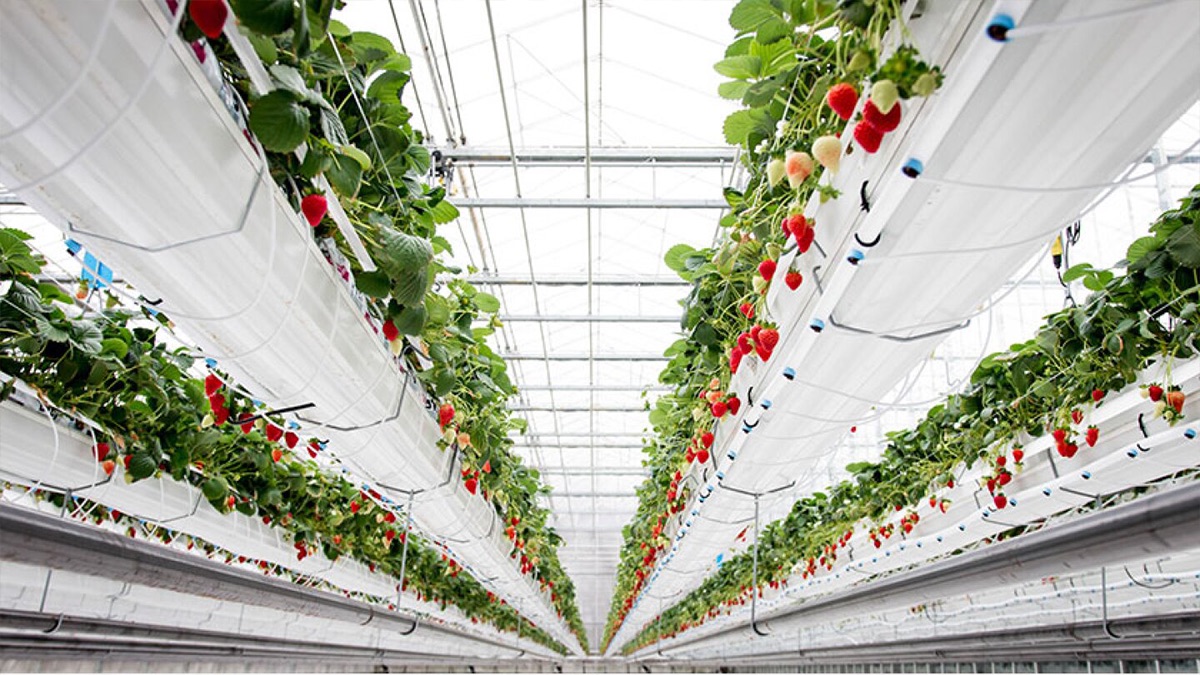
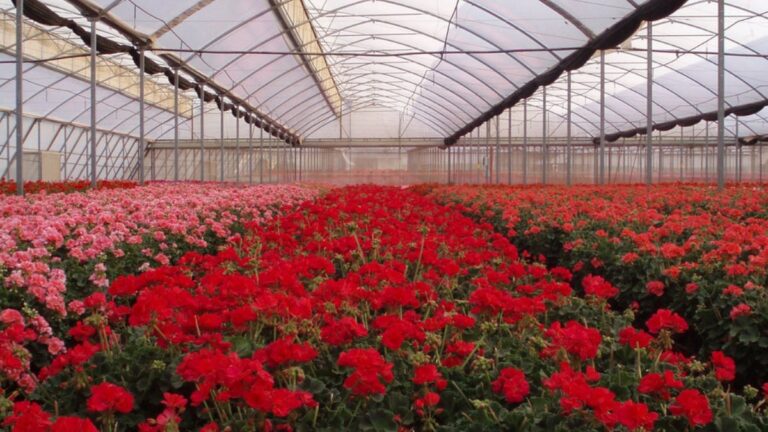
Strawberries (Fragaria × ananassa) require highly stable microclimates and massive amounts of light to accumulate sugars. A long-term field experiment published via ResearchGate evaluated the exact differences between PE and PO films on commercial strawberry cultivars (such as ‘Seolhyang’ and ‘Jukhyang’).
The Yield Impact: The study confirmed that PO films provided superior light transmittance and heat retention compared to standard PE films. As a result, strawberries grown under PO film produced 14% to 17% higher yields than those under PE film, with peak production occurring in the critical, high-priced winter month of February.
Fruit Quality (Brix): It isn’t just about total harvest weight; it is about premium quality. Under the PO film, sugar accumulation, fruit mass, and water content all increased, while undesirable nitrate levels declined. The ‘Jukhyang’ cultivar achieved a massive 12.2% Brix (total soluble solids). (Source: ResearchGate – Effect of Greenhouse Films with Different Properties on the Biological Performance of Strawberry Cultivars.)
If your farm sells to premium fresh markets or supermarkets, that increase in Brix alone justifies the premium cost of the plastic in the first season.
Cucumber Production: Deep Canopy Light And +17.3% Yield
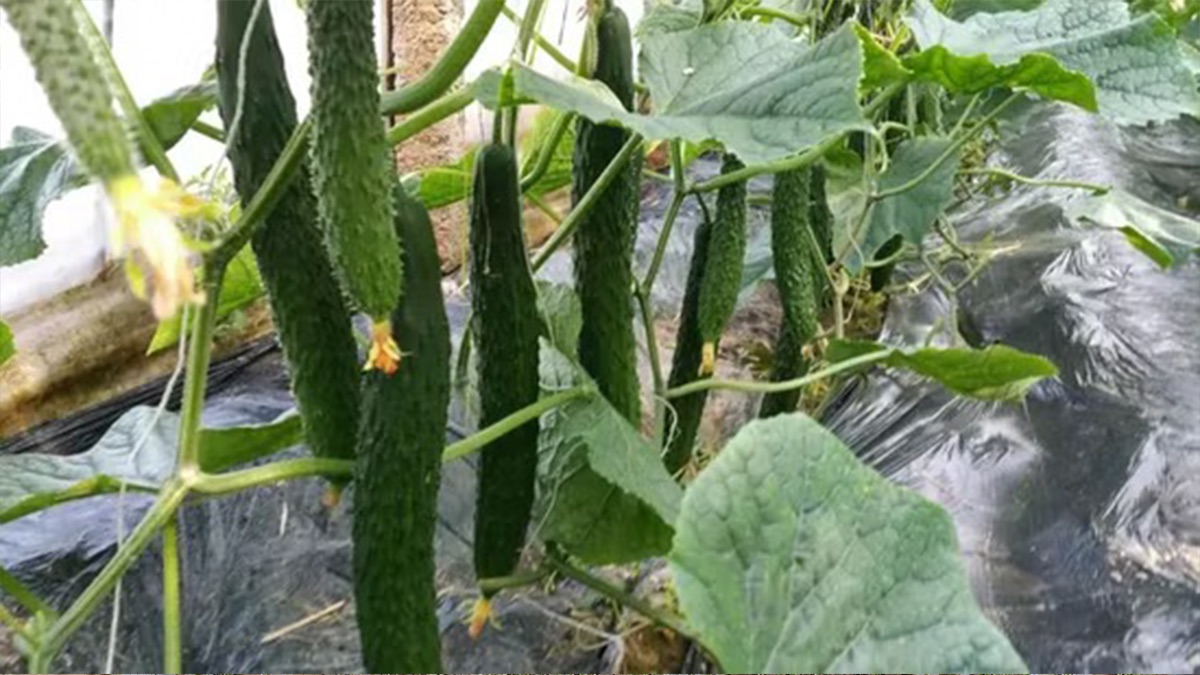
Cucumbers (Cucumis sativus) have massive, overlapping leaves that create deep shade in the lower canopy. If you use cheap, cloudy plastic, the lower vines starve for light and produce nothing. A rigorous trial published in HortiDaily evaluated the impact of high-PAR, highly diffusive PO film on commercial greenhouse cucumbers.
The Light Penetration: The advanced PO film increased PAR transmission by up to 11.6% at the lower canopy level. Because the film diffuses (scatters) the light, the photons bypassed the top leaves and penetrated deep into the lower vines.
The Yield Impact: This extra diffuse light led to a 17.9% improvement in leaf-level net photosynthesis, which directly contributed to a staggering 17.3% increase in total cucumber yield.
Disease Reduction: Because the PO film successfully managed the internal climate and utilized a permanent anti-drip coating, the researchers noted a massive reduction in the incidence of major fungal diseases. (Source: HortiDaily – Using plastic covers to aid greenhouse cucumber growth.)
Material Engineering: Why PO Outperforms Standard PE Film
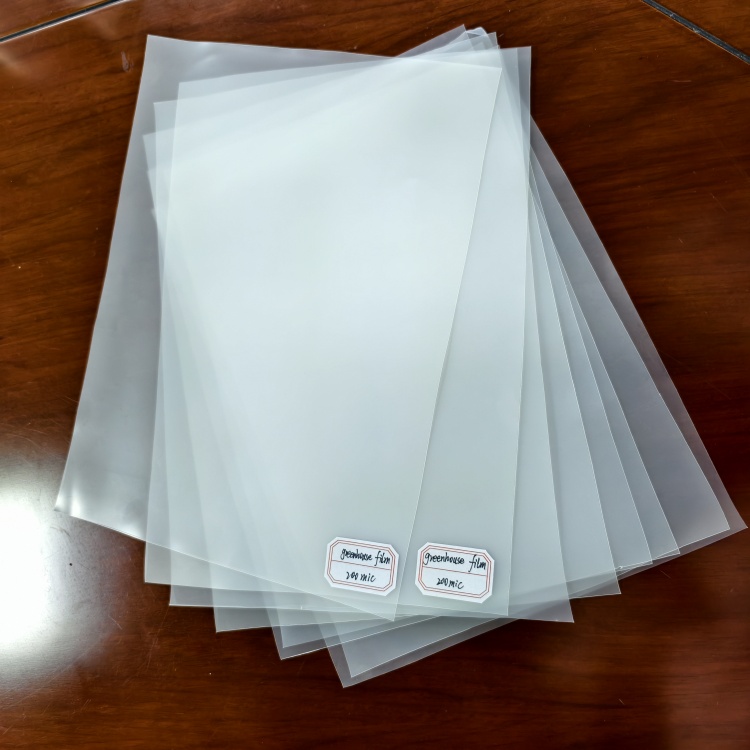
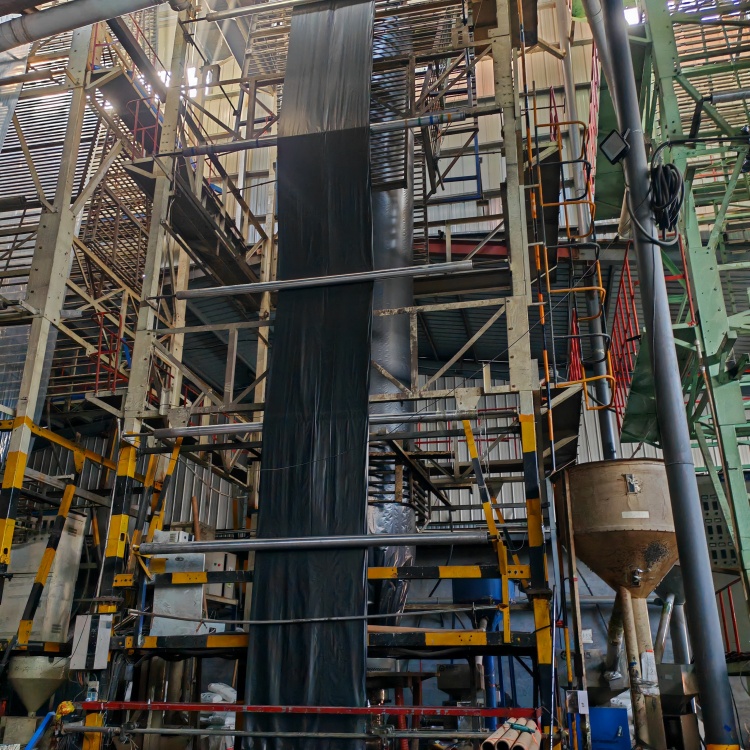
Standard PE film is excellent for budget-conscious, temporary high tunnels. However, when you are cultivating highly sensitive strawberries and cucumbers, the structural environment must be flawless. At HONREL, we manufacture our PO films using state-of-the-art 5-layer co-extrusion technology. Here is why the polymer chemistry matters to your bottom line:
1. Permanent Anti-Drip and Anti-Fog Technology
High humidity inside a densely planted cucumber or strawberry greenhouse causes heavy condensation on the roof. On standard PE films, the anti-drip additive is simply mixed into the plastic resin. This soapy additive washes away in 6 to 12 months. Once it is gone, water droplets form, blocking up to 15% of your sunlight. Even worse, when those freezing droplets fall onto your open strawberry blossoms, they instantly breed Botrytis (gray mold).
Our PO film features a chemically bonded nano-coating on the interior layer. The moisture sheets completely flat and runs smoothly down the walls into your gutters. No droplets mean higher light transmission and zero disease splashing.
2. 5-Year Structural Durability (Labor ROI)
Replacing a greenhouse cover is incredibly labor-intensive, dangerous, and requires you to halt your farm’s production. The ResearchGate strawberry study confirmed a known industry reality: standard PE films require replacement approximately every three years, while PO films retain their physical properties and optical clarity for at least five years.
By using Metallocene (mPE) and advanced Hindered Amine Light Stabilizers (HALS) in our 5-layer core, our PO film withstands severe UV radiation, high winds, and heavy snow loads. You pay for the premium plastic once, and you skip the massive replacement labor costs for half a decade.
💡 Best Practice: Controlling the Ground Climate
An advanced roof is only half the battle. If you want maximum yield stability for strawberries and cucumbers, you must manage your soil temperature and prevent soil moisture evaporation.
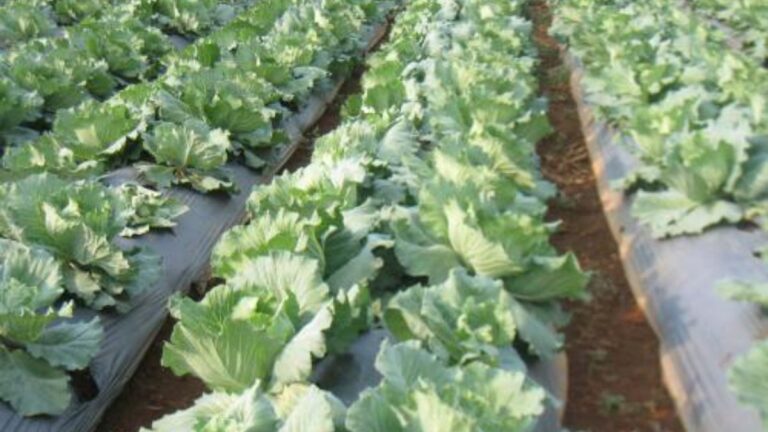
How to optimize your floor: We always advise commercial growers to utilize high-quality mulch film over their raised beds to lock in irrigation. If you are planting strawberries in the cold winter or early spring, covering the beds with a black mulch film will act as a solar heater, rapidly warming the root zone to stimulate early, aggressive growth.Conversely, if you are growing summer cucumbers and need to prevent heat stress, switch to a silver black mulch film. The silver top will act as a mirror, reflecting thermal heat away to keep the roots perfectly cool while simultaneously blinding the thrips and aphids that try to attack your crop.
Analyzing the Financial ROI Over a Full Season
To help you justify this upgrade to your procurement team or farm stakeholders, let’s break down the true cost of ownership over a standard 5-year commercial cycle.
Performance Metric
Standard PE Film (3-Layer)
HONREL PO Film (5-Layer)
Initial Procurement Cost
Lower
Higher
Average Yield Increase
Baseline
+14% to +17% (Proven by data)
Lifespan
2 to 3 Years
5+ Years
Labor Replacement Costs
High (Requires 2 installs in 5 years)
Low (Requires 1 install in 5 years)
Disease Management (Fungicide)
High (Anti-drip fails in 1 year)
Low (Permanent anti-drip coating)
Total 5-Year ROI
Negative/Baseline
Highly Positive
When you factor in the 17% yield boost, the reduction in fungicide sprays due to zero dripping, and eliminating one entire roof replacement cycle, the higher initial cost of PO film is heavily eclipsed by the massive operational savings.
💡 Best Practice: The “Drum-Tight” Installation Method
Polyolefin is an incredibly strong material, but it has a different thermal expansion coefficient than standard polyethylene. Even the best film will fail if installed sloppily.
The Execution: Never install your PO film early on a freezing morning. If you pull it tight when it is cold, it will expand and sag drastically when the noon sun hits it. Sagging creates “valleys” in the roof where condensation pools, completely ruining your anti-drip performance. Always install your film on a mild, warm day. Pull it taut. As the temperature drops at night, the film will shrink slightly, tensioning itself perfectly over your metal frame like a drum skin. A tight roof is a long-lasting roof.
Why Source Factory-Direct from HONREL AGRICULTURE?
If you are an agricultural distributor, a greenhouse constructor, or managing a massive multi-hectare farm, buying retail rolls of plastic from a middleman completely destroys your profit margins. You need a dedicated factory partner who understands polymer chemistry and high-yield farming.
At HONREL AGRICULTURE, we customize our 5-layer extrusion lines to fit your exact commercial demands:
Custom Widths and Thickness: We extrude films ranging from a flexible 150 microns to a heavy-duty 200 microns. We can supply massive custom roll widths (up to 20 meters wide) to cover your multi-span structures seamlessly. Fewer seams mean drastically reduced installation labor and zero wind-flap vulnerabilities.
A Complete Holistic Supplier: We supply every plastic layer your farm needs. Need to partition your facility, protect your hydroponic water reservoirs from algae, or force blooming via light deprivation in adjacent crops? We manufacture 100% opaque, heavy-duty black and white panda film to give you absolute control over your facility’s photoperiods.
5 Frequently Asked Questions (FAQ) for Commercial Growers
Q1: Will “diffused” PO film reduce the overall light my cucumbers and strawberries receive?
A: No. Diffused film scatters the light, but the Total Light Transmission (PAR) remains incredibly high (usually around 90-93%). In a greenhouse, direct sunlight creates harsh shadows and burns the top canopy. Diffused light simply redirects those photons deep into the lower canopy to boost overall photosynthesis without causing heat stress.
Q2: Does PO film block UV light, and will that affect my bumblebees?
A: We can customize the UV-blocking properties of the film at the factory. Generally, UV-blocking films help reduce populations of whiteflies and thrips and suppress fungal diseases. However, bumblebees need UV light to navigate. If you rely on bees for your strawberry pollination, you must request a “UV-open” PO recipe from us so your bees can navigate and pollinate efficiently.
Q3: How do I keep the dust off? I don’t want to lose that 90% light transmission.
A: The beauty of this film is that it basically washes itself. We use a nano-coating on the outside that kills static, so dust just can’t get a grip like it does on the cheap stuff. Most of the time, a bit of wind or a light rain is all the “cleaning” you’ll ever need.
Q4: Does it matter which side faces in?
A: It matters big time. This is a 5-layer film, so the sides aren’t the same. The outside handles the dust, but the inside has a permanent anti-drip coating to keep water from pooling.
If your crew puts it on backward, the anti-drip won’t do a thing, and you’ll have water raining down on your plants all day. That’s a fast track to rot and mold. We mark “Inside” and “Outside” on every single roll, so just make sure the guys double-check before they start rolling it out.
Q5: What’s the MOQ for buying factory-direct?
A: Look, we’re running massive 5-layer extrusion towers here, so we don’t really do “by the roll.” We talk in terms of tonnage. Generally, you’re looking at an MOQ of 1 or 2 tons, depending on the width and the mil thickness you need.
It’s a bigger order, for sure, but that’s how you cut out the middleman and get the actual wholesale price. If you’re looking to protect your margins, this is how you do it.
Conclusion: Secure Your Margins with Superior Yields
In commercial strawberry and cucumber farming, your greenhouse cover is your first line of defense against the elements and your primary optical growth engine. Settling for cheap, mono-layer plastic is a massive operational mistake. It forces you to overspend on replacement labor, exposes your crop to fungal drips, and leaves your lower plant canopy starved for light.
By upgrading your facility to HONREL’s 5-Layer PO Film, you are making a data-backed financial investment. The 14% to 17% yield increases in your very first season will more than pay for the upgraded plastic. You maximize PAR light transmission, eliminate Botrytis through permanent anti-drip tech, and guarantee a resilient 5-year lifespan for your structure.
Ready to maximize your yield and lower your long-term overhead? Partner with HONREL AGRICULTURE today. Contact our engineering and sales team for a custom B2B wholesale quote, and let us build the perfect polymer shield for your commercial farm.
Get Factory-Direct Insights & Growing Tips
Selecting the right Greenhouse Film or shade mesh is critical for crop success. As a dedicated Agricultural Netting and Film Manufacturer, our experts help you customize UV protection and light transmission based on your local climate. Share your project details for a tailored solution.
HONREL AGRICULTURE engineers films, netting, and drip pipe to your crop, climate, and structure—specs, colors, labeling, and packaging—backed by drawings and spec sheets.
Fast Response & Quick Proofing
Rapid quoting, spec-sheet/sample proofing, and practical engineering support. We align specifications and documentation quickly to keep your project timeline on track.
Consistent Quality & Traceability
UV-stabilized formulations, process QC, and lab checks for optics/mechanics—plus lot-level tracking. COA/test reports available; export packing and labeling are standardized.