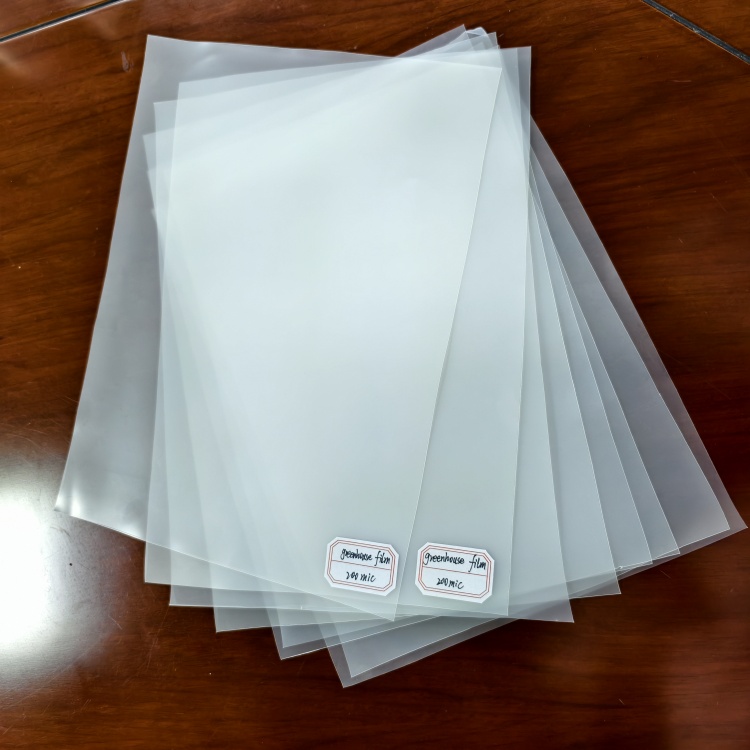
PO Greenhouse Film for Cut Flower Production: Stable Light Conditions for Roses and Carnations
Large cut-flower buyers need consistent stem quality and predictable harvest timing, so the film cannot be selected only by thickness or price. The specification must match crop value, greenhouse structure, climate exposure, and replacement schedule.
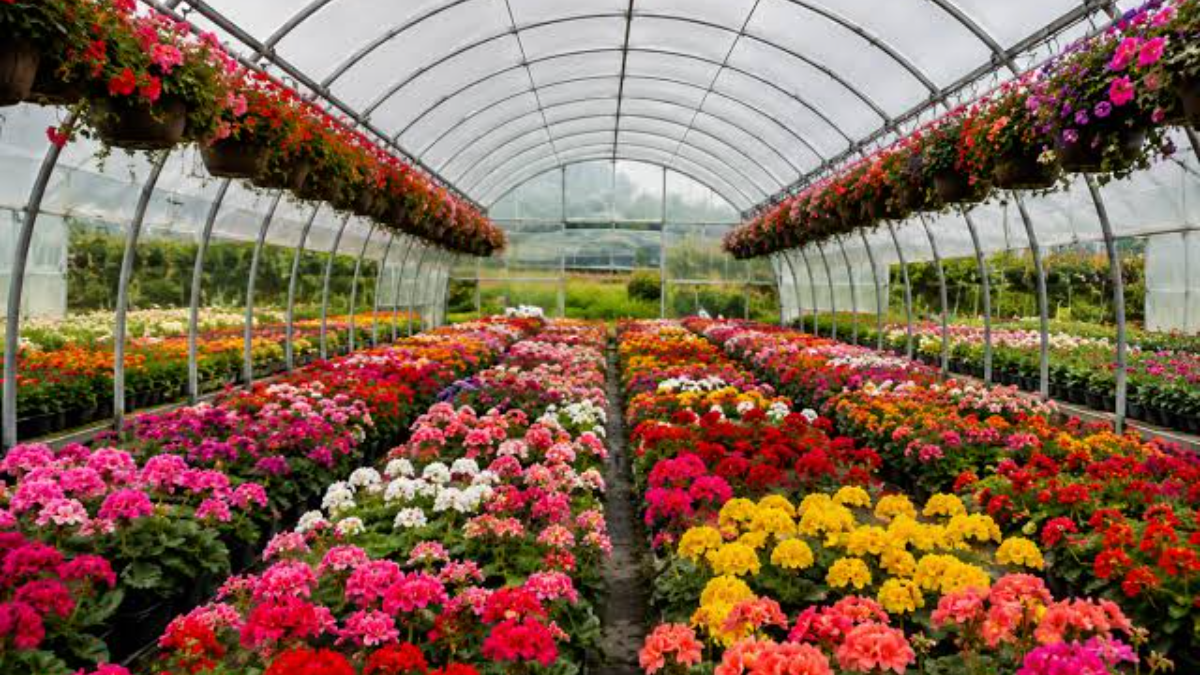
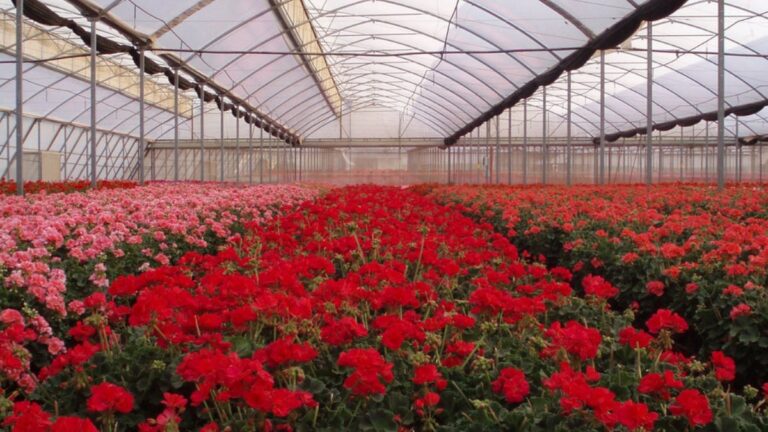
Growing roses and carnations commercially requires a greenhouse covering that delivers stable light conditions, reliable condensation control, and predictable service life. Since cut flowers are sold based on appearance, stem length, bloom quality, and harvest timing, greenhouse film directly influences production consistency and operating costs.
For commercial growers, distributors, and greenhouse project contractors, selecting PO greenhouse film is not simply a matter of choosing the thickest or lowest-priced product. The film specification should match the crop, greenhouse structure, local climate, and planned replacement cycle.
At HONREL AGRICULTURE, we manufacture customized PO greenhouse film for commercial flower production, supplying roll sizes, thicknesses, and additive packages designed for different growing environments.
Table of Contents
Why PO Greenhouse Film Is Preferred for Cut Flowers
Compared with standard PE greenhouse film, PO greenhouse film offers improved durability and additive performance for high-value flower crops.
Typical advantages include:
Better light transmission for uniform crop growth
Optional light diffusion to reduce hot spots
Anti-drip and anti-fog technology for cleaner greenhouse conditions
Longer UV resistance for multi-season production
Higher mechanical strength during installation
Stable optical performance throughout the service life
For commercial flower farms, these characteristics help reduce maintenance while improving crop consistency.
Recommended Specifications for Rose & Carnation Greenhouses
Specification
Rose Production
Carnation Production
Thickness
150–200 μm
150–180 μm
Light Transmission
88–91%
88–90%
Light Diffusion
30–50%
20–40%
Anti-drip
Recommended
Highly Recommended
UV Protection
3–5 Years
3–5 Years
Film Width
Customized
Customized
Actual specifications should be selected according to greenhouse span, wind conditions, climate, and replacement schedule.
PO Film for Rose Greenhouses
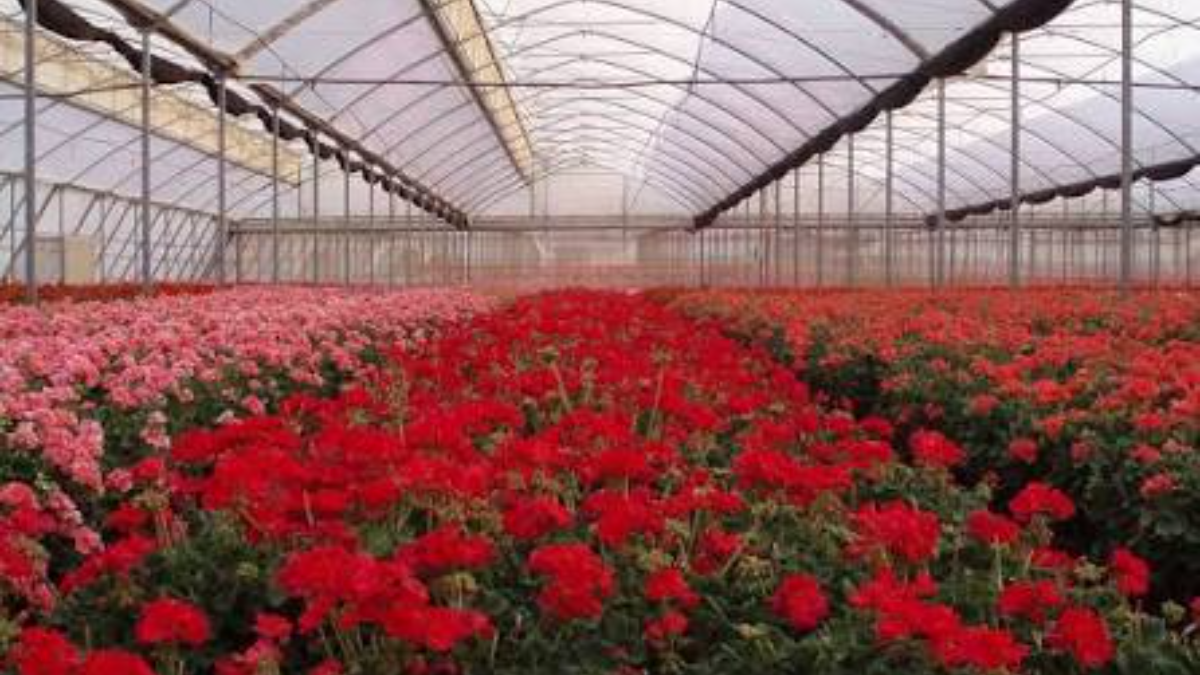
Rose production requires consistent light distribution throughout the greenhouse. Excessively strong direct sunlight can create uneven temperatures and inconsistent stem development, especially in multi-span commercial structures.
For rose growers, PO greenhouse film with light diffusion helps distribute sunlight more evenly across the crop canopy while maintaining high overall light transmission.
Recommended features include:
High light transmission
Medium-to-high light diffusion
Reliable UV stabilization
Good mechanical strength
Anti-drip performance where condensation is common
Selecting the appropriate diffusion level depends on local solar radiation and greenhouse design.
PO Film for Carnation Greenhouses
Carnations are commonly grown at high planting densities where humidity management becomes more challenging.
Condensation droplets can increase greenhouse maintenance and affect flower quality. For this reason, anti-drip performance is often one of the highest priorities when selecting greenhouse film.
Typical recommendations include:
Excellent anti-drip performance
Stable anti-fog behavior
High light transmission
Reliable UV resistance
Consistent film thickness
These features help create a cleaner growing environment while supporting stable production throughout the season.
Choosing the Right Film Thickness
Film thickness should be determined by greenhouse structure rather than price alone.
Greenhouse Type
Recommended Thickness
Small tunnels
120–150 μm
Standard commercial houses
150 μm
Large multi-span greenhouses
180–200 μm
Areas with strong wind or snow load
200 μm or above
Using a film that is too thin may shorten service life, while unnecessary thickness increases project costs without improving performance.
Key Factors Before Ordering
For large flower buyers, the order should specify roll width, roll length, thickness, UV package, diffusion, anti-drip, packing, label, and batch traceability. If the buyer compares PO with PE greenhouse film, the comparison should include service life, crop value, installation labor, and risk of quality loss. PE may be suitable for lower-cost or short-cycle structures. PO is usually stronger for high-value flower houses that need better optical and anti-drip performance.
Custom PO Greenhouse Film from HONREL AGRICULTURE
HONREL AGRICULTURE manufactures PO greenhouse film for commercial agriculture and greenhouse construction projects worldwide.
Customization options include:
Film width up to project requirements
Thickness from 80–200 μm
UV stabilization packages
Light diffusion additives
Anti-drip and anti-fog technology
IR thermal additives
Custom roll length
OEM packaging and labeling
Batch traceability for large-volume projects
Our production team works directly with distributors, greenhouse contractors, and commercial growers to supply film specifications that match each project’s operating conditions.
How To Compare Competing Film Offers
When comparing offers, large buyers should place the specifications side by side. Compare thickness tolerance, UV life, diffusion, anti-drip, roll width, roll length, packing, and delivery time. If one offer is cheaper, identify what is different. It may have lower thickness, shorter service life, weaker additive performance, or simpler packing. Sometimes the cheaper option is acceptable. Sometimes it creates risk for a high-value flower house.
Comparison Item
Why It Matters
Thickness tolerance
Determines product consistency
UV package
Influences replacement cycle
Light transmission
Affects crop growth
Light diffusion
Improves light distribution
Anti-drip performance
Reduces condensation
Mechanical strength
Prevents installation damage
Roll dimensions
Improves installation efficiency
Manufacturing consistency
Ensures stable quality across batches
FAQ for Large-Volume Buyers
Q1: Is PO film suitable for rose greenhouses?
A: Yes. PO film is suitable for rose houses that need stable light, diffusion options, anti-drip performance, and planned service life.
Q2: What is the main film priority for carnation houses?
A: Anti-drip and anti-fog performance are often key because dense planting and humid mornings can create condensation problems.
Q3: Should large flower buyers choose PO or PE film?
A: PE film can work for lower-cost structures, but PO film is usually preferred for high-value houses needing stronger additive performance.
Q4: What should be confirmed before bulk production?
A: Confirm greenhouse width, thickness, roll length, diffusion, anti-drip, UV life, packing, and batch labeling.
Q5: Can HONREL customize PO film for cut-flower projects?
A: Yes. HONREL AGRICULTURE can customize PO film width, thickness, UV package, diffusion, anti-drip, and packing for large-volume flower projects.
Get Factory-Direct Insights & Growing Tips
Selecting the right Greenhouse Film or shade mesh is critical for crop success. As a dedicated Agricultural Netting and Film Manufacturer, our experts help you customize UV protection and light transmission based on your local climate. Share your project details for a tailored solution.
HONREL AGRICULTURE engineers films, netting, and drip pipe to your crop, climate, and structure—specs, colors, labeling, and packaging—backed by drawings and spec sheets.
Fast Response & Quick Proofing
Rapid quoting, spec-sheet/sample proofing, and practical engineering support. We align specifications and documentation quickly to keep your project timeline on track.
Consistent Quality & Traceability
UV-stabilized formulations, process QC, and lab checks for optics/mechanics—plus lot-level tracking. COA/test reports available; export packing and labeling are standardized.