If you’re running a commercial greenhouse, you don’t need me to tell you that the math is getting harder every year. The margins are tighter than ever, and let’s be honest—it’s getting tougher to actually turn a profit.
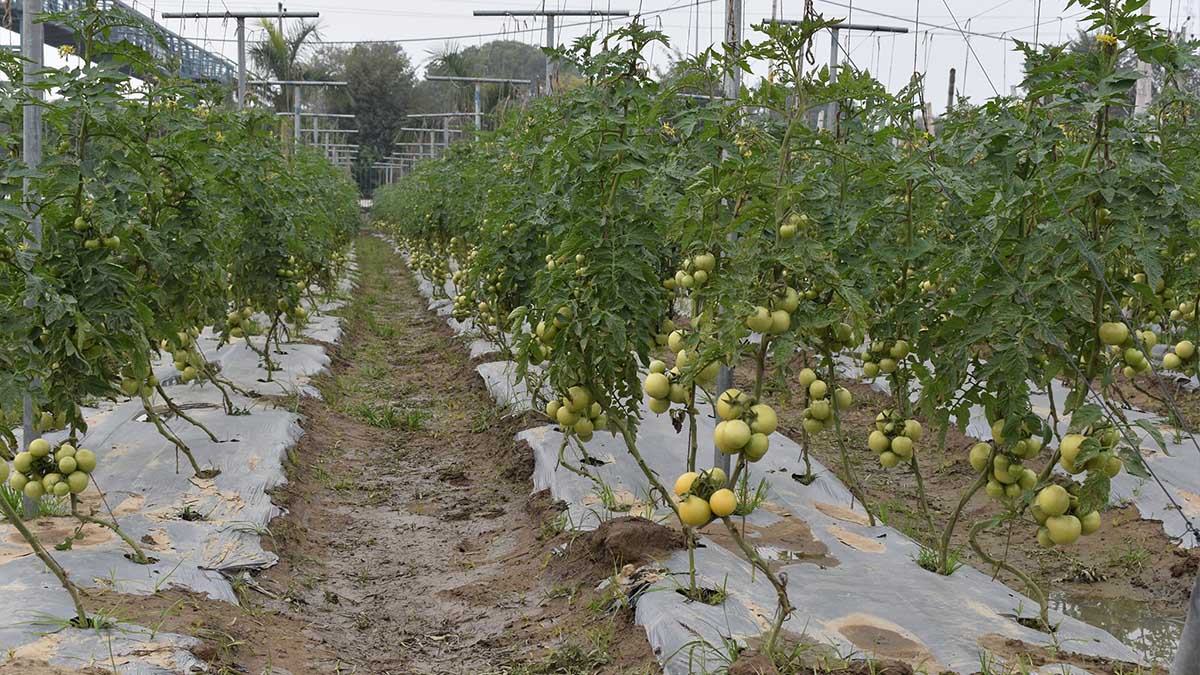
To grow top-tier indeterminate tomatoes, you basically have to be a control freak about the environment. You’re constantly chasing that perfect balance: you need every drop of sunlight you can get to push your yields, but if the temp spikes even a little too high, you’re looking at blossom drop or a nasty outbreak of mold.
The “old way” to fix this is just throwing money at the problem—cranking up the heaters all winter or running those massive exhaust fans 24/7 in the summer. But with the way energy costs are going, that’s a quick way to go broke. Unfortunately, this sends energy costs straight through the roof.
Here is the direct answer to your yield and energy problem:
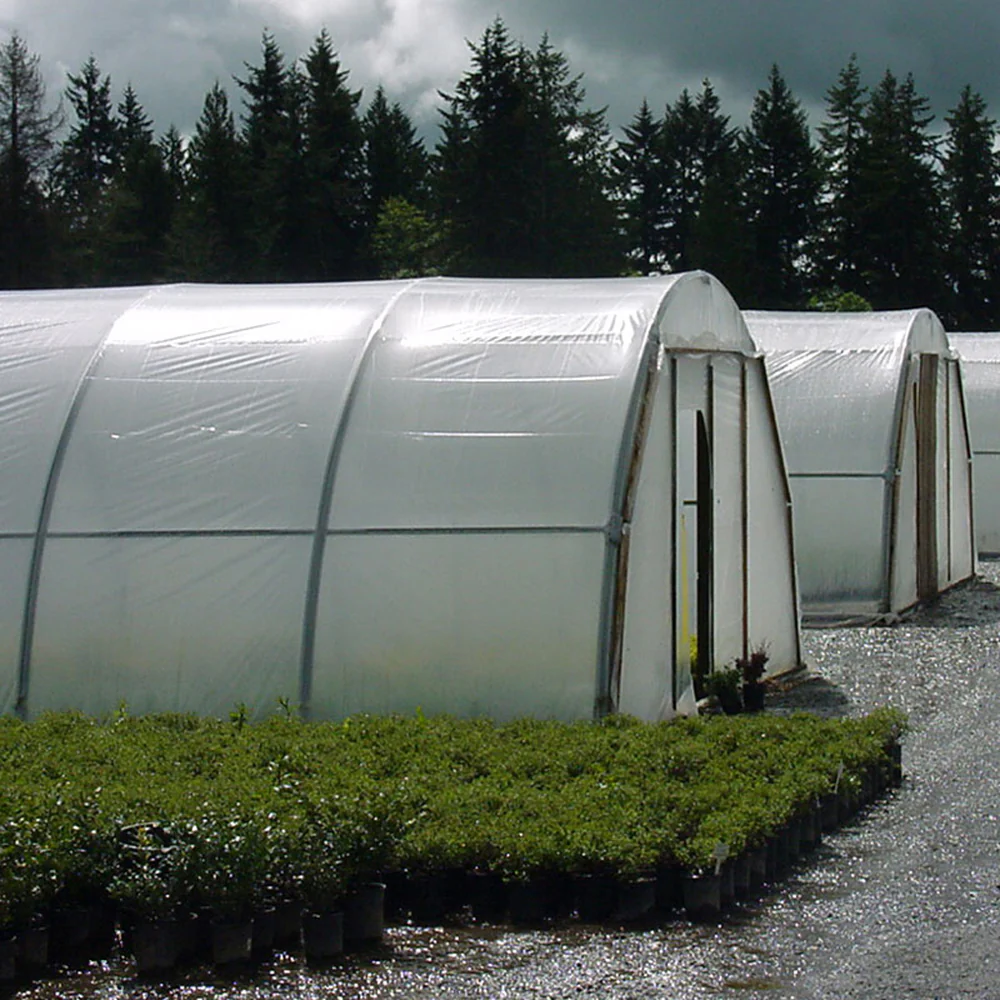
You do not need to spend more money on mechanical HVAC systems; you need a passive climate solution. To achieve this, you must upgrade your greenhouse cover to a 5-layer Polyolefin (PO) Film engineered with Infrared (IR) blocking and light diffusion technology.
Why choose PO film over standard polyethylene (PE) plastics? PO film fundamentally changes the physics of how light and heat behave inside your greenhouse. The Real Benefits of Pro-Grade PO Film
Look, the goal is to get as much light in as possible without “cooking” your plants. This film lets in over 90% of the sunlight, but here’s the clever part: it scatters that light. Instead of a harsh spotlight hitting the top leaves and scorching them, the light bounces around and reaches all the way down into the deep canopy. You get better photosynthesis from top to bottom, not just at the tips.
But the real “money maker” is what happens at night. We’ve baked IR additives right into the film to trap that heat inside. It’s like putting a thermal blanket over your entire greenhouse, which seriously cuts down those brutal winter heating bills.
Plus, it pretty much kills off condensation. You won’t have water dripping all over your fruit and causing rot. At the end of the day, you’re getting a way more stable, high-volume harvest while actually spending less on your overhead. It’s a no-brainer.
As a Solution Specialist at HONREL AGRICULTURE, I consult with multi-hectare farm operators every single day. We understand the polymer chemistry required to build a profitable farm. In this comprehensive guide, we are going to look at the exact plant biology of tomato cultivation, analyze verified academic data on energy retention, and show you why partnering with a direct factory for your greenhouse film is the highest ROI decision you can make.
The Financial Reality of Greenhouse Tomatoes
Let’s be completely honest: growing tomatoes indoors is incredibly expensive. Before you can harvest a single vine, your operational budget is heavily taxed by the environment.
According to a detailed economic analysis conducted by the University of Florida (UF/IFAS), annualized greenhouse structure costs, labor, and energy costs account for roughly 60% of total production costs. When 60% of your budget is tied up in simply keeping the environment stable, any fluctuation in outside weather can completely destroy your profitability.
If a sudden cold snap rolls in, you’re basically held hostage by your heaters—they’ll be running around the clock just to keep up. On the flip side, when a heatwave hits, the sun can get so intense it triggers “photoinhibition.”
Now, that’s just a fancy way of saying your plants get so stressed out they literally shut down. They stop growing and stop producing fruit entirely. At that point, trying to fight mother nature with more electricity is a losing battle—you’re just burning through cash while your crop sits there doing nothing. You need a passive structural solution that stabilizes the environment automatically.
Boosting Yield Stability: The Power of Light Diffusion
To understand how PO film boosts your harvest, we have to look at how tomato plants process solar radiation. Standard clear plastic acts like a magnifying glass; sunlight enters as a harsh, direct beam. The top leaves of the tomato vines absorb this light and cast deep, dark shadows over the middle and lower canopy.
Our advanced PO films are engineered with a specific “haze” or diffusion factor. The film scatters the incoming light in infinite, random directions. This diffuse light wraps around the top leaves and penetrates deep into the lower canopy.
The Scientific Proof of Yield Increase
A major agronomic study published by the scientific journal MDPI evaluated Mediterranean tomato greenhouses covered with highly diffusive experimental films versus standard commercial films.
- The Findings: The researchers found that the photosynthetic activity measured in the tomato leaves was an incredible 21.5% higher in plants growing under the diffuse film.
- Preventing Stress: The study noted that tomato photoinhibition typically occurs when canopy temperatures reach 30–40°C combined with high radiation levels. Diffused light causes significantly less photoinhibition because it eliminates severe localized peaks in light intensity, allowing the temperature of leaves and flowers to remain cooler.
- The Yield Result: By keeping the tomato plants stress-free during the peak hours of noon, the uniform light distribution generated a 3.2% absolute increase in marketable yield (larger and heavier fruits) simply by changing the plastic cover.
💡 Best Practice: Controlling the Ground Climate
An advanced roof is only half the battle. If you want a harvest that’s actually consistent, you’ve got to keep a death grip on your soil temp and moisture. You let that humidity spike even a little, and Botrytis—that nasty gray mold—will move in and wreck your whole crop before you even know it.
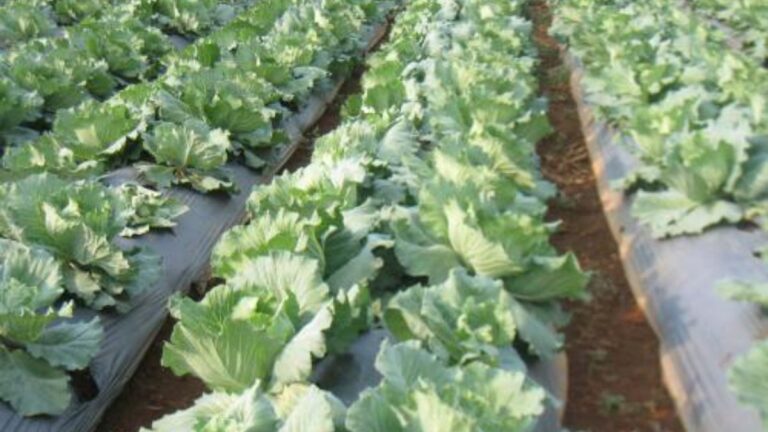
How to handle your floor: I always tell guys, don’t skimp on the mulch film. If you’re getting an early start while the ground is still cold, go with black mulch. It basically acts like a giant heater for the dirt, getting those roots moving so the plants take off.
But, if you’re planting in the middle of a heatwave, forget the black stuff—you need silver-on-black. That silver top works like a mirror, reflecting the sun so your roots don’t cook. A huge bonus is that it actually messes with the vision of pests like aphids and whiteflies. It “blinds” them so they don’t even land.
Slashing Energy Costs with IR Thermal Technology
Cutting down the bills: Look, big yields are great, but the real win is keeping your overhead from eating your lunch. Keeping a greenhouse warm in the winter is a total money pit—between the propane and the electric bill, it’s brutal. That’s why that IR thermal tech is a game changer. It keeps the heat locked inside at night, so your heaters aren’t working double shifts. At the end of the day, the money you save on power is pure profit in your pocket.
Our PO films are infused with advanced IR-absorbing mineral additives.
- The Energy Savings: According to energy audits performed by Michigan State University (MSU), utilizing films with an Infrared (IR) additive traps the inside radiant heat from escaping. The audits indicate that using IR plastic can reduce heating requirements by up to 20%.
- Fast Payback: Because the PO film keeps the internal plant tissue temperature higher at night, MSU notes that the return on investment (ROI) for upgrading to IR thermal films is typically one year or less. The fuel savings literally pay for the premium plastic.
The HONREL 5-Layer Engineering Advantage
Standard polyethylene plastics are the cheap “workhorses” of the industry, usually lasting 1 to 3 seasons before yellowing and tearing. While our standard PE film is excellent for budget-conscious, temporary high tunnels, commercial tomato production demands next-level technology.
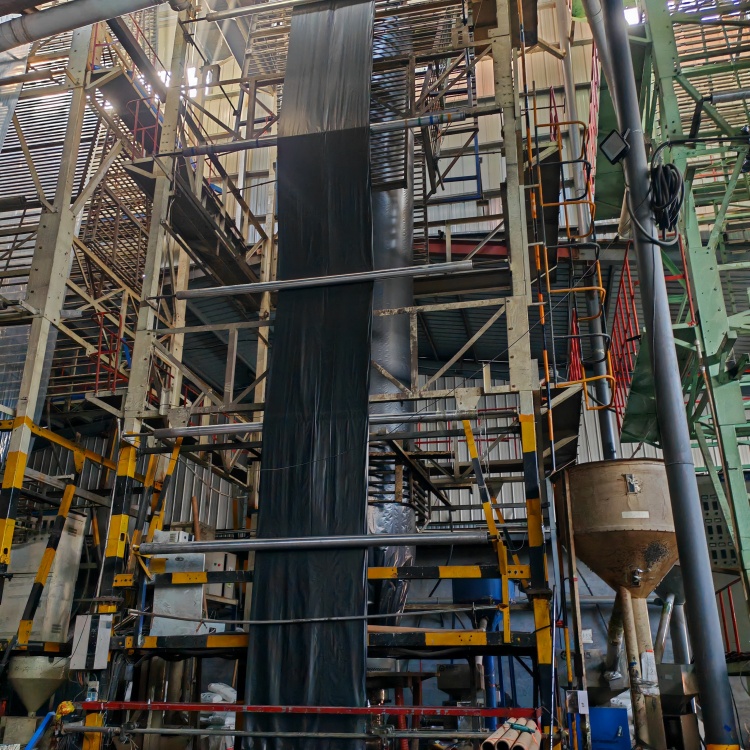
At HONREL, we manufacture our PO films using state-of-the-art 5-layer co-extrusion technology. This means we can isolate different chemical additives in different layers, preventing them from interfering with each other:
- The Exterior (UV & Anti-Dust): Loaded with advanced Hindered Amine Light Stabilizers (HALS) and an anti-dust nano-coating to keep the plastic crystal clear. This layer takes the brunt of the sun, guaranteeing a 3 to 5-year lifespan.
- The Core (Metallocene Strength): We utilize Metallocene (mPE) and EVA polymers in the core layers. This provides incredible elasticity and tensile strength against severe winds and heavy snow loads.
- The Interior (Permanent Anti-Drip): Tomatoes transpire massive amounts of water. If you use a cheap plastic roof, condensation forms into heavy droplets that fall onto your plants, breeding fungal diseases instantly. Our PO film features a permanent, chemically bonded anti-drip interior layer. The moisture sheets flat and runs down the walls to your gutters. No droplets mean higher light transmission and zero disease splashing.
💡 Best Practice: The “Drum-Tight” Installation Method
Polyolefin is an incredibly strong material, but it has a different thermal expansion coefficient than standard polyethylene.
The Execution: Never install your PO film early on a freezing morning. If you pull it tight when it is cold, it will expand and sag drastically when the noon sun hits it. Sagging creates “valleys” in the roof where condensation pools, completely ruining your anti-drip performance. Always install your film on a mild, warm day. Pull it taut. As the temperature drops at night, the film will shrink slightly, tensioning itself perfectly over your metal frame like a drum skin.
Why Source Factory-Direct from HONREL AGRICULTURE?
If you are a greenhouse constructor, an agricultural distributor, or managing a massive multi-hectare tomato facility, buying retail rolls of plastic from a middleman completely destroys your profit margins. You need a dedicated factory partner who understands polymer chemistry.
At HONREL AGRICULTURE, we customize our 5-layer extrusion lines to fit your exact commercial demands:
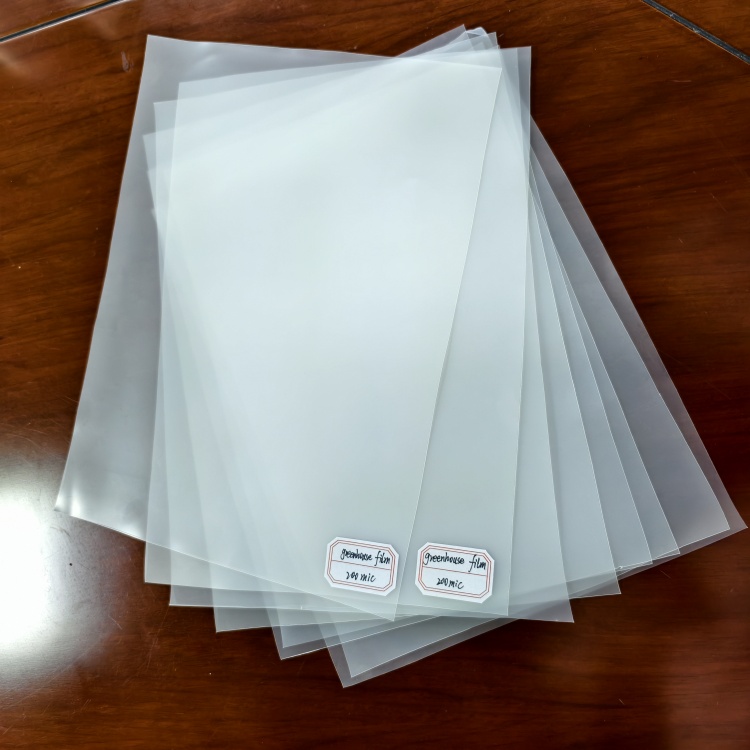
- Custom Widths and Thickness: We extrude films ranging from a flexible 150 microns to a heavy-duty 200 microns. We can supply massive custom roll widths (up to 20 meters wide) to cover your multi-span structures seamlessly. Fewer seams mean drastically reduced installation labor.
- A Complete Holistic Supplier: We supply every plastic layer your farm needs. Need to partition your facility, protect your hydroponic water reservoirs from algae, or force blooming via light deprivation in adjacent crops? We manufacture 100% opaque, heavy-duty black and white panda film to give you absolute control over your facility’s photoperiods.
5 Frequently Asked Questions (FAQ) for Tomato Growers
Q1: Will “diffused” PO film reduce the overall light my tomatoes receive?
A: No. Diffused film scatters the light, but the Total Light Transmission (PAR) remains incredibly high (usually around 90-95%). In a greenhouse, direct sunlight creates harsh shadows and burns the top canopy. Diffused light simply redirects those photons deep into the lower canopy to boost overall photosynthesis without causing heat stress.
Q2: How long does the anti-drip feature actually last on PO film?
A: Standard cheap PE films use “migratory” soapy additives mixed into the plastic that wash away in 6 to 12 months. Because we utilize advanced 5-layer co-extrusion, our premium anti-drip coating is chemically bonded to the innermost layer. It is designed to last for the realistic 3 to 5-year lifespan of the film itself, ensuring your tomatoes stay dry season after season.
Q3: Does PO film block UV light, and will that affect my bumblebees?
A: We can customize the UV-blocking properties of the film at the factory. Generally, UV-blocking films help reduce populations of whiteflies and thrips and suppress fungal diseases. However, bumblebees need UV light to navigate. If you rely on bees for your tomato pollination, you must request a “UV-open” PO recipe from us so your bees can work efficiently.
Q4: Which side of the PO film should face the inside of the greenhouse?
A: Because our 5-layer films are engineered with specific chemical coatings on different sides (anti-dust on the outside, anti-drip on the inside), the film is strictly directional. If you install it backward, the anti-drip will not function. We clearly mark the “Inside” and “Outside” on every single OEM roll package to ensure your installation team gets it right.
Q5: What is the Minimum Order Quantity (MOQ) for factory-direct wholesale?
A: Because we are an industrial manufacturer operating large-scale extrusion towers, our standard MOQ is generally based on raw tonnage (typically 1 to 2 Tons, depending on your custom width and thickness requirements). Buying directly in bulk guarantees you receive the absolute best B2B wholesale pricing on the global market.
Conclusion: Stop Wasting Energy and Protect Your Yield
In commercial tomato farming, your greenhouse cover is your first line of defense against the elements and your primary optical growth engine. Settling for cheap, mono-layer plastic is a massive operational mistake. It forces you to overspend on winter heating, exhausts your summer cooling systems, and leaves your plants vulnerable to severe photoinhibition and fungal outbreaks.
By upgrading your facility to HONREL’s 5-Layer PO Film, you are making a data-backed financial investment. You maximize PAR light transmission, eliminate sun scald through intelligent light diffusion, actively trap valuable thermal heat at night, and guarantee a resilient 3 to 5-year lifespan for your structure.
Ready to maximize your tomato yield and lower your facility’s energy overhead?
Partner with HONREL AGRICULTURE today. Contact our engineering and sales team for a custom B2B wholesale quote, and let us build the perfect polymer shield for your commercial farm.