PO Greenhouse Film Supplier for Commercial Herb Growers: Managing Condensation and Leaf Quality in Basil Production
It's a real help, but it only works alongside good ventilation and humidity control. The film handles where the water goes; it doesn't remove the water from the air.
For basil, the roof film matters mainly because of what drips off it. Water that condenses on the inside of the film and falls onto the crop keeps leaves wet, and wet leaves are what basil downy mildew needs. An anti-drip PO film makes condensation run down the roof instead of dripping, which keeps the canopy drier. It’s a real help, but it only works alongside good ventilation and humidity control. The film handles where the water goes; it doesn’t remove the water from the air.
Table of Contents
Why Is Condensation Control Important for Commercial Basil Production?
If there’s one thing every basil grower loses sleep over, it’s downy mildew—and that stuff lives for moisture. According to UMass Extension, if a leaf is wet, spores can sprout in about two hours and take over the plant in four. Once night hits and humidity stays past 85%, the pathogen starts churning out fresh spores. Bottom line from their fact sheet: long hours of leaf wetness and thick, humid air are pretty much the exact recipe for an outbreak.
So anything that keeps leaves wet for hours is a problem. Overhead irrigation late in the day is one cause. Water dripping from the roof onto the crop at night and early morning is another, and that’s the part the film can do something about.
Drips also leave marks on soft basil leaves, and packers notice. Fewer drips usually means a cleaner product.
How Does Condensation Form on Greenhouse Film and Affect Basil Leaves?
On a chilly night, the roof film is easily the coldest spot in the whole greenhouse. Warm, damp air rising up from the plants hits that cold plastic, cools right down, and moisture starts beading up on the underside. With standard plastic, that water just turns into big hanging droplets. They keep swelling up as more moisture condenses until they’re too heavy and start raining down on your crops. Rows of basil under purlins or bows often show it first, because that’s where drips collect and fall.
Droplets also cut down the light coming through the roof. UMass notes that droplets on the film reduce light transmission and can cause disease when they drip onto plants (UMass greenhouse film update).
How Can Anti-Drip and Anti-Fog PO Greenhouse Film Help Manage Condensation?
How Anti-Drip Treatment Changes Water Droplet Behavior
Anti-drip film—some folks call it anti-condensate or just AC film—has a built-in wetting agent that kills the surface tension on the inside. So instead of water beading up and hanging there, the condensation flattens out into a thin sheet and just slides right down the slope of the roof into the side walls or gutters instead of raining on your plants. An anti-fog additive can be added too, to reduce the mist that forms inside the house in the early morning and late afternoon.
For this to work, the water needs somewhere to go. The roof needs enough slope, and the film has to be tight. Flat or sagging areas let water collect and eventually drip anyway.
Film Surface Performance and Changes Over Time
The anti-drip effect doesn’t last forever. The additive is either built into the film or sprayed on, and it slowly washes out with repeated condensation. UMass says it usually lasts a couple of years. Multi-layer PO films are designed to hold the additive longer, but performance still depends on the film, the climate and how wet the house runs.
When you buy, ask the supplier how long the anti-drip effect is expected to last, separately from the overall UV life of the film. The two are often different.
How Do Light Transmission and Greenhouse Temperature Affect Basil Quality?
Basil thrives when it gets solid sunlight, and if it’s starved for light, the plants just get all stretched out, spindly, and weak. UMass has a handy rule of thumb for dealing with winter gloom or cloudy stretches: roughly speaking, every 1% bump in light gives you about a 1% boost in growth.
Film additives change light transmission, and not always the way people expect. UMass lists typical PAR transmission of 88–91% for plain UV-stabilized film, 82–87% for film with IR and anti-drip additives, and 77–88% for IR/AC film with diffusion. In other words, an anti-drip film may transmit slightly less light when dry than a plain film. Its benefit is that it stays clearer when wet, because water spreads into a thin layer instead of droplets.
Temperature matters too. Basil is a warm-season crop and slows down a lot in cool conditions. An IR (thermal) additive in the film reduces heat loss at night. UMass puts heating savings at about 10–20% depending on sky conditions, which helps keep night temperatures up in heated houses.
In very sunny climates, a diffused film spreads light more evenly through the canopy and reduces scorching on the top leaves.
Why Must Greenhouse Ventilation and Humidity Control Work Together With PO Film?
Anti-drip film stops the roof from dripping, but the humidity is still there. Downy mildew can still develop if the air around the plants stays very humid overnight.
Extension advice on this is fairly consistent:
Keep relative humidity below 85% where you can. Rutgers notes this can significantly reduce spore production.
Run horizontal airflow fans at night. Rutgers reports that continuous fanning at night has been shown to dramatically reduce the disease.
If you can’t keep humidity down, break up the wet periods. Rutgers suggests ten minutes of fanning or venting every two to four hours.
Heat and vent in the evening, especially after warm days followed by cool nights. This comes from UMass.
Water in the morning, or use drip irrigation, so leaves dry before night.
Space plants so air can move between them.
Keeping the floor and benches free of standing water also helps. Where vents and sidewalls are open, insect netting keeps pests out, but choose a mesh that still lets enough air through. Very fine mesh restricts ventilation.
How to Choose PO Greenhouse Film for Different Herb-Growing Conditions
Film Thickness, Light Transmission and UV Stabilization
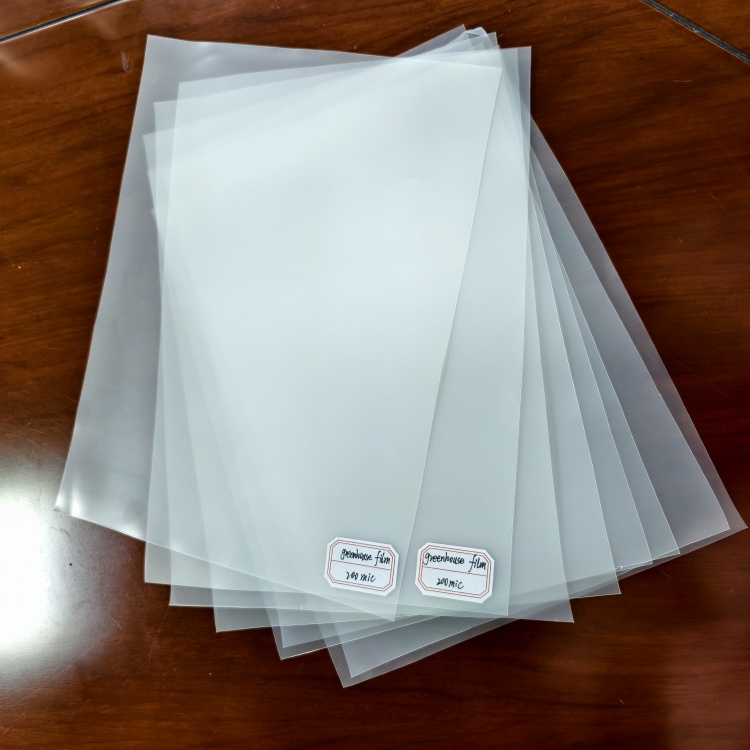
For permanent houses, most growers use a multi-layer PO film around 150–200 microns (6–8 mil), with UV stabilization rated for several years. Check:
light transmission, and whether you want clear or diffused film
expected UV life in your climate
whether you use sulfur burners or certain crop protection products, since some can shorten film life, so ask for a film rated for them
Anti-Drip Performance, Greenhouse Structure and Climate
The right combination depends on your house and climate:
Situation
What to look for
Heated house, cold winters
Anti-drip plus IR (thermal) additive
Hot, sunny climate
Anti-drip plus diffusion
Unheated tunnels
Anti-drip, durable film, enough roof slope for water to run off
Double-layer inflated roof
Anti-drip on the inner layer facing the crop
Anti-drip film only works on the side facing the crop, so it has to go on the right way round. Good film is printed to show which side faces in.
What Should Commercial Herb Growers Verify Before Ordering PO Film in Bulk?
Before ordering, confirm:
Width and length for each house, with enough extra to fix into the locking channels.
Thickness, UV life, and the expected life of the anti-drip effect.
Additives: anti-drip, anti-fog, IR, diffusion. Choose what your climate needs.
Clear printing that shows which side faces in.
Packing, so rolls arrive clean and undamaged.
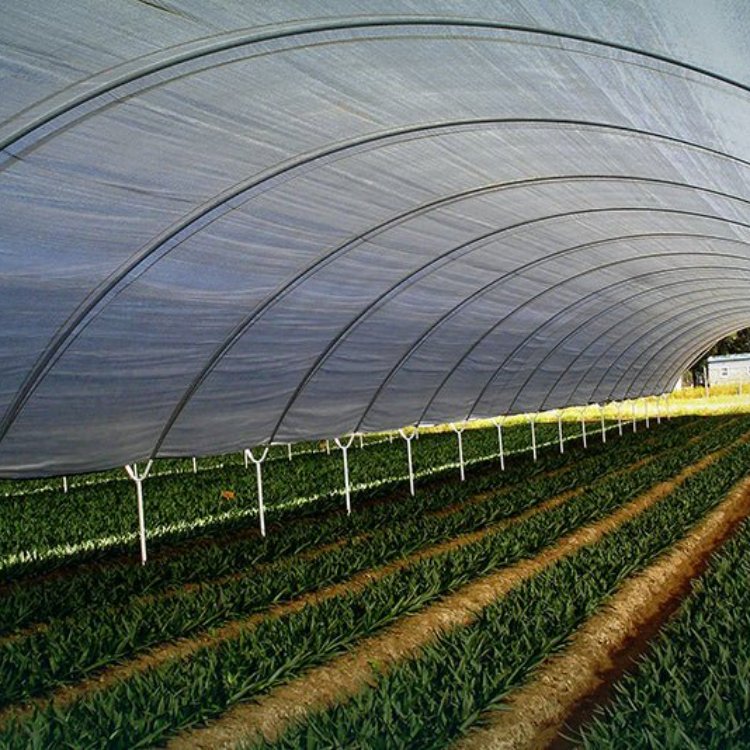
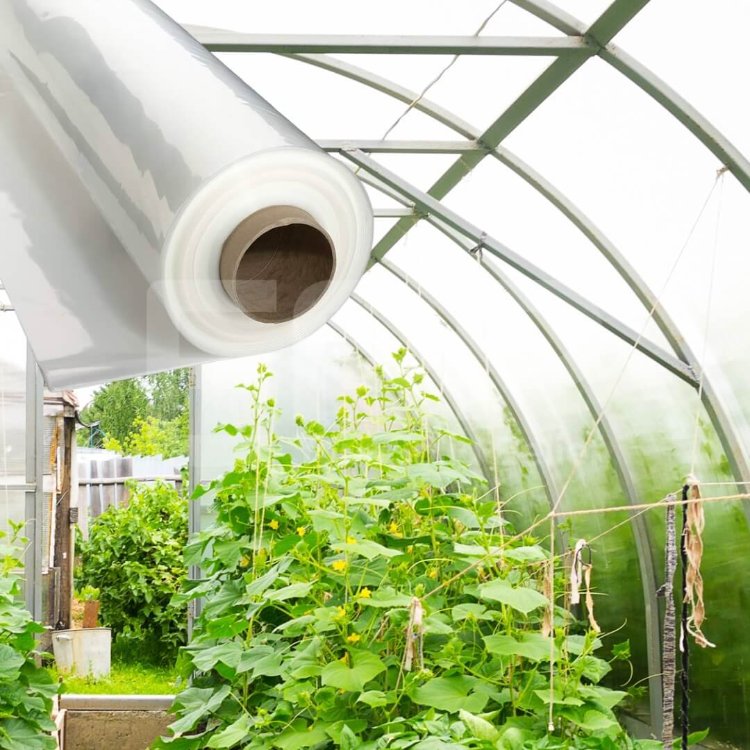
We supply po greenhouse film with anti-drip, IR and diffusion options, as well as pe greenhouse film for lower-cost or shorter-term covers. For summer heat, our shade net can go over the house. send us your house sizes and climate, and we’ll suggest a film.
FAQ
Q1: Does anti-drip film lower humidity in the greenhouse?
A: No. It changes how condensation behaves on the film, so water runs off instead of dripping. You still need ventilation, fans and heating to control humidity.
Q2: Will anti-drip film stop basil downy mildew?
A: Not on its own. It helps by reducing drips that keep leaves wet, but humidity, airflow, watering and spacing matter just as much.
Q3: How long does the anti-drip effect last?
A: It depends on the film and the conditions. UMass says it usually lasts a couple of years. Ask your supplier for their estimate.
Q4: Does anti-drip film let in more light?
A: When the roof is wet, yes, because water spreads into a thin layer instead of droplets. Dry, a film with extra additives can transmit slightly less light than plain film.
Get Factory-Direct Insights & Growing Tips
Selecting the right Greenhouse Film or shade mesh is critical for crop success. As a dedicated Agricultural Netting and Film Manufacturer, our experts help you customize UV protection and light transmission based on your local climate. Share your project details for a tailored solution.
HONREL AGRICULTURE engineers films, netting, and drip pipe to your crop, climate, and structure—specs, colors, labeling, and packaging—backed by drawings and spec sheets.
Fast Response & Quick Proofing
Rapid quoting, spec-sheet/sample proofing, and practical engineering support. We align specifications and documentation quickly to keep your project timeline on track.
Consistent Quality & Traceability
UV-stabilized formulations, process QC, and lab checks for optics/mechanics—plus lot-level tracking. COA/test reports available; export packing and labeling are standardized.