Black White Panda Film for Leafy Greens: Reducing Heat Stress and Quality Loss
You can’t turn down the sun, but you can definitely fix the climate around your roots. If you want to grow premium greens when it’s hot out, you’ve got to keep the soil cool and keep the weeds from stealing your water.
Look, let’s cut to the chase. If you’re running a commercial farm for leafy greens—lettuce, spinach, chard, you name it—you know that heat is the one thing that’ll absolutely kill your season.
These crops are built for the cold. The second you try to push them into late spring or summer, the soil starts cooking and the plants just panic. You get tip burn, they bolt way too early, and the leaves turn bitter and puffy. At that point, your buyers won’t touch the crop with a ten-foot pole, and your profit for the whole season just goes up in smoke.
You can’t turn down the sun, but you can definitely fix the climate around your roots. If you want to grow premium greens when it’s hot out, you’ve got to keep the soil cool and keep the weeds from stealing your water.
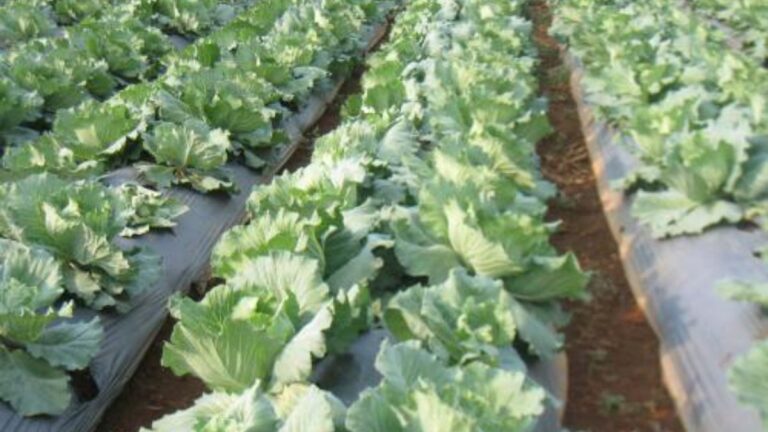
The fastest way to do that is to ditch the old-school ground cover and switch to a co-extruded white-on-black mulch.
By laying this film with the white side up, you’re basically flipping the physics of your field. That white surface acts like a mirror, bouncing the sun’s energy away before it ever hits the dirt. It drops the bed temperature way down compared to standard black plastic.
At the same time, that black underside is a total blackout—zero light gets through, so weeds don’t stand a chance. What you’re left with is better transplant survival, no more bolting, and a solid 25% jump in yield compared to just planting in bare ground. It’s a no-brainer if you want to keep harvesting while everyone else is getting burned.
As a Solution Specialist at HONREL AGRICULTURE, I consult with large-scale vegetable operations across the globe. We don’t just sell plastic rolls; we engineer the polymer formulas that solve actual field bottlenecks. In this comprehensive guide, we are going to look at the verified agronomic data behind root zone cooling, explain why standard plastics destroy summer crops, and show you exactly how to maximize your farm’s ROI.
Table of Contents
The Agronomic Challenge: Heat Stress in Leafy Greens
Look, to get why this white-on-black film is such a big deal for commercial growers, you’ve gotta look at what happens when you pick the wrong cover for the season.
Back in the day, everyone loved standard black mulch because it’s great for warming up the dirt in early spring to get things moving. But here’s the problem: once you hit late May or June, that black plastic stops being a “growth engine” and turns into a literal oven. Instead of helping your plants, it just cooks the roots. It’s a total rookie mistake to keep using it when the sun starts getting serious.
The 80°F Danger Zone for Lettuce
Black plastic is an opaque blackbody absorber. It absorbs almost all incoming UV, visible, and infrared solar radiation, and transfers that heat directly into the soil via conduction.
According to the New England Vegetable Management Guide, the optimum soil temperature for lettuce is around 75ºF. Once soil temperatures rise above 80ºF, seed germination is severely inhibited, and mature plants are forced into bolting and developing a highly bitter flavor.
If you’re dropping delicate lettuce starts into standard black plastic during the summer, you’re basically setting them up for failure.
The surface gets so hot it’ll instantly sear the stems—what we call stem girdle. It’s brutal. Once that root zone starts cooking, the plant just shuts down and stops taking in nutrients. That’s how you end up with tip burn and a field full of bitter, unmarketable junk that nobody’s going to buy. If the roots are miserable, the whole crop is a loss.
The Solution: How White-on-Black Film Cools the Soil
You cannot turn off the summer sun, but you can reflect it.
Our black and white panda film solves the heat crisis through high-albedo reflectivity. The bright white exterior layer reflects the vast majority of incoming shortwave solar radiation back into the atmosphere. Because the energy is bounced away before it can be absorbed, the soil underneath stays incredibly cool and stable.
The Cooling Advantage
Data from the University of Connecticut (UConn) Integrated Pest Management extension notes that co-extruded white-on-black mulches are highly recommended for establishing crops when soil temperatures are naturally high. Because they reflect incoming solar radiation back into the plant canopy, they actually decrease soil temperatures compared to bare, sun-baked dirt. Any reduction in soil temperature directly benefits cool-season vegetable development during the summer. (Source: UConn IPM – The Use of Different Colored Mulches for Yield and Earliness.)
This cooling effect completely eliminates stem burn, dramatically increases the survival rate of young lettuce transplants, and keeps the root system functioning at 100% efficiency even during a mid-summer heatwave.
💡 Best Practice: The “White Up, Black Down” Rule
I occasionally see field crews make a devastating mistake during rushed tractor installations: they load the mulch roll backward.
How to execute it correctly: When laying this film in the field, the white side must face the sky and the black side must face the dirt. The white side is your thermal mirror to reflect the heat, and the black side is your 100% opaque shield that smothers and kills the weed seeds. If you lay it upside down, you will accidentally cook your lettuce roots and let weeds germinate. We clearly mark the orientation on all of our HONREL factory packaging to prevent this exact error.
Verifiable Data: The 25% Yield Impact on Crisphead Lettuce
Keeping the roots cool sounds good in theory, but does it actually put more weight on the scale at harvest? You bet it does.
The American Society for Horticultural Science (ASHS) put out a field study from the University of Rhode Island that looked at exactly this—comparing white-on-black mulch to bare ground for growing lettuce.
The data doesn’t lie: the study confirmed that the white-on-black plastic completely stopped the dangerous soil heating you get with dark plastics. It kept the average soil temperature right around 17.7°C (63.8°F). Basically, it mimics the cool temperatures of bare dirt while still giving you all the benefits of using a mulch. When the roots aren’t stressed, the plants actually bulk up like they’re supposed to.
The Yield Result: Even though the white-on-black film kept the soil cool like bare ground, it provided all the massive benefits of plasticulture (100% weed suppression and locked-in moisture). The lettuce grown on bare ground yielded a poor 4.57 kg/m ². However, the lettuce grown on the white-on-black mulch yielded a massive 5.71 kg/m ².
That is a scientifically proven 25% increase in total marketable yield. (Source: ASHS Journals / University of Rhode Island – The Effects of Black and White Plastic Mulch on Soil Temperature and Yield of Crisphead Lettuce.)
By using white-on-black film, you get the high yields, clean produce, and zero-weeding benefits associated with professional plasticulture, without the lethal heat stress caused by standard black plastic.
💡 Best Practice: Timing Your Plastic Transition
Knowing when to switch your plastic colors dictates the ultimate success of your harvest window.
The Execution: Up to the middle of spring, when the soil is still struggling to warm up, standard black plastic is usually the preferred choice to push early lettuce growth. However, agricultural extensions agree: if you are transplanting sensitive leafy greens in June, July, or August, you must switch to white-on-black mulch. Paying attention to your regional planting calendar and switching your plastic color in late spring is the ultimate secret to extending your leafy green harvest straight through the hot summer months.
A Complete Polymer Ecosystem for Your Farm
At HONREL AGRICULTURE, we understand that a commercial farm is a complex ecosystem. While securing your soil with the right mulch film is critical, modern agriculture requires complete environmental control. We manufacture the exact polymer solutions for every stage of your crop’s lifecycle.
Here is how our custom-engineered films work together on a commercial farm:
Pest Disorientation: If your leafy greens are battling massive aphid or thrips pressure in the late summer, upgrading to a highly reflective silver black mulch film physically blinds the insects, preventing viral infections while keeping the roots cool.
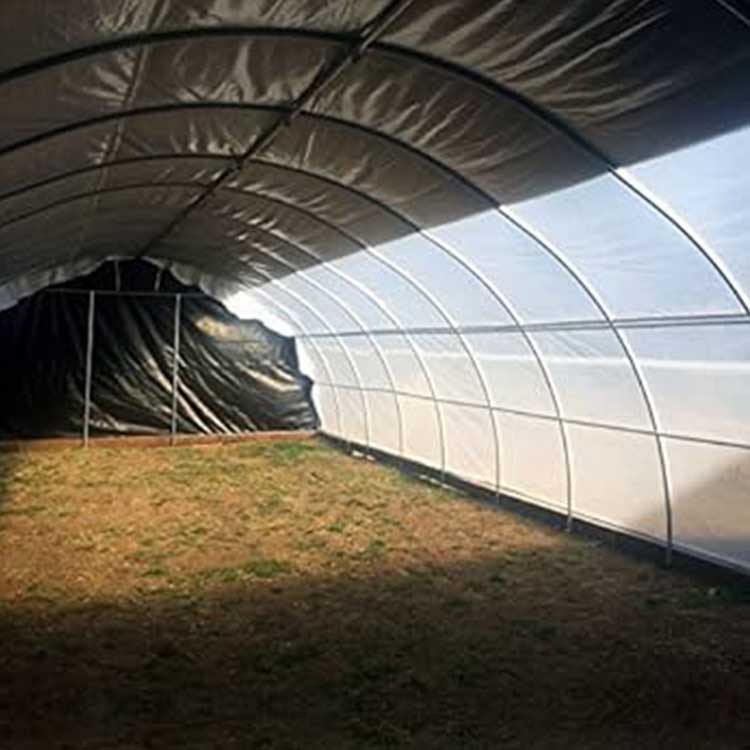
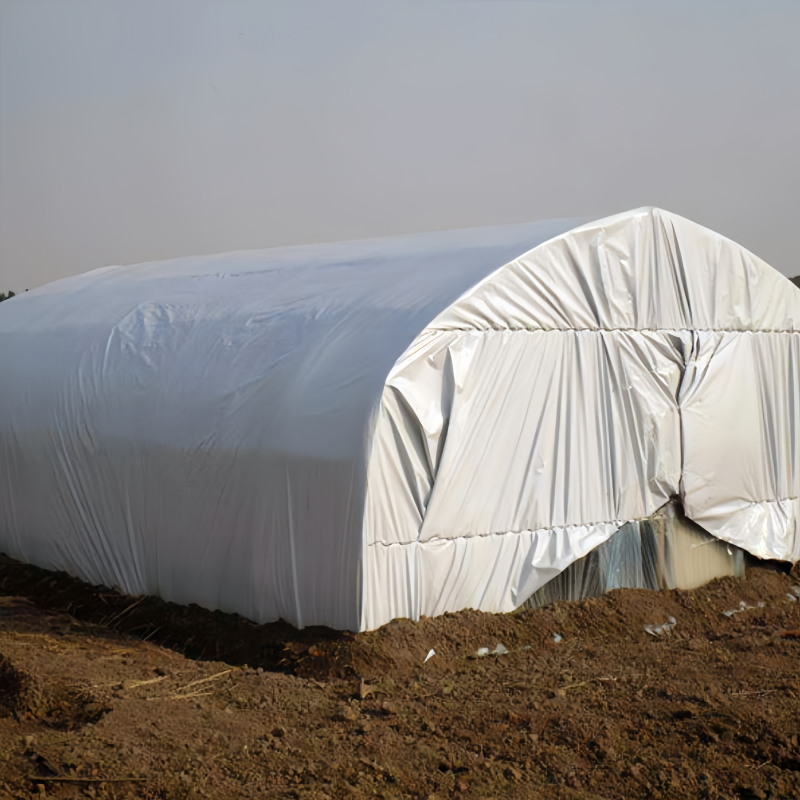
Rain and Hail Protection: Lettuce leaves are easily bruised by heavy seasonal rains. If you grow under high tunnels or multi-span structures to protect crop quality, upgrading your greenhouse roof to our advanced 5-layer PO film or our high-tensile PE film provides unmatched light transmission. More importantly, the permanent anti-drip coatings ensure condensation doesn’t drip onto your lettuce heads, keeping them perfectly dry and disease-free.
Why Source Factory-Direct from HONREL?
If you are an agricultural distributor or a farm manager overseeing hundreds of hectares, buying retail rolls of plastic from a middleman completely destroys your profit margins. You need a dedicated factory partner who understands polymer chemistry.
At HONREL AGRICULTURE, we don’t just paint our plastics; we engineer them. We manufacture our white-on-black films using advanced multi-layer co-extrusion technology. The white reflective layer and the opaque black layer are melted and fused together at the molecular level. They will never peel, flake, or separate in the field, guaranteeing 100% opacity against weeds.
Custom OEM Capabilities
Because we are the direct factory, we don’t force you into a “one-size-fits-all” retail box. We customize the film to your exact commercial demands:
Metallocene (mPE) Strength: We blend virgin Metallocene into the core to ensure the plastic doesn’t tear under your tractor’s tuck wheels. It stretches like a rubber band, making end-of-season mechanical retrieval fast and clean.
We can also do custom widths to match your bed shapers exactly. That way, you’re not messing around with overlap or wasting material—it just fits. The real game-changer, though, is the pre-punched holes. We can deliver bulk rolls with the spacing already set for your high-density lettuce. If you’ve ever had a crew out there doing that by hand, you know what a nightmare it is. Having them ready to go saves your guys thousands of hours of manual labor, so they can just focus on getting the plants in the ground. It’s a massive win for your efficiency.
5 Frequently Asked Questions (FAQ) for Vegetable Growers
Q1: Is that white side gonna scorch my lettuce transplants?
A: Honestly, I get why you’d worry, but it’s actually the opposite. If you were using something like aluminum mylar, yeah, you’d get those nasty “hot spots” that act like a magnifying glass and fry your plants.
Our white film is different—it’s designed for what we call “diffuse reflection.” Instead of a laser beam, it scatters the light in every direction. It’s a much softer, more even light that gets right under the leaves where they need it for photosynthesis, but without the heat. Your transplants stay cool, and they get a nice boost instead of a sunburn.
Q2: How do I irrigate my leafy greens if the plastic blocks the rain?
A: Because any high-quality mulch acts as a total vapor barrier, you cannot rely on overhead sprinklers to water the roots. You must lay drip irrigation tape underneath the plastic during the tractor installation process. This actually saves massive amounts of water by preventing evaporation and allows you to inject liquid fertilizer directly into the root zone without feeding weeds in the alleys.
Q3: Can I reuse this white-on-black film for a second planting season?
A: That depends entirely on the thickness (micron rating) you order from our factory. For a single summer lettuce season, a thin 15 to 20-micron film is perfect and highly economical. If you intend to leave the film down for double-cropping (e.g., planting a fall crop right after the summer lettuce), we highly recommend ordering a custom heavy-duty thickness of 30 to 40 microns so it survives the mechanical stress of planting twice.
Q2: How do I irrigate my leafy greens if the plastic blocks the rain?
A: Because any high-quality mulch acts as a total vapor barrier, you cannot rely on overhead sprinklers to water the roots. You must lay drip irrigation tape underneath the plastic during the tractor installation process. This actually saves massive amounts of water by preventing evaporation and allows you to inject liquid fertilizer directly into the root zone without feeding weeds in the alleys.
Q4: Do I still need to weed the tractor alleys between the plastic beds?
A: Yes. The plastic completely stops weeds inside the plant row (which is the hardest and most expensive place to hand-weed). However, the bare dirt in the tractor alleys will still grow weeds. Growers typically manage the alleys with a quick mechanical tractor cultivation or a carefully shielded herbicide spray, which requires very minimal labor.
Q5: What is the Minimum Order Quantity (MOQ) for factory-direct wholesale?
A: Because we run massive industrial extrusion lines, our standard MOQ is generally based on raw tonnage (typically 1 to 2 Tons, depending on your custom width and thickness requirements). Buying directly in bulk guarantees you receive the absolute best commercial B2B pricing on the global market.
Conclusion: Stop Cooking Your Roots
In commercial leafy green farming, trying to fight the summer sun with the wrong plastic is a guaranteed way to lose your harvest. When the soil hits 80°F to 90°F, your lettuce will bolt, turn bitter, and die.
By upgrading to HONREL’s co-extruded black and white panda film, you take absolute control over your field’s microclimate. You reflect the lethal heat away, you permanently smother water-stealing weeds, and you lock in the cool, stable root zone temperatures that high-yielding lettuce demands. It is the fastest, lowest-cost cultural practice you can adopt to extend your harvest window straight through the summer.
Ready to eliminate heat stress and maximize your marketable yield? Partner with HONREL AGRICULTURE today. Contact our engineering and sales team for a custom B2B wholesale quote, and let us supply the heavy-duty polymer solutions your commercial operation demands.
Get Factory-Direct Insights & Growing Tips
Selecting the right Greenhouse Film or shade mesh is critical for crop success. As a dedicated Agricultural Netting and Film Manufacturer, our experts help you customize UV protection and light transmission based on your local climate. Share your project details for a tailored solution.
HONREL AGRICULTURE engineers films, netting, and drip pipe to your crop, climate, and structure—specs, colors, labeling, and packaging—backed by drawings and spec sheets.
Fast Response & Quick Proofing
Rapid quoting, spec-sheet/sample proofing, and practical engineering support. We align specifications and documentation quickly to keep your project timeline on track.
Consistent Quality & Traceability
UV-stabilized formulations, process QC, and lab checks for optics/mechanics—plus lot-level tracking. COA/test reports available; export packing and labeling are standardized.