Black Mulch Film for Onion Farming: Improving Soil Moisture While Reducing Hand Weeding
The correct specification should be based on bed width, laying equipment, soil roughness, exposure time, and labor pressure. For container orders, thickness tolerance, roll width accuracy, and winding quality matter as much as the headline film thickness.
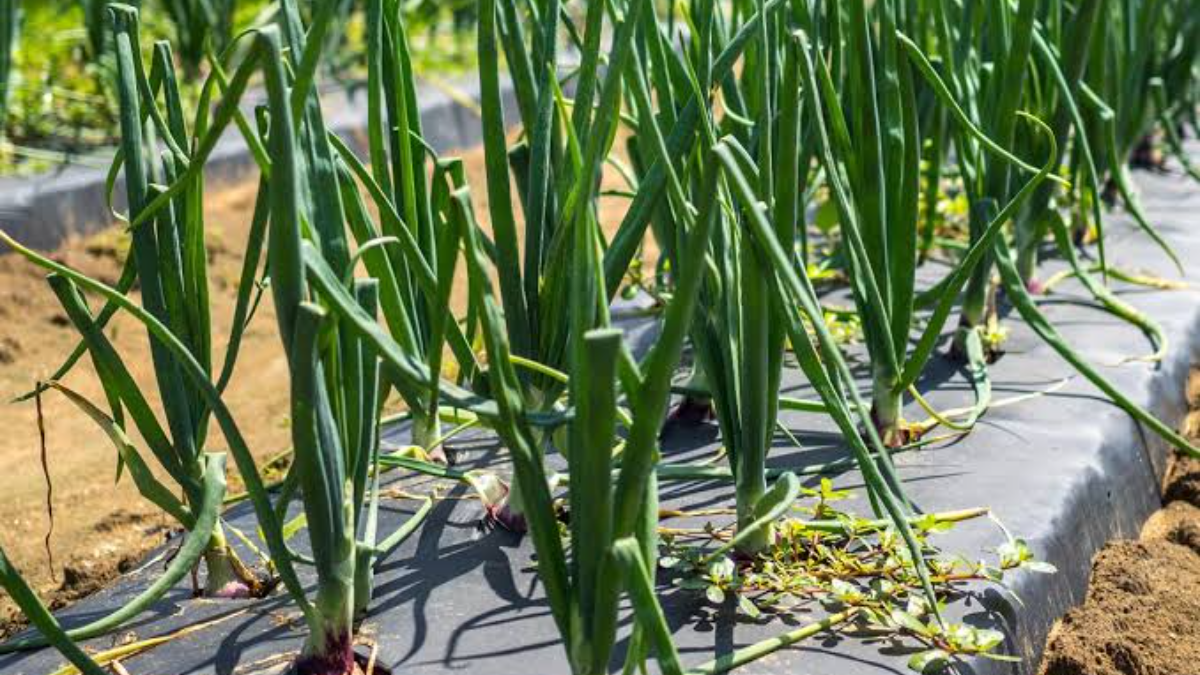
Black mulch film helps onion farms reduce weed pressure and retain moisture in the covered soil. This is particularly useful during early growth, when onion plants have limited leaf coverage and compete poorly with fast-growing weeds.
The opaque black film blocks sunlight from reaching the soil surface. It also reduces direct evaporation and supports more consistent moisture conditions around the crop roots.
Table of Contents
Why Use Black Mulch Film for Onions?
Onion is a slow canopy crop. In the early stage, the plant does not cover the bed quickly, so weeds compete strongly for light, water, and nutrients. For large farms, hand weeding can become expensive and hard to schedule. A properly selected black plastic mulch film blocks light from the covered soil surface and reduces weed emergence under the film. That does not remove every weed in the field, but it reduces pressure where the crop bed is covered and where labor cost usually accumulates.
For large-volume buyers, the film should not be treated as a simple black sheet. Onion beds are narrow compared with some vegetable crops, planting holes are frequent, and drip lines must be positioned accurately. If the film width is wrong, the bed edge is exposed. If the film is too thin for the soil condition, it can tear during laying. If the roll winding is poor, high-speed installation becomes slower. These are production problems, not only purchasing problems.
At HONREL AGRICULTURE, we normally discuss onion mulch film as a field-system material. The film, drip tape, bed shape, planting density, and installation machine must fit together. Buyers sourcing mulch film for onion programs should confirm these details before bulk production, especially when the order is going into several farms or regions.
For onion farms, the cheapest film is not always the lowest-cost film. A poor fit can create more field labor than it saves.
Moisture Control Under Black Mulch
Black mulch film reduces direct evaporation from the bed surface. In dry or windy regions, this can help the soil retain moisture longer between irrigation cycles. For onion crops, consistent moisture is especially important during establishment and bulb development. However, mulch film does not correct poor irrigation design. Since surface water cannot enter the covered bed evenly, drip tape placement and irrigation scheduling must be planned before film laying.
For large farms, drip tape position should be checked against planting rows. If the drip line is too far from the active root zone, moisture distribution becomes uneven. If water flow is too high, the bed may become excessively wet in localized areas. If water flow is too low, the film may reduce evaporation but still leave plants short of moisture. The film creates a more controlled surface environment, but the irrigation system still decides how water reaches the crop.
Moisture factor
Why it matters for onion
Bulk-buyer check
Drip tape position
Controls water access under covered beds
Confirm row layout before film width is finalized
Film width
Protects the bed shoulder and reduces exposed soil
Match bed former, not only crop row spacing
Thickness
Affects puncture resistance during laying
Adjust for rough or stony soil
Exposure period
Determines UV and field-life requirement
Match film life to onion season length
Weed Reduction And Labor Efficiency
The most direct value of black mulch film in onion farming is weed reduction on the covered bed. Large onion farms should calculate this value in labor terms. How many weeding rounds are normally required? How many workers are needed per hectare? How much yield or quality risk appears when weeds are removed late? These questions help the buyer compare film cost with field labor cost. This is more useful than comparing roll price alone.
In high-labor-cost regions, mulch film may be justified even when the material price is higher than a thin economy grade. A stronger film can reduce laying interruptions, edge tearing, and mid-season patching. For farms using mechanized laying equipment, roll stability and winding tension are also important because a badly wound roll can slow the crew and create uneven film tension in the field.
The buyer should still manage weeds around planting holes, bed edges, and uncovered furrows. Film is strongest where it blocks light completely. It is weaker wherever the soil is exposed. For onion production, hole size and planting accuracy matter. Large holes create more weed openings and reduce the benefit of the film.
Technical Specification For Bulk Orders
Large-volume onion buyers should request more than a general product name. A complete wholesale mulch film specification should include resin type, color, thickness, width, roll length, core size, roll weight, winding direction, carton or pallet requirement, and label information. If the buyer needs private production marks, those should be confirmed before printing and packing.
Specification item
Recommended decision logic
Film color
Black for weed suppression and moisture retention
Thickness
Select by soil roughness, laying speed, and exposure time
Width
Set by bed top, bed shoulder, and edge burying requirement
Roll length
Longer rolls reduce stops in large fields
UV package
Match local sunlight and season length
Packaging
Protect rolls during container shipping and warehouse handling
Installation And Field Performance Checks
Before large-scale field laying, the buyer should confirm that the film runs correctly on the laying machine. This is not a small-farm trial; it is a production-readiness check. The crew should verify roll rotation, edge burying, drip tape placement, and film tension. When the first rolls run correctly, the rest of the field operation becomes faster and more predictable.
Check bed shape and soil surface before laying.
Confirm drip tape position relative to onion rows.
Set film tension so the film is flat but not overstretched.
Bury edges firmly to reduce wind lifting.
Keep planting holes clean and as small as the crop system allows.
Record roll batch and field location for later performance review.
Quality Control Before Shipment
For container orders, HONREL AGRICULTURE can support agriculture mulch film manufacturer supply with production checks focused on roll width, thickness consistency, color uniformity, winding quality, and packaging condition. These details are important for large buyers because a small specification error can repeat across many rolls. The final order should be documented clearly so future reorders can match the approved specification.
If the buyer sources multiple mulch products, HONREL AGRICULTURE can align onion black mulch film with related crop films under one container plan. The goal is not to add generic purchasing steps, but to make the field specification consistent from production to installation.
How Large Onion Programs Should Set Film Width
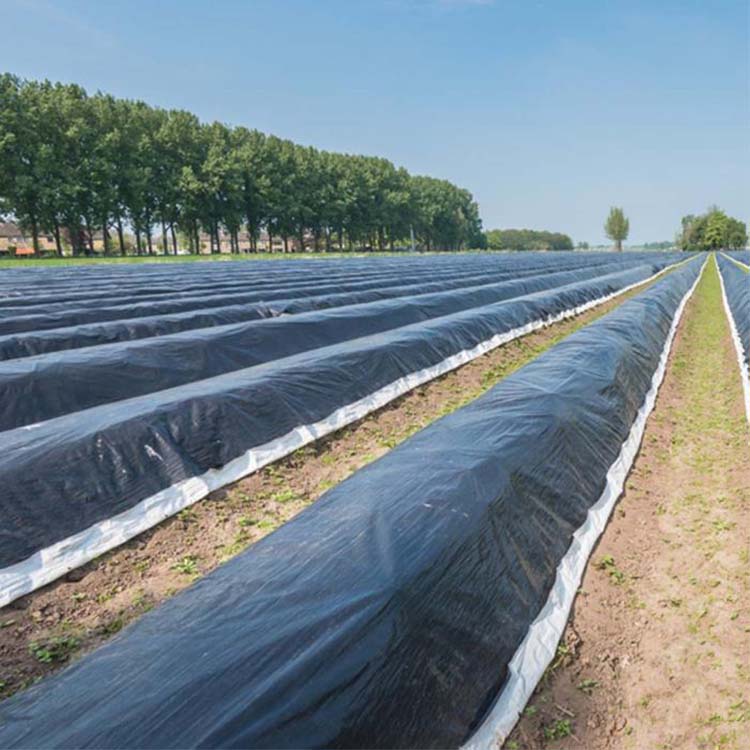
For onion production, film width should be decided from the bed, not from a general catalog size. Large farms often use fixed bed formers and planting machines, so the mulch film must cover the bed top, bed shoulder, and enough side area for secure edge burying. If the film is too narrow, weeds appear along the shoulders and wind can lift the film. If the film is too wide, material waste increases across every hectare. In container orders, that small width difference becomes a large cost difference.
A professional buyer should provide bed top width, total bed width after shaping, row number, row spacing, drip tape position, and edge burying method. With those details, the supplier can recommend a roll width that works with the field equipment. This is more accurate than copying a width from tomato, melon, or pepper production. Onion beds are often managed differently, and the film should match the crop system.
Film Thickness And Field Durability
Film thickness should be selected according to field stress. Smooth soil, short exposure, and careful machine laying may allow a lighter specification. Rough soil, stones, long exposure, or high-speed laying usually require a stronger film. Large buyers should also consider thickness tolerance, not only nominal thickness. A film sold as a certain thickness should remain consistent across the roll and across the shipment. Inconsistent thickness can create weak points during installation.
For onion farms, puncture and tearing often begin at practical field points: rough bed surface, hard clods, sharp residues, excessive tension, or poor edge burying. A stronger film helps, but field preparation still matters. The best result comes from matching film strength with bed preparation and machine settings. This is why serious buyers should discuss both film specification and field use before confirming production.
Commercial Production Example
Consider a large onion operation that plants on raised beds with drip tape under the film. The farm has two main issues: high hand-weeding cost and uneven moisture near the bed shoulders. In this case, the film recommendation should focus on opacity, width, edge coverage, and compatibility with drip layout. A thin film that does not cover the shoulder well may reduce some weeds in the center but still leave labor problems along the edges. A correct width and stable black opacity are more valuable than a vague claim about premium quality.
For this type of farm, the supplier should prepare a clear production sheet. It should state the exact width, roll length, thickness, tolerance target, color, core size, packing, and label. If the farm buys annually, the specification should be saved for the next season. This makes repeat procurement easier and prevents the buyer from receiving a different film under the same product name.
What Large Buyers Should Avoid
Avoid selecting film only by price per kilogram without checking field performance risk.
Avoid using a vegetable mulch width from another crop without measuring onion beds.
Avoid very thin film in rough fields where puncture risk is high.
Avoid oversized planting holes that create weed openings around onion rows.
Avoid unclear roll labels when several film widths are stored in the same warehouse.
FAQ for Large-Volume Buyers
Q1: Does black mulch film stop all weeds in onion fields?
A: No. It reduces weeds under the covered bed, but planting holes, edges, and uncovered furrows still need field management.
Q2: Is drip irrigation required under onion mulch film?
A: It is strongly recommended. Once the bed is covered, drip tape becomes the main way to supply water evenly to onion rows.
Q3: What thickness should large onion farms choose?
A: Thickness should be selected by soil roughness, laying equipment, season length, and expected field stress. The buyer should not choose by price alone.
Q4: What should be checked before bulk production?
A: Confirm bed width, film width, roll length, thickness tolerance, UV requirement, core size, winding quality, and packaging.
Q5: Can HONREL customize black mulch film for onion programs?
A: Yes. HONREL AGRICULTURE can customize width, thickness, roll length, UV package, labels, and export packing for large-volume orders.
Get Factory-Direct Insights & Growing Tips
Selecting the right Greenhouse Film or shade mesh is critical for crop success. As a dedicated Agricultural Netting and Film Manufacturer, our experts help you customize UV protection and light transmission based on your local climate. Share your project details for a tailored solution.
HONREL AGRICULTURE engineers films, netting, and drip pipe to your crop, climate, and structure—specs, colors, labeling, and packaging—backed by drawings and spec sheets.
Fast Response & Quick Proofing
Rapid quoting, spec-sheet/sample proofing, and practical engineering support. We align specifications and documentation quickly to keep your project timeline on track.
Consistent Quality & Traceability
UV-stabilized formulations, process QC, and lab checks for optics/mechanics—plus lot-level tracking. COA/test reports available; export packing and labeling are standardized.