PE Film for Vegetable Fields (Tomatoes, Peppers): Solving Tearing and Inconsistent Thickness Issues
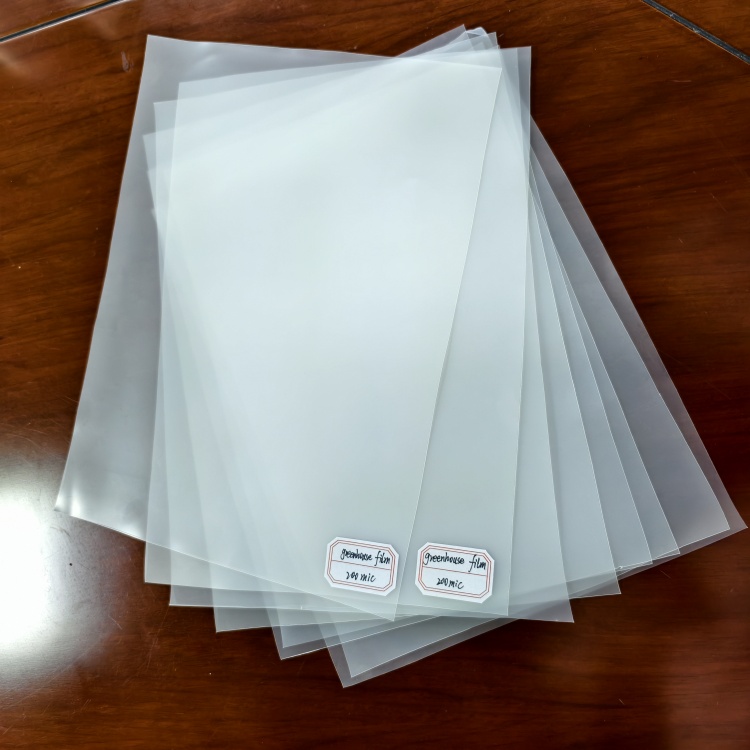
To completely eliminate these operational disasters, commercial vegetable growers must upgrade to multi-layer, metallocene-reinforced (m-LLDPE) plastic films manufactured with advanced precision extrusion technology.
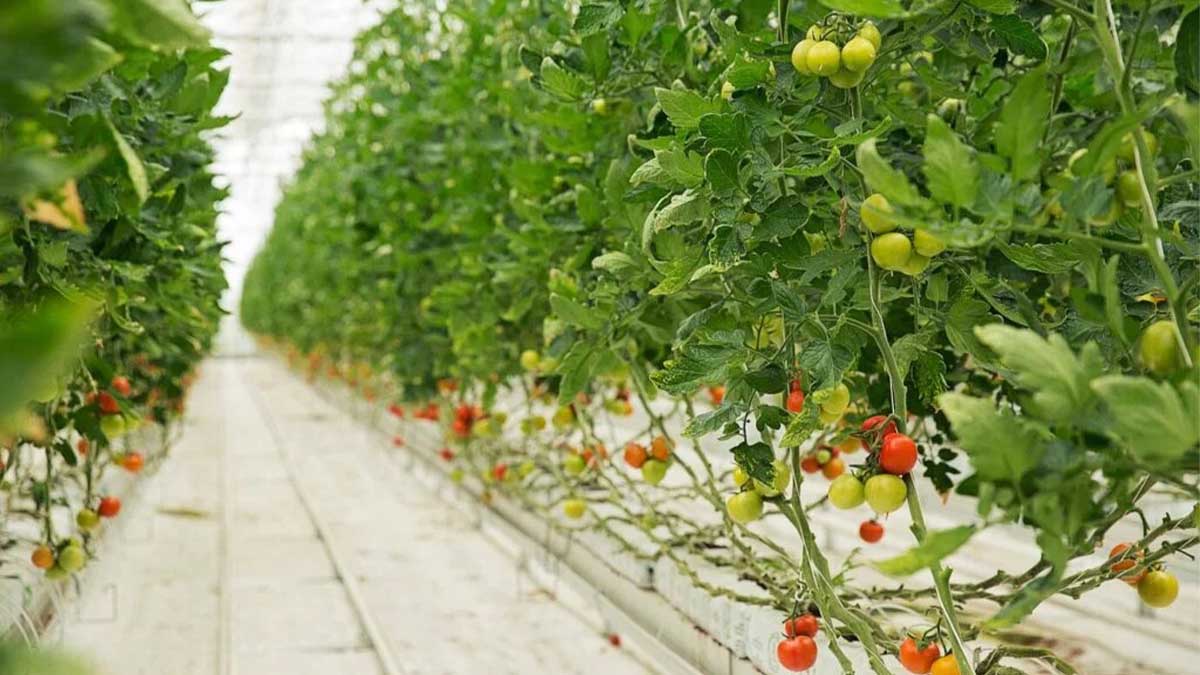
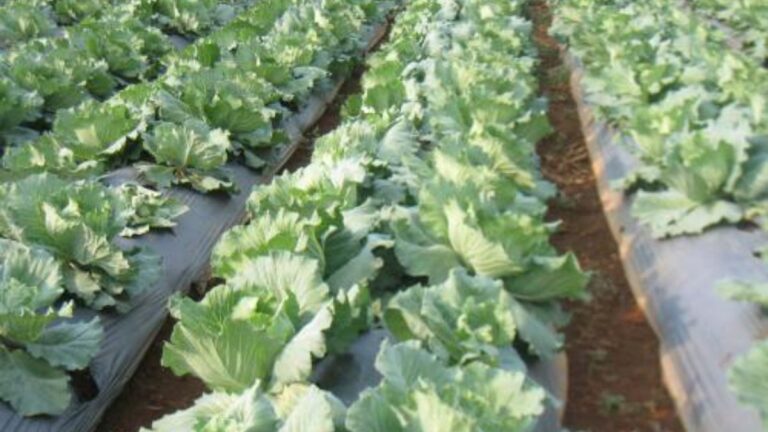
If you operate a commercial vegetable farm growing high-value crops like tomatoes and bell peppers, you rely heavily on plasticulture. Plastic ground covers are the lifeblood of your soil moisture management, temperature regulation, and weed control. But let’s talk about the nightmare every farm manager and tractor operator dreads: you hook up a fresh roll of plastic to your mulch laying machine, start driving down the row, and suddenly, the film splits straight down the middle. Or even worse, the plastic lays down fine, but mid-season, the wind picks up and it tears repeatedly around the planting holes, exposing your pepper roots to the harsh sun.
Here is the direct answer and the ultimate solution to your film tearing problems: Tearing and splitting during mechanical installation are almost always caused by two critical manufacturing flaws found in cheap agricultural plastics: inconsistent thickness (gauge variation) and the use of brittle, mono-layer Low-Density Polyethylene (LDPE).
To completely eliminate these operational disasters, commercial vegetable growers must upgrade to multi-layer, metallocene-reinforced (m-LLDPE) plastic films manufactured with advanced precision extrusion technology. This ensures the plastic has a 100% uniform thickness across the entire roll and possesses over double the elongation and tear resistance of standard films. By making this simple material switch, you eliminate tractor downtime, prevent mid-season weed blowouts from ripped plastic, and protect your crop’s root microclimate perfectly until harvest.
As a Solution Specialist at HONREL AGRICULTURE, I speak with frustrated growers every day who are losing time and yield to bad plastic. In this comprehensive guide, we are going to dive into the exact polymer engineering behind why cheap PE film tears, look at verifiable academic data on how pristine plastic increases tomato and pepper yields, and show you how to source the right material for a flawless growing season.
Table of Contents
The Root of the Problem: Why Cheap PE Films Tear
When your plastic mulch shreds in the field, it is incredibly easy to blame the tractor operator or a stray rock in the soil. However, the root cause usually happens weeks earlier on the factory floor of a low-tier manufacturer.
1. Inconsistent Thickness (Gauge Variation)
Standard, low-tier agricultural films are manufactured using outdated blown film extruders. These conventional machines often cause a severe film gauge variation of ±7% to 10%. This means a film rated for 1 mil (25 microns) might actually be 0.8 mil in the center and 1.1 mil on the edges.
When your tractor’s tuck wheels and tension rollers pull this uneven film over a raised bed, the mechanical tension is not distributed equally. The tension focuses entirely on the microscopic thin spots. This uneven stress creates a massive vulnerability, resulting in the film wandering off the guide wheels or splitting longitudinally right down the row.
2. The Chemical Limits of Standard LDPE
Many cheap films are made entirely of recycled or basic Low-Density Polyethylene (LDPE). While LDPE is cheap and easy to process, it has a highly branched molecular structure that makes it relatively weak when pulled under tension. Once a tiny micro-tear starts—whether from a sharp rock, a tomato stem, or a pepper stake—standard LDPE lacks the tear-propagation resistance to stop it. The wind catches the small hole, and within days, the entire sheet is shredded.
Why a Torn Film Is a Total Nightmare for Tomatoes and Peppers
If you’re growing tomatoes or peppers, you already know they’re “divas.” They’re high-value, but they’re picky as hell. When your plastic starts ripping, you’re not just looking at an ugly field—you’re looking at a shrinking paycheck.
1. You’re Killing the Vibe (and the Roots)
Peppers and tomatoes need a steady “microclimate” to thrive. They want their roots warm and the moisture levels hit-the-spot consistent. The second that plastic tears, the seal is blown. All that moisture just evaporates into thin air, which means you’re stuck running your drip lines twice as long. You’re not just wasting water; you’re literally washing your expensive liquid fertilizer right past the roots where the plant can’t even reach it.
2. It’s an Open Invite for Pests
For a tomato grower, thrips and whiteflies are public enemy number one. These aren’t just annoying bugs; they’re “dirty needles” carrying TSWV (Spotted Wilt) and other viruses that can wipe out an entire block in days. When your film is intact, it helps manage the environment, but a torn-up mulch film is basically a welcome mat for these pests to settle in and start spreading disease.
A pristine, untorn reflective mulch film creates a visual barrier that confuses these pests. According to the University of Florida Institute of Food and Agricultural Sciences (UF/IFAS), utilizing UV-reflective plastic mulch reduces the incidence of these viruses by as much as 75% and dramatically boosts tomato yields. The Alabama Cooperative Extension System also confirms that reflective silver mulch confuses and repels pests like aphids and flower thrips.
However, if your film is torn, flapping in the wind, and exposing the brown dirt below, the reflective pest-control barrier is completely compromised. The bugs will land, and the viruses will spread.
💡 Best Practice: Choosing the Right Color for Your Season
Selecting a tough plastic is step one, but choosing the right color dictates your harvest date and yield volume.
For Early Spring Plantings: When the soil is still cold, tomatoes and peppers will stall. You must use a high-quality black mulch film. The black surface acts as an opaque blackbody radiator, absorbing solar radiation and warming the underlying root zone significantly faster than bare soil, pushing your harvest forward by 7 to 14 days.
For Mid-Summer Plantings: In peak heat, standard black plastic will cook pepper roots and cause severe blossom drop. Switch to a silver black mulch film. The silver top acts as a mirror, dropping the soil temperature to keep roots cool, while simultaneously blinding the thrips and aphids that try to land on your plants.
The Engineering Solution: HONREL’s Metallocene Technology
To completely eliminate tearing and gauge variation, we had to change the fundamental chemistry of the plastic and upgrade the mechanics of the manufacturing process. At HONREL AGRICULTURE, our films are engineered for the realities of commercial farming.
1. The Real Talk on Metallocene (m-LLDPE)
Look, most people just use basic LDPE, but that stuff is honestly pretty weak. What we’re doing differently is using Metallocene (m-LLDPE) in the core. Basically, instead of that stiff, “one-and-done” plastic that rips the second things get rough, this tech makes the material act way more like a super-strong rubber band. It’s got crazy “bounce back” feel to it. So, when you’re actually out there using it, it stretches and takes a beating instead of just snapping on you. It’s all about that extra toughness.
The Hard Scientific Data: A peer-reviewed study published in the MDPI scientific journal tested the exact mechanical properties of m-LLDPE agricultural mulch films. The test results showed that the average elongation at break of m-LLDPE films was an incredible 1267.69%, compared to only 549.5% for standard LDPE films.
This indicates a massive, scientifically proven increase in film elasticity and toughness. When your tractor pulls our film, it stretches instead of snapping. When a pepper plant rubs against the planting hole in the wind, the metallocene stops the tear from propagating.
2. Precision Uniform Extrusion
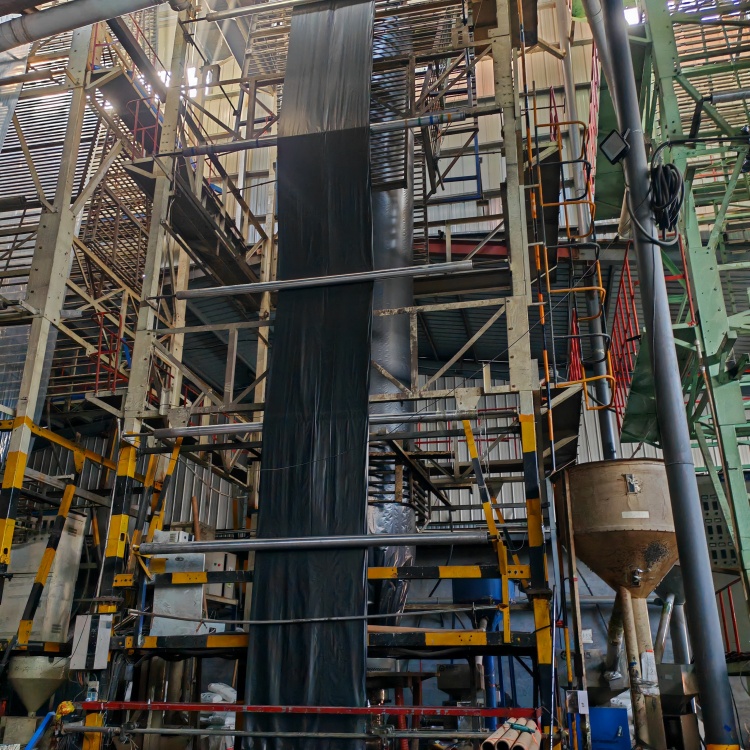
We use state-of-the-art blown film extruders with precision die heads and direct-drive motors to ensure absolute bubble stability during the manufacturing process. This drastically reduces the gauge variation found in cheap films. When you run our film on your tractor, the tension is distributed perfectly across the entire width of the plastic. You get no thin spots, no weak links, and zero tracking issues under your tuck wheels.
Material Performance Comparison Table
Feature
Standard Cheap LDPE Film
HONREL m-LLDPE Mulch Film
Elongation at Break
~550% (Snaps easily)
>1200% (Extreme stretch)
Gauge Consistency
±10% variation (Thin spots)
Highly uniform edge-to-edge
Puncture Resistance
Low (Tears from pepper stakes)
High (Absorbs kinetic impact)
Tractor Laying Speed
Slow (Requires constant stops)
Fast (Handles high mechanical tension)
💡 Best Practice: The “Drum-Tight” Tractor Laying Technique
Even the strongest metallocene film can fail if your tractor setup is sloppy. When laying film for tomatoes or peppers, you must ensure your bed shaper creates a perfectly smooth, crowned bed (slightly higher in the center so water sheds off).
The Execution: Adjust the tension rollers on your mulch laying machine so the plastic is pulled drum-tight over the soil crown. The edges must be deeply secured with a generous amount of soil by the burial discs. A tight film sheds rainwater away from the plant stem, prevents the wind from catching it like a parachute, and stops the plastic from whipping against the fragile stems of young vegetable transplants.
Complete Climate Control: Beyond the Soil
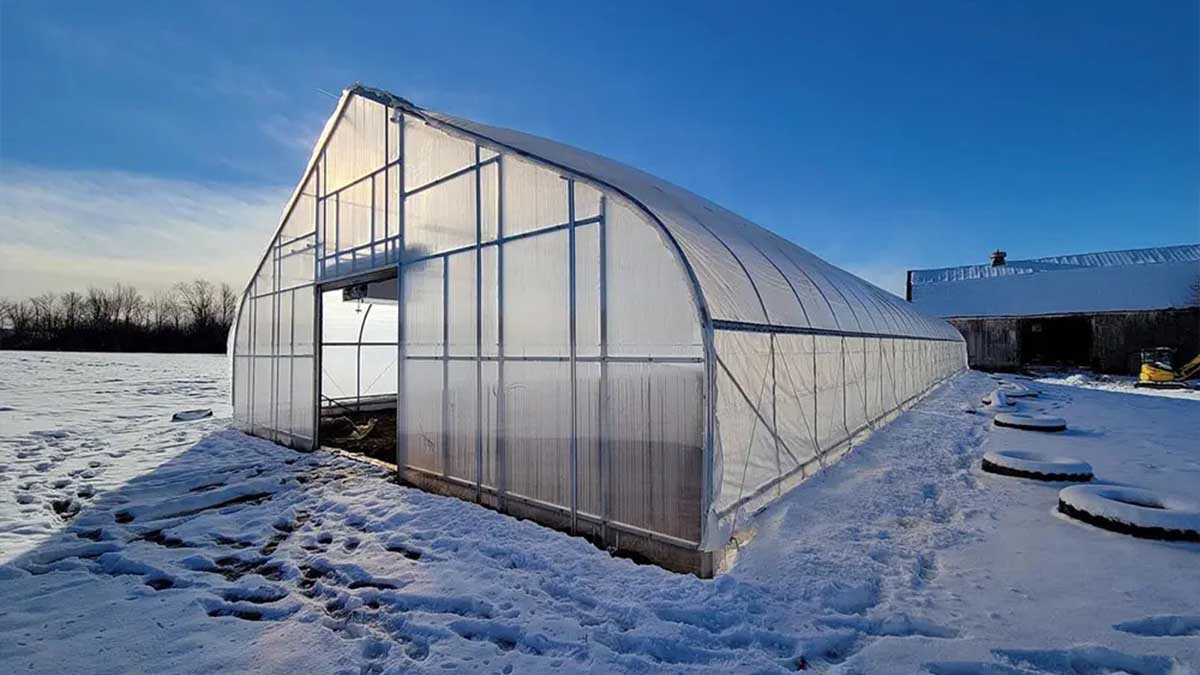
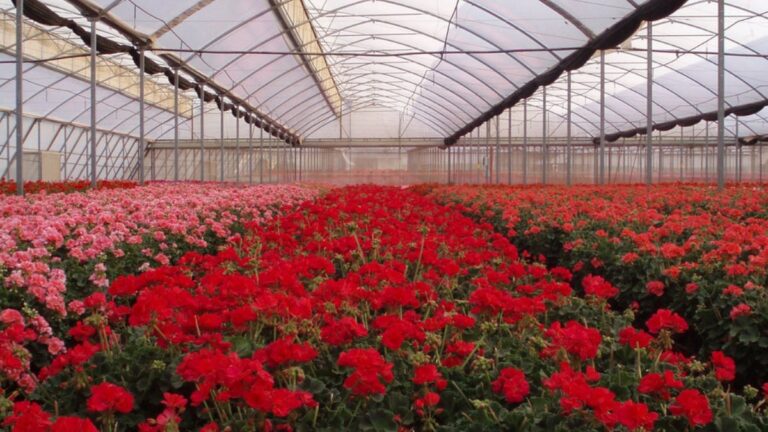
While securing the ground with tough, tear-resistant mulch is critical, many commercial vegetable operations grow under protective structures to maximize their yields. If you are farming inside high tunnels or multi-span greenhouses to extend your tomato and pepper season, the plastic over your head needs to be just as reliable as the plastic on the ground.
At HONREL AGRICULTURE, we apply our precise, uniform extrusion technology to all our B2B agricultural polymer products:
For structural roofs requiring intense UV protection, permanent anti-drip coatings, and massive tensile strength against snow and wind, our advanced 5-layer PO film delivers unmatched glass-like clarity.
If you are managing a specialized nursery, need to partition a vegetable processing warehouse, or are running a strict light-deprivation cycle for other crops, we manufacture heavy-duty black and white panda film for 100% light-proof environments.
We ensure high-tensile strength and uniform thickness across every single product line we sell, guaranteeing that your farm runs without operational interruptions.
5 Frequently Asked Questions (FAQ) for Commercial Vegetable Growers
Q1: Why does my plastic mulch always tear around the planting holes mid-season?
A: This happens because of two factors: wind-whip and poor tear propagation resistance. If the film is laid loosely by the tractor, the wind flutters it constantly, pulling the sharp edges of the planting hole against the rough plant stem. If the film is made of cheap LDPE, the hole stretches and splits easily. Upgrading to an m-LLDPE reinforced film provides the molecular elasticity needed to handle this friction without tearing.
Q2: Will buying a thicker film (higher mil/micron) automatically stop tearing?
A: Not necessarily. A poorly manufactured 1.5 mil film with a 10% gauge variation will tear faster in a machine than a perfectly uniform 1.0 mil film made with high-quality m-LLDPE. While thickness helps with basic puncture resistance (like stepping on it), the uniformity of the extrusion and the quality of the resin matter much more for preventing long, catastrophic tractor tears.
Q3: Can I use the exact same mulch film for both tomatoes and peppers?
A: Yes, they thrive in similar plasticulture environments. However, peppers are slightly more sensitive to extreme root heat than tomatoes. If you are planting late in the season in a hot climate, rely on silver/black or white/black reflective film to keep both crops’ roots from overheating and aborting their blossoms.
Q4: Does the color of the plastic affect how easily it tears?
A: Indirectly, yes. Black film absorbs UV rays efficiently, which helps it last longer before photo-degrading. Clear films degrade the fastest and become brittle, making them highly prone to tearing late in the season unless they are heavily loaded with specialized UV stabilizers. Reflective silver films also hold up well as they bounce the destructive UV rays away.
Q5: What is the Minimum Order Quantity (MOQ) for factory-direct wholesale?
A: Because we run industrial-scale, continuous extrusion lines, our standard MOQ is generally based on raw tonnage (typically 1 to 2 Tons, depending on your custom width and thickness requirements). Consolidating your seasonal mulch and greenhouse covers into a direct bulk order guarantees you the absolute best commercial B2B pricing on the global market.
Conclusion: Stop Stopping the Tractor
In commercial vegetable farming, time is your most valuable resource. Every time your tractor operator has to stop the machine, climb down, and re-thread a torn roll of plastic mulch, you are bleeding money in labor costs. Every time a weed bursts through a thin spot in your film mid-season, you are losing water, nutrients, and yield.
By upgrading to HONREL’s metallocene-reinforced, uniformly extruded PE films, you permanently eliminate the headaches of gauge variation and weak plastics. You secure the precise microclimate your tomatoes and peppers need, protect them from vector-borne viruses, and guarantee a smooth, uninterrupted mechanical installation process.
Ready to stop replacing torn plastic and start maximizing your harvest? Partner with HONREL AGRICULTURE today. Contact our sales and engineering team for a custom B2B wholesale quote, and let us supply the heavy-duty polymer solutions your commercial operation demands.
Get Factory-Direct Insights & Growing Tips
Selecting the right Greenhouse Film or shade mesh is critical for crop success. As a dedicated Agricultural Netting and Film Manufacturer, our experts help you customize UV protection and light transmission based on your local climate. Share your project details for a tailored solution.
HONREL AGRICULTURE engineers films, netting, and drip pipe to your crop, climate, and structure—specs, colors, labeling, and packaging—backed by drawings and spec sheets.
Fast Response & Quick Proofing
Rapid quoting, spec-sheet/sample proofing, and practical engineering support. We align specifications and documentation quickly to keep your project timeline on track.
Consistent Quality & Traceability
UV-stabilized formulations, process QC, and lab checks for optics/mechanics—plus lot-level tracking. COA/test reports available; export packing and labeling are standardized.