Panda Film for Cucumber Greenhouses: Stabilizing Light and Temperature for Better Yield
You're losing fruit weight and leaving money on the table every single day plants are starved for light. It’s a massive bottleneck. When those lower cucumbers are starved for light, they just stop developing, which tanks your harvest weight and hits your wallet.
Let’s be real about high-wire cucumbers—it’s a non-stop war for light.
The problem is these vines grow like crazy. Before you know it, the top leaves are huge, hogging every bit of sun coming through the roof. Meanwhile, bottom half of your plant is basically living in a cave. That’s exact spot where your cucumbers are supposed to be bulking up, but since they’re stuck in the dark, they just stall out. You’re losing fruit weight and leaving money on the table every single day plants are starved for light. It’s a massive bottleneck. When those lower cucumbers are starved for light, they just stop developing, which tanks your harvest weight and hits your wallet. You’re basically losing money just because the bottom of your crop is stuck in the shade. You could install expensive supplemental LED lighting, but that drives your monthly electricity overhead through the roof.
Look, let’s cut to the chase. You don’t need to dump a bunch of money into more lights—you just need to stop wasting the ones you’ve already paid for.
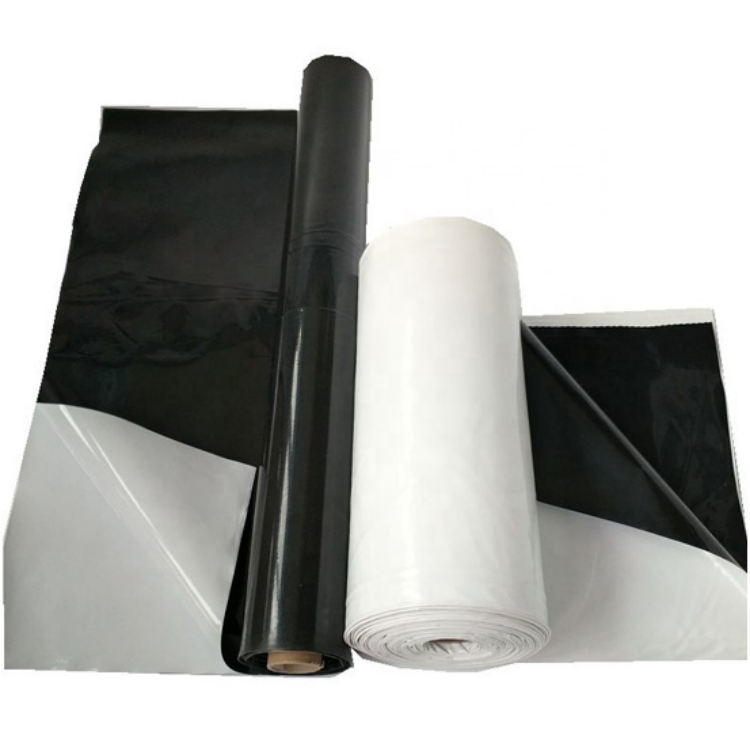
The easiest way to fix that canopy bottleneck is to put the light you’ve already got to work. If you line your floors and walls with some heavy-duty panda film, you’re basically recycling every bit of light that hits the ground. Instead of the sun just soaking into the dirt and cooking your roots, it’s bouncing right back up into the shade where your cucumbers are actually growing. It’s a dead-simple fix that’ll boost your yield without touching your electric bill. First, the brilliant white surface acts as a highly efficient diffuse reflector, bouncing wasted Photosynthetically Active Radiation (PAR) back up into the shaded lower canopy. This drives photosynthesis across the entire vine. Second, the opaque black underside creates a 100% light-proof barrier that kills weeds, retains soil moisture, and stabilizes your root zone temperatures. The result is a massive, verified increase in marketable cucumber yields without spending an extra dime on electricity.
As a Solution Specialist at HONREL AGRICULTURE, I consult with commercial greenhouse operators all over the world. We don’t just sell plastic rolls; we engineer the polymer formulas that solve actual commercial farming challenges. In this guide, I am going to break down the verified academic data on how reflective films change cucumber microclimates, explain why standard floor management falls short, and show you exactly how to maximize your farm’s ROI.
Table of Contents
The Cucumber Canopy Crisis: Light Starvation and Root Stress
To understand why panda film is such a game-changer, you have to look closely at the biology of a commercial high-wire cucumber setup.
The Shading Effect
Cucumbers are incredibly light-hungry plants. In a commercial greenhouse, they are trained vertically. Within just a few weeks of transplanting, the large upper leaves form a dense, overlapping canopy. The sunlight hitting the roof is absorbed almost entirely by the top 30% of the plant. The lower 70% of the vine is effectively starved for PAR light. Without adequate light energy, the lower fruits mature slowly, grow deformed, or simply abort.
The Root Zone Instability
Look, if you’re growing in open beds, bare dirt is basically a liability. It creates a mess of a microclimate that’s constantly working against you.
For one, the moisture just evaporates right out of the ground. That’s not just a waste of water—it causes these massive humidity spikes that are an open invitation for powdery mildew and other fungal crap to move in. Then you’ve got weeds constantly stealing the expensive fertilizer you’re putting down.
On top of all that, the soil temperature is all over the place. It bakes during the day and freezes at night, which absolutely hammers a cucumber’s shallow roots. If you want a stable field and a crop that isn’t constantly stressed out, you’ve got to get that dirt covered.
The Solution: How Panda Film Transforms the Microclimate
When you install our heavy-duty black and white film on the ground, you actively change the physics of the greenhouse environment.
1. Diffuse Reflection: Feeding the Lower Canopy
The bright white layer of the panda film is engineered with titanium dioxide to create diffuse reflection. Unlike a mirror or aluminum foil that bounces a harsh, direct beam of light (which can create hot spots and burn leaves), our white film scatters the light in infinite, random directions.
The Academic Proof: A comprehensive study published by the National Institutes of Health (NIH) investigated the impact of diffuse light on greenhouse cucumber canopies. The researchers found that utilizing a highly diffuse light environment significantly improved the uniformity of overall light distribution. More importantly, the scattered light penetrated directly into the dense, shaded layers of the lower canopy. The study concluded that diffuse light increased the photosynthesis of leaves that were directly shaded by other leaves in the canopy by up to an incredible 55%.
By activating the lower leaves, you turn previously unproductive foliage into active energy producers, swelling your cucumbers to premium market sizes.
2. Temperature Stability and 100% Weed Suppression
While the white side acts as your optical growth engine, the black underside is your environmental shield. The black layer provides 100% opacity. Weed seeds in the soil simply cannot germinate in total darkness. By completely eradicating weeds without chemical herbicides, your cucumbers receive 100% of the water and nutrients from your drip tape.
Furthermore, the white top layer acts as a thermal mirror. It reflects thermal heat away, preventing the soil from overheating during the peak of summer. This keeps the cucumber root zone in a perfectly stable, comfortable temperature range.
💡 Best Practice: The “White Up, Black Down” Rule
I see this mistake occasionally with new farm crews. They unroll the plastic in a rush without checking the orientation.
How to execute it correctly: If you are laying the film on the floor of your cucumber greenhouse, the white side must face the sky and the black side must face the dirt. The white side reflects the PAR light into the canopy, and the black side smothers the weeds. (Note: If you were building a blackout flowering room for light deprivation, you would reverse this rule on the walls to block external light, but for greenhouse floor reflection, white always goes up!)
Verifiable Data: The Yield Impact of Reflective Covers
Does bouncing light off the floor actually put more weight on your harvest scale? Absolutely.
A detailed study published in the journal MDPI evaluated the effects of various reflective and diffusive polyethylene films as greenhouse covers and floor mulches in arid environments. The researchers meticulously tracked the growth parameters and yield of cucumber crops.
The Findings: The study revealed that utilizing reflective covers drastically improved the microclimate and the total diffuse radiation reaching the plants.
The Yield Result: The crops grown with optimal reflective and diffusive materials showed massive increases in fruit length, diameter, and weight. The crop yield values under the optimized light conditions reached 12.3 kg/m ², compared to just 10.1 kg/m ² in the standard control setups.
That is a scientifically proven 21%+ increase in total marketable yield. When you combine a 21% heavier harvest with zero hand-weeding costs, the return on investment (ROI) of laying panda film pays for itself in the first few weeks of picking.
Microclimate Comparison Table
Performance Metric
Bare Soil
Standard Black Plastic
HONREL Panda Film
Lower Canopy PAR Light
Low (Absorbed by dirt)
Low (Absorbed by black plastic)
High (Reflected via white surface)
Root Zone Temp (Summer)
Fluctuating
Overheats (Stresses roots)
Stable (Reflects thermal heat)
Weed Suppression
None
Excellent
Excellent (100% opaque)
Overall Yield Impact
Baseline
Moderate
Maximum (+21% Yield)
💡 Best Practice: Drum-Tight Tensioning and Cleanliness
To maximize your light reflectivity, the film must be installed flawlessly and kept pristine throughout the season.
The Execution: Here’s the deal: if you lay that plastic loose, you’re asking for trouble. Those wrinkles don’t just look messy—they bounce light in every direction except where you need it. Plus, they create these little pockets where water sits and breeds algae and fungus.
And for god’s sake, keep your drip lines under the plastic. Don’t go spraying messy fertilizers or overhead watering. If that white surface gets caked in mud or dust, it’s useless—it can’t reflect a thing. A clean floor is the only way you’re getting that heavy harvest you’re after.
Every year, some grower tries to save a few bucks by buying cheap, single-layer white plastic or just painting their floors. They always regret it by July.
That thin, basic plastic lets light right through. Next thing you know, weeds are growing underneath and literally lifting the film off the ground. And floor paint? It’s even worse. It chips and peels the second the humidity hits, and those cracks are the perfect hiding spot for mold spores that’ll eventually wipe out your leaves. Between your cucumber crop cycles, you can easily sweep it, hose it down, and sanitize it with hydrogen peroxide to prevent soil-borne diseases from carrying over to your next planting.
A Complete Polymer Ecosystem for Your Farm
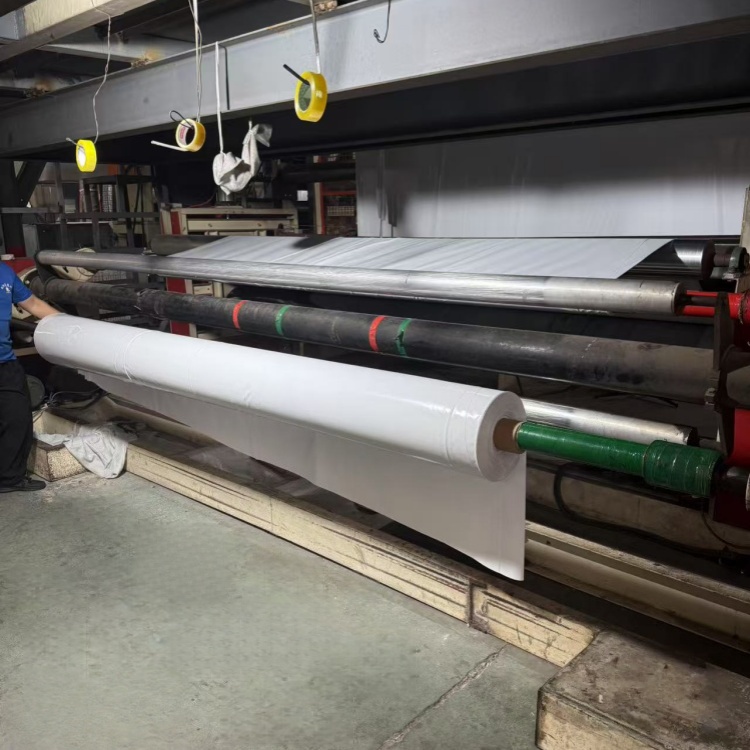
While securing your floor with reflective panda film is a massive yield booster, commercial greenhouse operations require a holistic approach to climate control. As a direct factory, we manufacture the exact polymer solutions for your entire facility.
The Greenhouse Roof: The light reflecting off your floor is only as good as the light coming through your roof. For commercial cucumber operations, we highly recommend upgrading your main structural cover to our premium 5-layer PO film. Polyolefin provides unmatched, glass-like light transmission and features a permanent anti-drip nano-coating. No drips mean no gray mold on your cucumber leaves. For more traditional high tunnels, our high-tensile PE film offers incredible wind and snow resistance.
Alternative Ground Covers: If you are growing outdoor cucumbers in peak summer heat and need a thinner, single-season disposable option to repel aphids, our highly reflective silver black mulch film is the industry standard. If you simply need basic early-season soil warming for field crops, our standard black mulch film or generalized mulch film rolls are incredibly cost-effective.
Why Source Factory-Direct from HONREL?
If you are an agricultural distributor, a greenhouse construction firm, or a farm manager overseeing multi-hectare facilities, buying retail plastic from a middleman destroys your profit margins. You need a dedicated manufacturing partner.
Because we are the direct factory, we customize our extrusion lines to your exact commercial demands:
Custom Thickness: We can extrude standard 4 mil to 5.5 mil for basic reflective floor coverings, or heavy-duty 8 mil to 9 mil for main walkways that experience heavy rolling carts and foot traffic.
Massive Roll Widths: Stop taping dozens of small pieces together. We manufacture custom widths (from 4 meters up to 20 meters wide) that allow you to roll out your greenhouse floors seamlessly, saving you days of installation labor and eliminating overlapping waste.
5 Frequently Asked Questions (FAQ) for Greenhouse Growers
Q1: Is that white side gonna fry my cucumbers?
A: Actually, it’s the exact opposite. If you’re using standard black plastic, it’s basically acting like a heat magnet—it drinks up the sun and cooks your roots.
The white side on this film reflects that energy before it even has a chance to turn into soil heat. It keeps things nice and cool down in the dirt where it matters. Plus, you’re getting a “bonus” of reflected light hitting the underside of your plants. It’s like getting free extra lighting for your canopy without a single cent added to your electric bill.
Q2: Is this stuff safe for my hydro tanks?
A: Yeah, you’re good. We use 100% virgin poly, so it’s totally stable. It’s not gonna leach some weird chemicals into your nutrient mix or mess with your pH.
Most guys I know actually flip it over and use the black side to cover their reservoirs. It’s a total blackout—no light, no algae. It keeps your oxygen levels where they should be and stops your lines from getting gunked up.
Q3: How many seasons will I get out of this?
A: As long as it’s indoors and the greenhouse roof is taking the hit from the UV, this stuff is tough as nails.
Treat it right, and you’re looking at several crop cycles over a couple of years, easy. When you finish a harvest, don’t even bother ripping it up. Just give it a good sweep, hit it with some sanitizer, and it’s ready for the next round. It’s built to handle people walking all over it.
Q4: Can I use this for light dep?
A: Absolutely. If you’re running a zone that needs a strict dark cycle—like medicinal flowers or short-day plants—this is exactly what you need.
Whether you’re hanging it as a curtain or using it as a pull-tarp, that black core is 100% opaque. It doesn’t matter how bright it is on the other side; once this is closed, it’s pitch black. Zero light leaks, period.
Q5: What is the Minimum Order Quantity (MOQ) for factory-direct wholesale?
A: Because we operate industrial-scale co-extrusion lines, our MOQ is generally based on raw tonnage (typically 1 to 2 Tons, depending on your custom width and thickness). Consolidating your ground cover and roof plastic orders directly with us guarantees you the absolute best commercial B2B pricing on the market.
Conclusion: Stop Wasting Your Expensive Light
In commercial cucumber farming, light is your most valuable and expensive input. Every photon that hits dark, bare soil is a photon completely wasted.
By upgrading your greenhouse floors with HONREL’s black and white panda film, you instantly recapture that lost energy. You drive photosynthesis deep into your shaded lower canopy, you permanently smother water-stealing weeds, and you lock in the stable root zone temperatures that high-yielding cucumbers demand. It is the fastest, lowest-cost structural upgrade you can make to increase your overall harvest tonnage.
Ready to maximize your lighting efficiency and lower your overhead costs? Partner with HONREL AGRICULTURE today. Contact our engineering and sales team for a custom B2B wholesale quote, and let us supply the heavy-duty polymer solutions your commercial operation needs.
Get Factory-Direct Insights & Growing Tips
Selecting the right Greenhouse Film or shade mesh is critical for crop success. As a dedicated Agricultural Netting and Film Manufacturer, our experts help you customize UV protection and light transmission based on your local climate. Share your project details for a tailored solution.
HONREL AGRICULTURE engineers films, netting, and drip pipe to your crop, climate, and structure—specs, colors, labeling, and packaging—backed by drawings and spec sheets.
Fast Response & Quick Proofing
Rapid quoting, spec-sheet/sample proofing, and practical engineering support. We align specifications and documentation quickly to keep your project timeline on track.
Consistent Quality & Traceability
UV-stabilized formulations, process QC, and lab checks for optics/mechanics—plus lot-level tracking. COA/test reports available; export packing and labeling are standardized.